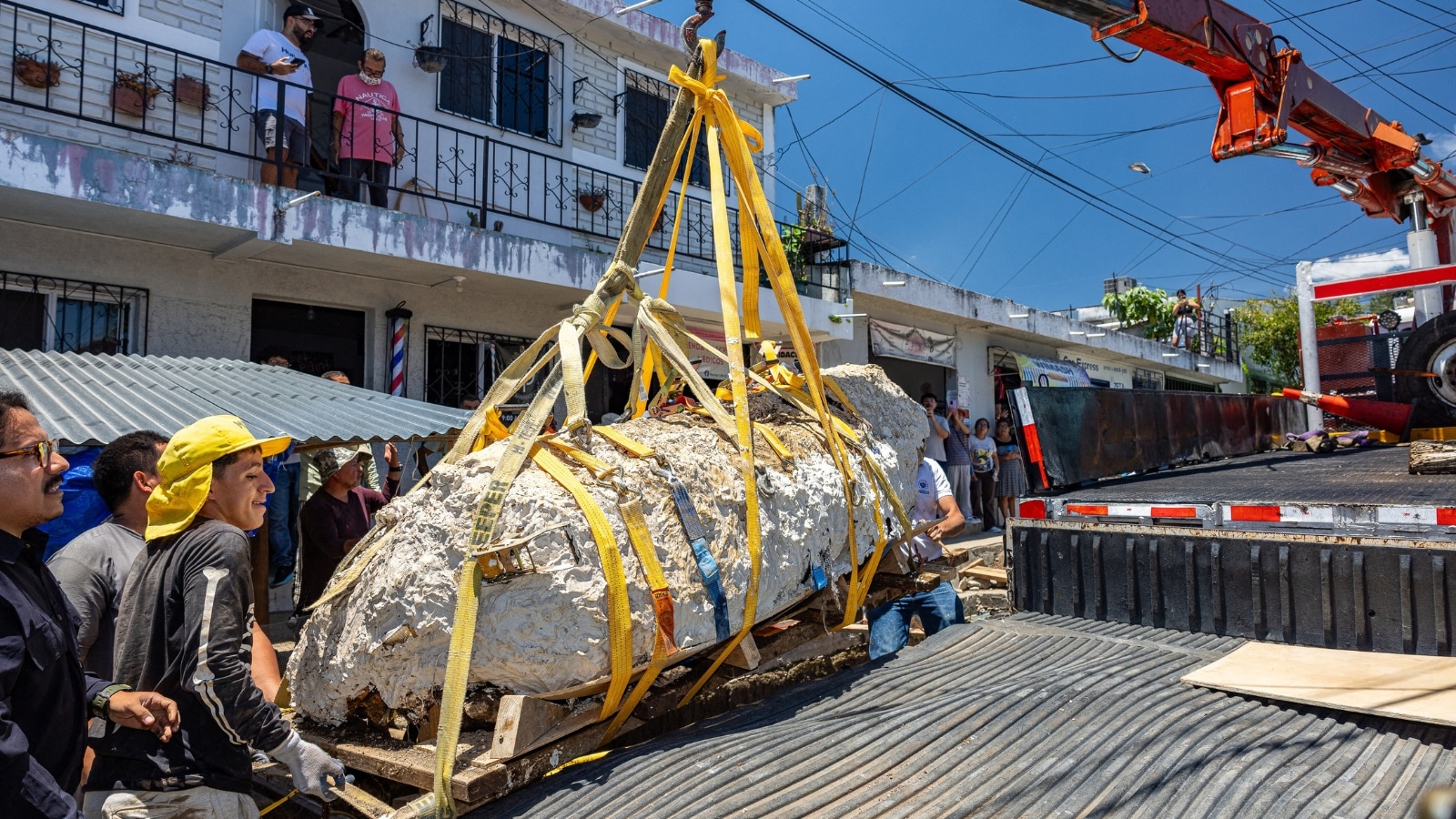
Archaeologists in El Salvador recently pulled a 3,000-year-old human skeleton from the ground in Antiguo Cuscatlán, a busy suburb of San Salvador. Most news reports skimmed right past the details to hit their word count, but the actual finding is far more intriguing than a basic headline suggests.
We aren't just looking at old bones here. The site contains buried artifacts, preserved organic matter, and distinct skeletal positioning that point to ritual sacrifice or complex ancestral rites dating back to roughly 850 BC.
When you strip away the sensationalism, this discovery at the Pasaje 4 archaeological site offers a raw look into early Middle Preclassic life in Central America. It forces us to rethink how early human societies lived, farmed, and died in the shadows of active volcanoes.
A Rare Discovery Beneath Volcanic Ash in Antiguo Cuscatlán
Construction projects across Central America unearth artifacts all the time, but finding an intact human skeleton alongside organic plant matter from nearly three millennia ago is exceedingly rare.
On July 2, 2026, researchers first spotted the burial pit beneath multiple stratified layers of volcanic ash. By July 21, teams from El Salvador's Ministry of Culture completed the delicate exhumation process.
The body sat face down. Prone position burials in Mesoamerican archaeology almost always carry specific cultural meaning. They weren't accidental, nor were they standard domestic interments for respected community elders.
Lab technicians are currently prepping the remains for radiocarbon testing and DNA extraction. That work will confirm the exact century of death and determine the individual's sex, genetic origins, and health markers.
Face Down and Bound: The Chilling Possibility of Human Sacrifice
Why does the face-down position matter so much?
Context matters. Back in the 1970s, archaeologists working at Chalchuapa in western El Salvador uncovered a burial ground containing 33 individuals. That discovery stands as the earliest documented evidence of human sacrifice in Mesoamerica.
At Chalchuapa, 26 complete skeletons lay prone. Many had their hands and feet bound, while others showed obvious signs of decapitation or dismemberment.
The Ministry of Culture notes that this new Antiguo Cuscatlán site shares striking structural traits with Chalchuapa. While researchers haven't officially declared this specific individual a sacrifice victim, the prone posture strongly suggests something beyond a standard funeral rite.
In ancient Mesoamerican cosmology, face-down interments often served as offerings to the underworld or earth deities. Placing a body face down directed the spirit downward into the earth rather than outward toward the sky.
If DNA testing shows the individual came from outside the local area, it would strengthen the case for ritual captive execution. If the person was local, it might indicate an internal punishment or an offering made during times of famine or volcanic crisis.
Turtle Pots and Cassava Branches: What Artifacts Say About Daily Life
The bones grab headers, but the objects surrounding the skeleton tell the real human story.
Inside the burial pit, excavators recovered a small Usulután-style ceramic vessel shaped like a sea turtle. Usulután ceramics are famous among Mesoamerican historians for their distinct resist-painted geometric lines. Seeing this style in a pit from 850 BC shows that sophisticated ceramic techniques and artistic trade networks were already humming in Preclassic El Salvador.
The turtle motif isn't random either. Turtles hold deep symbolic weight in early pan-Mesoamerican mythologies, often representing the earth floating on primal waters. Placing a turtle vessel with the body was likely an intentional symbolic act tied to creation or rebirth.
Equally valuable to archaeologists are the charred cassava (manioc) branches recovered from the site.
Root crops like cassava rarely survive thousands of years in tropical climates because heat and humidity destroy organic tissue quickly. Here, volcanic ash blanketed the flora, effectively vacuum-sealing the plant matter and preserving its cellular structure.
This direct physical evidence confirms that Preclassic communities in the San Salvador region were intentionally cultivating manioc as a dietary staple alongside maize. It proves that agricultural systems in 850 BC were diversified and resilient.
Why Ash and Clay Are History's Best Vaults
El Salvador is known colloquially as the land of volcanoes. While eruptions brought sudden destruction to early villages, they also created unmatched preservation conditions.
When a volcano erupts, superheated ash falls rapidly over surrounding areas. This process:
- Seals out oxygen, stopping normal bacterial decay.
- Forms a protective shell over buried artifacts and plant matter.
- Creates clear stratigraphy, allowing archaeologists to date layers based on known ash falls.
Think of it like a mini-Pompeii. Without the tephra layers deposited over consecutive centuries, soft organic items like cassava branches would have turned to dust within decades.
Instead, archaeologists can analyze plant cellular structures and volcanic mineral composition to construct a precise timeline of environmental conditions during the Middle Preclassic period.
Tracking Mesoamerica's Preclassic Timeline
To grasp the weight of this find, you have to place it accurately on the timeline.
When people hear "ancient Central America," they usually picture giant Maya pyramids or Aztec stone calendars. But those monuments came much later during the Classic and Postclassic periods.
Around 850 BC, Mesoamerican societies were in the middle of a massive transition. Nomadic hunter-gatherer habits had given way to permanent agricultural villages. Complex social hierarchies, long-distance trade, and formal religious systems were starting to crystallize.
During this era:
- Olmec cultural influence was spreading down from the Gulf Coast of Mexico.
- Local highland communities were developing independent ceramic styles like the Usulután technique.
- Early trade corridors connected coastal regions with inland valleys.
Finding a formal burial pit with prestige ceramics and agricultural offerings in Antiguo Cuscatlán proves that this area wasn't just a quiet backwater. It was an active node in an expanding cultural web.
Next Steps for Archaeology Enthusiasts and Researchers
If you follow Mesoamerican history or field archaeology, keep an eye on upcoming research papers from El Salvador's Ministry of Culture over the next six to twelve months.
Here is how to follow this story as it develops:
- Watch for the published radiocarbon dating results to see if the 850 BC estimate holds firm or shifts.
- Track DNA reports to see if researchers extract usable genetic material to map migration patterns.
- Check updates from ongoing excavations at Pasaje 4, as neighboring pits may yield additional skeletons or civic infrastructure.
- Read published research on Usulután ceramic trade routes to see how the turtle vessel compares with finds across Honduras and Guatemala.