Geopolitics usually moves like a cold, calculated chess game where human lives get buried under diplomatic statements. Every headline between New Delhi and Beijing seems to center on military standoffs, economic tariffs, or border skirmishes. When China publicly praised the Indian Navy and Coast Guard for saving Chinese sailors from a burning container ship off the coast of Kerala, people took notice.
It wasn't a routine diplomatic thank-you note. China thanking India for a maritime rescue points to something far more pragmatic: when disaster strikes on the high seas, military tensions take a back seat to maritime brotherhood.
What Happened Off the Kerala Coast
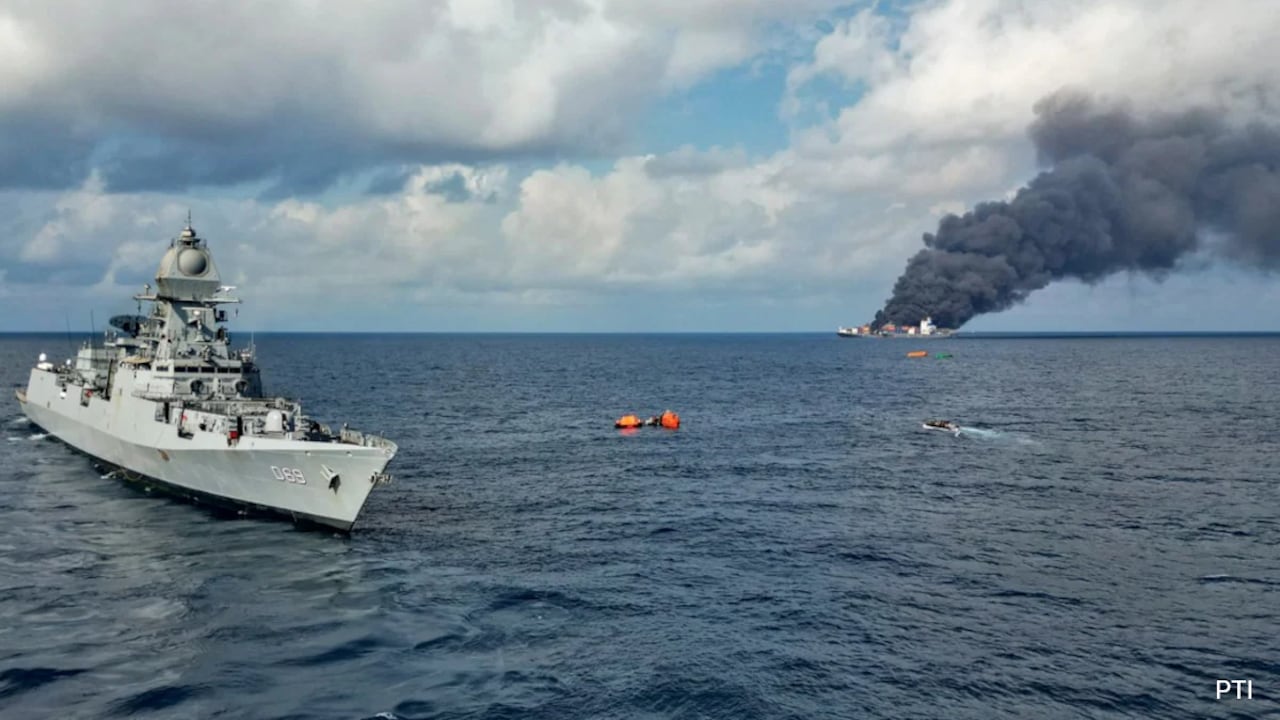
The emergency began on June 9, 2025, when an explosion tore through the lower decks of the Singapore-flagged container ship MV Wan Hai 503. The vessel was carrying 22 crew members from Colombo to Nhava Sheva, drifting roughly 44 nautical miles off Azhikkal in Kerala's Kannur district.
Under deck fires on a container vessel are a nightmare scenario. Containers stacked with unknown materials can erupt into chain-reaction explosions, leaving the crew with seconds to decide between leaping into open sea or facing toxic smoke and heat. Out of the 22 crew members on board, 18 leaped into the Arabian Sea.
The Indian Navy diverted the guided-missile destroyer INS Surat, while the Indian Coast Guard deployed multiple ships including ICGS Samudra Prahari and ICGS Sachet along with a Dornier reconnaissance aircraft. Indian forces pulled 18 crew members out of the ocean and rushed the severely burned survivors to medical facilities in Mangaluru.
Of those aboard, 14 were Chinese nationals, six hailing from Taiwan, along with sailors from Myanmar and Indonesia.
The Statement That Surprised Foreign Policy Analysts
Initial appreciation came from Chinese Embassy Spokesperson Yu Jing on social media, expressing gratitude for the "prompt and professional rescue." The real political weight dropped later during a high-profile reception marking the anniversary of the People's Liberation Army.
Rear Admiral You Jian, China's Defence Attache to India, made an explicit statement that caught military analysts by surprise. He noted that China "will not forget" how the Indian military stepped up off the Kerala coast to save Chinese sailors. He used the rescue as a springboard to suggest deeper military-to-military communication and confidence-building measures between the two Asian giants.
That wording matters. Words like "will not forget" carry intentional diplomatic weight in Beijing's lexicon. It signals a willingness to acknowledge professional competence and humanitarian goodwill, even while border negotiations remain complex.
Why Maritime Search and Rescue Transcends Border Friction
Nations fight on land and compete for influence across ocean trade routes, but the laws of the sea operate under a totally different moral code. Under the International Convention for the Safety of Life at Sea (SOLAS) and the United Nations Convention on the Law of the Sea (UNCLOS), mariners are legally and morally bound to assist anyone in distress at sea, regardless of nationality or political alignment.
The Indian Navy has built a reputation as the primary security responder in the Indian Ocean region. Whether it's intercepting pirates off the Horn of Africa, helping fire-stricken oil tankers in the Gulf of Oman, or rescuing crew members off Kerala, India consistently demonstrates its capability to handle complex open-ocean emergencies.
When Chinese sailors were pulled from the burning wreckage of MV Wan Hai 503, Indian rescue teams didn't check passports before pulling men out of the water. They did their job with speed and precision.
The Real Potential Impact on India-China Relations
Nobody should expect a single sea rescue to resolve decades of territorial disputes or economic rivalry overnight. Pretending this solves complex geopolitical issues is naive.
It creates what diplomats call a "cool-down valve."
When top military officials meet, having shared instances of cooperation gives both sides a non-controversial baseline. Rear Admiral You Jian explicitly tied the rescue effort to the broader idea that the common interests of both nations outweigh their differences. When senior leaders from New Delhi and Beijing work toward gradual normalization, maritime safety serves as low-hanging fruit for cooperation.
Navies across the world frequently participate in joint search-and-rescue drills precisely because humanitarian aid doesn't carry the political baggage of offensive combat exercises. If India and China ever decide to rebuild military confidence-building mechanisms, joint maritime safety protocols are the logical place to start.
What History Teaches Us About High-Seas Diplomacy
This isn't the first time life-saving efforts at sea have softened diplomatic rhetoric. Cold War history shows multiple instances where US and Soviet naval forces rendered assistance to stranded submarines or burning cargo ships during periods of extreme tension.
Humanitarian action creates a clear distinction between state-level policy and human survival.
When a ship is listing 15 degrees to port, blowing off smoke, and dropping cargo containers into shipping lanes, the only thing that matters is getting people out alive. The Indian Navy proved its capability, and Beijing acknowledged it without hesitation.
Practical Steps for Tracking Maritime Diplomacy Moving Forward
If you want to understand where naval relations between these two powers are actually heading, skip the political soundbites and watch three specific indicators over the coming months.
- Monitor joint maritime safety communiques issued by the Indian Coast Guard and regional maritime security centers.
- Track whether diplomatic talks open up formal Search and Rescue (SAR) bilateral channels between Indian and Chinese naval commands.
- Keep an eye on regional shipping lane protocols along the Arabian Sea and the broader Indian Ocean region where commercial routes overlap.
Humanitarian professionalism on the water creates opportunities on land. Whether both capitals choose to build on that goodwill remains to be seen, but the precedent off the Kerala coast stands as a sharp reminder of what maritime coordination looks like in practice.