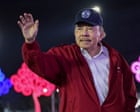
The mask is completely off in Managua. Speaking on July 19 at the 47th anniversary of the Sandinista revolution, 80-year-old Daniel Ortega declared that Nicaragua will no longer hold elections. He framed the move as a necessary measure to stop opposition candidates—whom he labeled "traitors" and "coup plotters" funded by the United States—from ever taking power.
For anyone who has followed Central American politics over the last decade, this announcement isn't a surprise. It's simply the logical end of a process that started years ago. Ortega and his wife, co-president Rosario Murillo, have spent the last decade systematically dismantling every democratic institution in the country. By openly declaring an end to competitive voting, they've dropped the pretense of electoral legitimacy once and for all.
How Nicaragua Reached the Point of No Return
To understand how a former revolutionary hero became a entrenched dictator, you have to look back at the 2018 anti-government demonstrations. That year, peaceful protests against social security reforms quickly morphed into a nationwide demand for democratic change. The regime responded with brutal force. United Nations reports estimated that state forces and affiliated armed groups killed over 350 people during the crackdown.
Instead of backing down after the violence, the Ortega-Murillo regime doubled down on repression. The 2021 presidential vote provided a clear preview of where things were heading. Months before citizens went to the polls, police arrested every major opposition candidate, shut down independent news outlets, and outlawed rival political parties. Ortega won a fourth consecutive term in a vote that the United States, the European Union, and the Organization of American States immediately declared illegitimate.
Since then, the regime has systematically erased public dissent. Here is what that crackdown has looked like in practice:
- Stripping citizenship from more than 500 political dissidents, journalists, and civic leaders, effectively turning them into stateless exiles.
- Shutting down over 5,600 non-governmental organizations, including charity groups, religious organizations, and human rights bodies.
- Seizing and shutting down 29 universities and 58 independent media outlets across the country.
- Keeping dozens of political prisoners in harsh conditions, including high-profile opposition leaders and indigenous activists.
The recent death in custody of 73-year-old indigenous leader and four-term congressman Brooklyn Rivera highlighted the harsh reality facing those who speak out. Rivera spent nearly three years unjustly imprisoned before dying under state control, drawing widespread condemnation from human rights organizations and international bodies.
Rewriting the Constitution to Rule Indefinitely
Sunday's announcement wasn't an isolated rant. It follows a series of structural legislative shifts designed to solidify dynastic rule.
In January 2025, the government-controlled National Assembly unanimously passed sweeping constitutional amendments that fundamentally reshaped Nicaragua's system of government. Those changes officially created a diarchy, elevating Vice President Rosario Murillo to the role of co-president alongside Ortega.
The 2025 constitutional changes went even further:
- They extended the presidential term from five years to six years.
- They granted the co-presidents supreme authority over the legislative, judicial, and electoral branches of government.
- They expanded presidential command beyond the Nicaraguan Army to directly control the police and Ministry of the Interior.
- They established that if Ortega dies, Murillo immediately assumes sole presidency without requiring a vote or special confirmation.
Because of those constitutional edits, the next general election was already pushed back to late 2027. Now, with Ortega's explicit decree that no further elections will take place, even that delayed timeline has been wiped away. The regime has chosen to skip the logistical hassle and cost of staging rigged votes altogether.
Why Ortega Made the Announcement Now
Why explicitly cancel elections now instead of continuing to run fixed races? Analysts point to deep internal insecurity within the ruling family.
Even with opposition leaders jailed or exiled, staging an election creates an unavoidable window of political vulnerability. Electoral cycles give citizens a focal point for discontent. During the 2021 cycle, despite terrifying repression, small public protests still flared up across the country. By eliminating the electoral cycle entirely, Ortega and Murillo hope to close off the last remaining mechanism for public organizing.
There's also a geopolitical component. During his July 19 address, Ortega targeted Washington, referencing recent U.S. military operations in Latin America and accusing American officials of funding domestic opposition groups. By declaring a total ban on opposition political activity, he's signaling to foreign powers that international sanctions and diplomatic pressure will not force concessions.
Economic stability has also given the regime a false sense of security. Despite international isolation, Nicaragua's economy has managed to avoid total collapse, supported largely by remittances sent home by hundreds of thousands of Nicaraguans who fled the country since 2018. Ironically, the massive exodus of citizens fleeing political persecution has created a financial cushion that helps keep the dictatorship afloat.
What Lies Ahead for Nicaragua and the Region
The explicit creation of a family dictatorship sets a dangerous precedent for Central America. It sends a clear message to other authoritarian-leaning leaders in the region that international outrage can simply be ignored if a government is willing to use enough force at home.
For everyday Nicaraguans, the immediate future looks grim. With all legal avenues for political change closed off and civil society dismantled, the drain of human talent will almost certainly accelerate. Young professionals, students, and workers are leaving the country in record numbers, seeking opportunities in Costa Rica, Spain, and North America.
For foreign policymakers and international observers, standard diplomatic playbooks are no longer working. Targeted sanctions on government officials haven't altered the regime's behavior, and statements of concern from global bodies carry little weight in Managua.
If international actors want to address the crisis in Nicaragua effectively, they need to adapt their strategies quickly:
- Focus support on exiled civil society and independent media outlets operating from neighboring countries like Costa Rica, ensuring accurate news reaches citizens inside Nicaragua.
- Target financial channels that directly enrich top regime figures and state-run monopolies rather than broad measures that punish the general population.
- Coordinate regional diplomatic pressure across Latin America, pushing neighboring governments to refuse recognition of the Ortega-Murillo co-presidency.
- Document human rights violations continuously to ensure eventual accountability for political imprisonments and deaths in custody.
The transition from a fragile democracy to a fully consolidated family dictatorship in Nicaragua is now complete. Recognizing this reality is the first necessary step for anyone trying to understand where Central American security and stability are headed next.