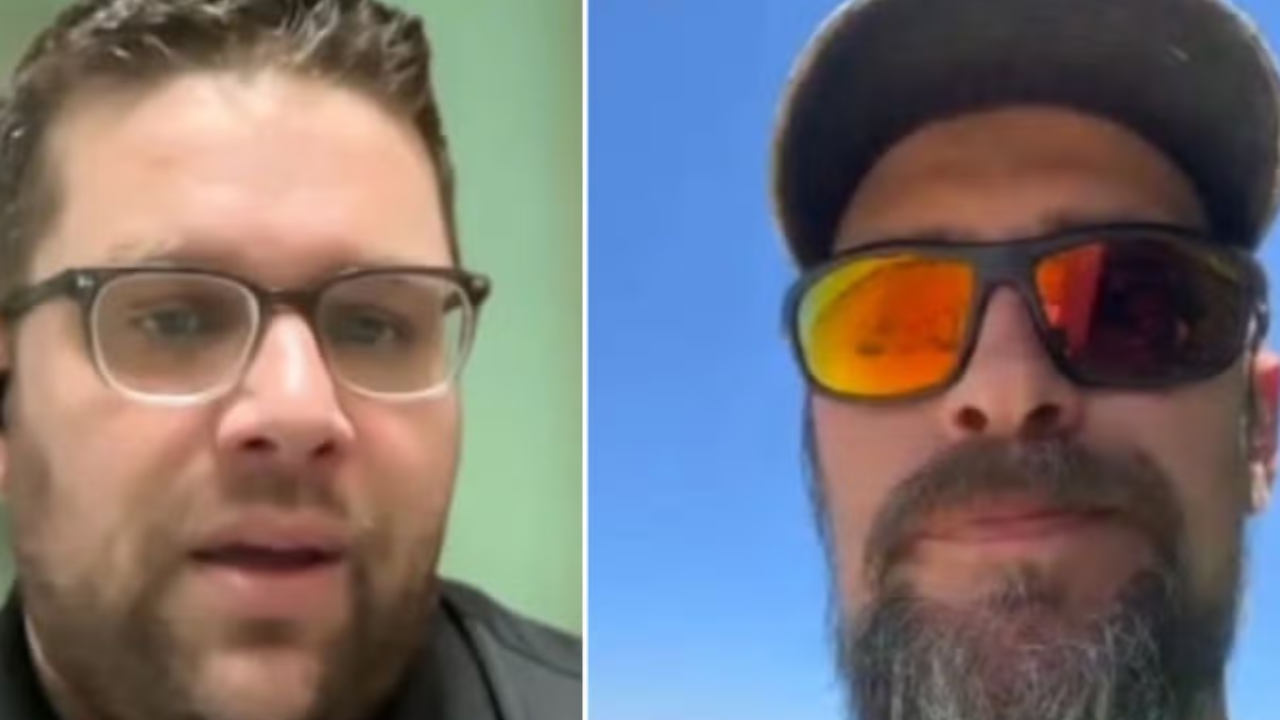
Imagine opening a plastic tube during a casual Christmas gift exchange, spitting into it, and accidentally deleting the last 38 years of your reality. That's not a plot for a cheap thriller. It's exactly what happened to Kyle Bylin and Jeremy Morrison.
Last week, these two men and their families filed a lawsuit in a North Dakota state court against Unity Medical Center in Grafton. The charge? Medical malpractice and negligence that completely flipped two lives upside down. On January 26, 1988, Bylin and Morrison were the only two babies born at that hospital. Somehow, they went home in the wrong arms.
Now, decades later, consumer genetics websites are doing something hospitals never intended: exposing the absolute messy reality of historic medical blunders.
The Random Holiday Gift That Broke a Family Tree
Bylin didn't suspect anything when he sent his saliva sample to a genealogy platform. He was just playing along with a holiday tradition. But when the results hit his dashboard, he matched with a woman listed as his biological aunt.
That aunt's actual nephew, Jeremy Morrison, grew up a few states away. When Morrison took his own test to verify the bizarre digital match, the truth became undeniable. Morrison looked at a photo of Bylin's brother and saw his own face staring back.
Bylin grew up on a North Dakota grain farm, constantly wondering why he felt so entirely detached from his family's personalities and political views during Thanksgiving dinners. He assumed it was normal family friction. It wasn't. He was just a totally different person living someone else's life. Morrison, meanwhile, ended up in Colorado working as a welding inspector for a wind energy company. He was the blonde kid standing out in a family full of brown-haired people.
If the hospital hadn't botched the delivery room handoff, their roles would have been completely reversed. Morrison would be running the North Dakota farm. Bylin would likely be elsewhere.
When the Paper Trail Vanishes
The legal battle over this decades-old mistake highlights a massive problem with historical hospital errors: time erases accountability.
Unity Medical Center isn't denying that the switch happened. The DNA evidence makes that argument impossible. Instead, the hospital Corporation filed a motion to dismiss the lawsuit, pointing to the statute of limitations and arguing that no current evidence proves their specific staff caused the mix-up.
The hospital released a statement explaining that because nearly four decades have passed, all medical and staffing records from January 1988 are gone. Not a single member of that delivery team still works there. The hospital even raised a defense of comparative fault, suggesting other unknown parties could be responsible.
But Bylin still holds a damning piece of physical evidence: the original infant hospital bracelet that misidentified him from day one.
The Heavy Cost of Genetic Truth
The emotional fallout from these discoveries doesn't fit neatly into a legal complaint. Attorney Tim O’Keefe spent a year trying to negotiate a settlement with the hospital before going public with the lawsuit, which seeks more than $50,000 in damages.
Evelyn Newton, the woman who raised Bylin, openly expressed the grief of losing the chance to watch her biological son grow up. You don't get a second chance at first steps, driving lessons, or weddings.
Yet, the men are quick to defend the parents who actually raised them. Morrison insists that a simple cheek swab doesn't delete 38 years of real memories, family dinners, and parental love.
This North Dakota case isn't an isolated incident. Across the globe, commercial DNA tracking is forcing institutions to face their past mistakes:
- In 2024, two women sued the Norwegian government for human rights breaches after proving a hospital switch.
- In 2020, two men in West Virginia sued a Roman Catholic diocese over a 1942 birth switch.
- In 2016, the Canadian government had to launch a massive federal investigation after discovering multiple Indigenous men were switched at birth in a Manitoba facility during the 1970s.
Modern maternity wards use electronic bands, umbilical cord clamping matches, and immediate skin-to-skin protocols to make switches almost impossible today. But for anyone born before the mid-1990s, the only real guarantee of your identity might just be sitting in a lab tube at a commercial tech startup.
If you suspect a massive disconnect in your own family history or medical background, relying on old hospital archives is usually a dead end. Consumer database testing remains the most direct way to verify biological roots, even if the truth ends up being incredibly messy.