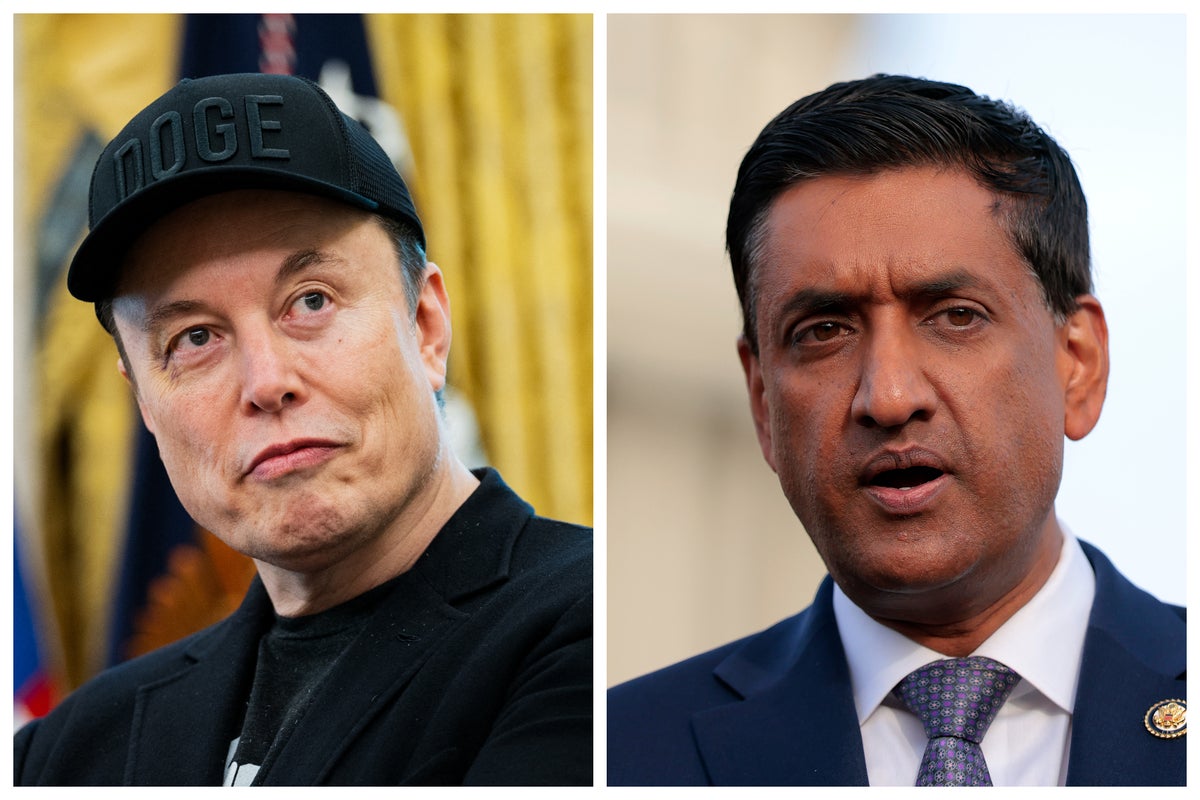
Elon Musk wants a judge to handle his latest political grudge match. The tech billionaire is threatening to sue California Representative Ro Khanna after the Democratic lawmaker accused Musk's Department of Government Efficiency of essentially sentencing millions of children to death. It is an ugly, high-stakes escalation in the war over federal spending. This isn't just another standard social media flame war. It represents a fundamental clash over who actually controls the purse strings of the United States government.
The fight exploded when Khanna appeared on the progressive podcast I've Had It. During the interview, Khanna blasted the massive budget cuts targeting the United States Agency for International Development. He claimed people celebrate Musk for creating millionaires while ignoring the millions of children around the world who could die because of the dismantling of USAID. Musk fired back on his platform X. He called Khanna a liar. He threatened legal action. He even suggested the congressman belongs in prison for unrelated insider trading allegations.
To understand why this fight is getting so toxic, you have to look past the internet theater. This is a battle over real-world data, unconstitutional power grabs, and a looming political reckoning if control of Congress shifts.
The numbers behind the 4.5 million children claim
Khanna didn't pull that staggering number out of thin air. He based his claim on a peer-reviewed study published in July 2025. That research modeled the long-term impact of drastic U.S. foreign aid cuts. The study warned that rolling back healthcare, clean water, and food assistance programs could lead to more than 14 million preventable deaths by 2030. Within that massive total, roughly 4.5 million are children under the age of five.
When DOGE took aim at USAID, it didn't just trim the fat. Reports indicate the agency froze massive portions of its budget practically overnight. We are talking about programs that distribute anti-malaria sprays, deliver clean water infrastructure, and provide life-saving antiretroviral drugs for HIV patients. Public health experts like Boston University professor Brooke Nichols have pointed out that pausing these programs causes immediate, severe damage. If you stop funding an active malaria prevention campaign mid-season, people get sick and die within weeks. It doesn't take years to see the fallout.
Khanna used this data to argue that Musk needs to face formal accountability. He wants a congressional investigation. He wants subpoenas. For Khanna, the policy choices made by an unelected billionaire adviser have direct, lethal consequences on the ground in developing nations.
Musk defends the audit and alleges widespread fraud
Musk sees the situation completely differently. He treats the public health warnings as a total lie designed to shield systemic corruption. According to Musk, the standard applied by DOGE to USAID was incredibly simple. The agency demanded that foreign aid operations provide verifiable contact information for the actual recipients of the funds. The goal was to prove the money wasn't just vanishing into thin air.
Musk argues that massive chunks of American foreign aid routinely end up in the pockets of corrupt foreign politicians. He insists that requiring basic accountability isn't a death sentence for kids. It's just common sense. To back up his point, Musk pointed to past Justice Department cases where USAID officials and corporate executives pled guilty to bribery and stealing federal funds. From his perspective, DOGE is just running a standard corporate audit on a bloated, unmonitored government bureaucracy.
But aid groups say this framework displays a profound ignorance of how international humanitarian work operates. In active conflict zones or deeply impoverished regions, collecting clean, verifiable digital contact lists for every single person receiving a meal or a vaccine is functionally impossible. Insisting on corporate-style receipts before releasing emergency funds effectively kills the program entirely.
The legal reality of the Elon Musk DOGE cuts showdown
Can Musk actually sue a sitting congressman for defamation over political speech? Honestly, it's highly unlikely to go anywhere. Legal experts know that members of Congress enjoy massive protections under the Constitution. The Speech or Debate Clause gives lawmakers broad immunity for statements made in the course of their legislative duties and political commentary. A podcast interview discussing federal policy and calling for a congressional investigation sits firmly within protected political discourse.
The real legal danger actually flows in the opposite direction. The entire operational model of DOGE has been drowning in lawsuits since early 2025. Groups like the Sierra Club, Public Citizen, and various federal employee unions have filed dozens of challenges in federal courts. The core argument in those cases is that an unelected advisory body has zero constitutional right to halt funding that Congress already authorized.
Under the Impoundment Control Act of 1974, the executive branch cannot simply decide to stop spending money passed by lawmakers. When DOGE freezes billions for USAID or orchestrates mass layoffs at agencies like the Social Security Administration or the National Park Service, it steps directly on the constitutional powers of Congress.
What happens next if the political wind shifts
Khanna openly admits that his push for accountability depends entirely on political power. Right now, Republicans control the machinery of Washington, shielding Musk and his cost-cutting agenda. But Khanna is banking on a shift in upcoming elections. If Democrats regain control of the House or the Senate, the political protection vanishes.
If that happens, expect a wave of aggressive congressional actions:
- Subpoenas targeting Musk's personal communications regarding federal agency budgets
- Formal committee hearings examining the exact decision-making process behind the USAID funding freezes
- Legislation designed to strip qualified immunity from outside advisers who execute federal policy changes
- A detailed, public accounting of the true human and financial cost of the entire DOGE experiment
This isn't a minor policy disagreement between two public figures. It is a preview of a massive constitutional showdown. One side believes a billionaire entrepreneur can apply aggressive corporate restructuring tactics to eliminate government waste. The other side believes that approach is an illegal, unconstitutional overreach that leaves a trail of human devastation in its wake.
Actionable steps for tracking the federal budget battle
If you want to look past the political theater and see where your tax dollars are actually going, you don't have to rely on social media posts. You can monitor the situation directly.
First, check the official website of the Government Accountability Office. The GAO regularly tracks federal spending and issues formal opinions on whether the executive branch is illegally withholding funds through unapproved impoundments.
Second, read the actual text of the Impoundment Control Act of 1974 to understand the precise legal boundaries separating congressional spending power from executive execution.
Finally, follow the active dockets in the U.S. District Court for the District of Columbia. That's where the most significant legal challenges against DOGE's structural reforms are currently being litigated. The rulings coming out of those courtrooms will dictate the future of federal governance long after this specific social media feud fades away.