The global race for rare earth elements has a new battleground. It is not a remote desert or a deep-ocean trench. It is Brazil. For decades, China dominated this market with an iron fist, controlling roughly 70 percent of global extraction and a staggering 90 percent of refined rare earth processing. Western nations panicked, realizing that their electric vehicles, wind turbines, and advanced defense systems depend entirely on Beijing's goodwill.
Now, Europe is making a aggressive move to break that dependency. The European Union has approached Brazil with a strategic partnership pitch. European officials claim this offer is far more beneficial than what the United States or China can put on the table. Why? Because the EU isn't just asking for raw dirt. They are offering to build factories, transfer technology, and keep the high-margin processing profits inside Brazilian borders.
If you want to understand the future of clean energy and geopolitical power, you have to look at what is happening in the southeastern state of Minas Gerais. Brazil holds the world's second-largest reserves of rare earth elements, yet it produces less than 1 percent of global output. The resources are there, sitting untapped in the soil. The EU wants to unlock them, and they are using a strategy that appeals directly to Brazil's desire to become an industrial powerhouse, not just a resource colony.
The Pitch That Outsmarts Washington and Beijing
Europe's strategy relies on a simple reality about mining history. Developing nations are tired of digging up raw materials, shipping them overseas for pennies, and buying back expensive finished goods.
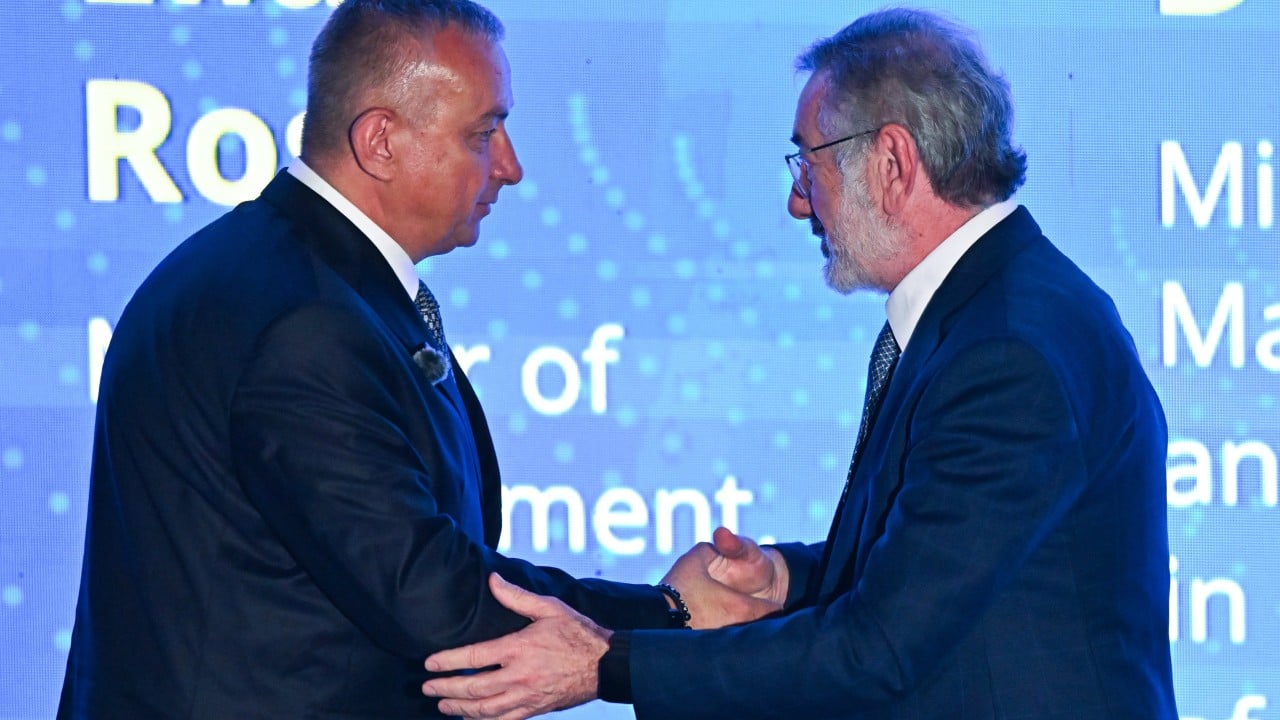
When EU Commissioner for International Partnerships Jozef Sikela visited a rare earth research center in Poços de Caldas, he laid out the European value proposition plainly. The EU wants to secure supply through purchase agreements, but in exchange, they will help Brazil build its own refining capacity.
China typically extracts resources to process them at home. The US approach often relies on vague memorandums of understanding or handshakes that lack long-term capital backing. Europe is offering something different. They are tying their demand to the European Critical Raw Materials Act, which entered into force in May 2024, and the 2025 RESourceEU Action Plan. These laws mandate that Europe cannot source more than 65 percent of any strategic raw material from a single supplier by 2030. They need Brazil to succeed to hit their own legal targets.
Inside the Minerals Reshaping Geopolitics
Rare earth elements are a group of 17 minerals. They aren't actually rare in the crust, but finding them in concentrations rich enough to mine economically is incredibly difficult. Processing them is even harder. It requires separating highly similar elements through complex, chemically intense steps.
These minerals are the hidden spine of modern technology. Neodymium and praseodymium are used to make the super-strong permanent magnets that drive electric vehicle motors and wind turbine generators. Without them, the green transition grinds to a halt.
Rare Earth Elements Supply Chain Bottleneck (Global Shares)
Extraction: China 70%, Rest of World 30%
Refining & Processing: China 90%, Rest of World 10%
Brazil holds massive advantages beyond just having the second-largest reserves. The country already has a mature, highly sophisticated mining sector with massive operations in iron ore, bauxite, and copper. It has a power grid dominated by renewable energy, particularly hydropower. This allows for what economists call "greenshoring"—moving energy-intensive refining processes to countries where the electricity itself is clean. Processing rare earths in Europe using fossil fuels makes no sense. Doing it in Brazil using hydro power fits the EU climate agenda perfectly.
Real Money on the Ground
This isn't just diplomatic talk. Money is already moving. An Australian mining company, Viridis Mining and Minerals, is driving one of the four priority projects selected to accelerate this EU-Brazil collaboration.
Viridis plans to invest 360 million dollars in a commercial plant in Minas Gerais. The goal is to produce 15,000 tons of Mixed Rare Earth Carbonate per year starting in 2028, spanning across 228 square kilometers of licensed land. The company is actively negotiating advanced purchase agreements with buyers in both Europe and the US.
By building separation facilities locally, Brazil moves up the supply chain into higher-margin production. This creates skilled jobs, brings technical education, and establishes knowledge transfer. It transforms a low-margin extraction business into a high-value industrial asset.
The Trade Deal Supporting the Push
You can't separate this rare earth push from the broader economic architecture being built between Europe and South America. The long-debated EU-Mercosur Partnership Agreement provides the legal teeth that corporate investors need.
The agreement eliminates export taxes on critical minerals like nickel, copper, and rare earths traveling from Brazil to Europe. It prohibits export monopolies. Crucially, it leaves a specific carve-out for Brazil's own industrial policy. The Brazilian government retains the legal right to apply export restrictions or taxes if necessary to protect its own domestic supply chains.
This contract-based framework offers a level of legal certainty that a simple bilateral handshake cannot match. For Mercosur countries—Brazil, Argentina, Paraguay, and Uruguay—weighing a binding European trade contract against unstructured foreign interest makes the preferred path clear.
Risks and Local Resistance
It isn't all smooth sailing. The rush to unlock Brazil's critical minerals has triggered intense domestic debate. In Brazil’s lithium and rare earth belts, local communities and environmental advocates are raising alarms.
The scramble to stockpile these minerals risks fast-tracking environmental permits. Mining and refining rare earths generates toxic wastewater and, in some geological formations, radioactive byproducts like thorium and uranium. Local groups fear that the pressure to supply Western green tech will lead to a dismantling of legal protections for forests and indigenous lands.
Furthermore, Brazil's leadership is walking a tightrope. President Luiz Inácio Lula da Silva has made it clear that Brazil does not want to choose sides in a new Cold War. Brazil wants to sell to everyone. Chinese car giant BYD is already building massive EV manufacturing hubs in Brazil, aiming to source 50 percent of its components locally. Brazil wants European capital, American technology, and Chinese buyers all at the same time. Managing those conflicting geopolitical pressures will be incredibly difficult.
Your Next Strategic Steps
If your business or investment portfolio depends on semiconductor manufacturing, electric vehicles, renewable energy infrastructure, or defense logistics, you cannot ignore this shift. The supply chain of the next decade is being forged right now.
First, audit your tier-two and tier-three suppliers. Find out exactly where the permanent magnets in your components are refined. If they trace back 100 percent to Chinese processing facilities, you face severe regulatory and geopolitical risks as Western compliance laws tighten.
Second, track the progress of South American refining projects like the Viridis plant in Minas Gerais. As these facilities come online between 2026 and 2028, they will offer the first viable, scale-ready alternative for certified, non-Chinese strategic minerals. Securing early off-take agreements now will protect your manufacturing pipeline from future supply chokepoints.
US & EU Sign Major Deal — China's Grip at Risk?
This video provides broader context on how Western allies are partnering to secure critical mineral supply chains and reduce reliance on single-source suppliers.