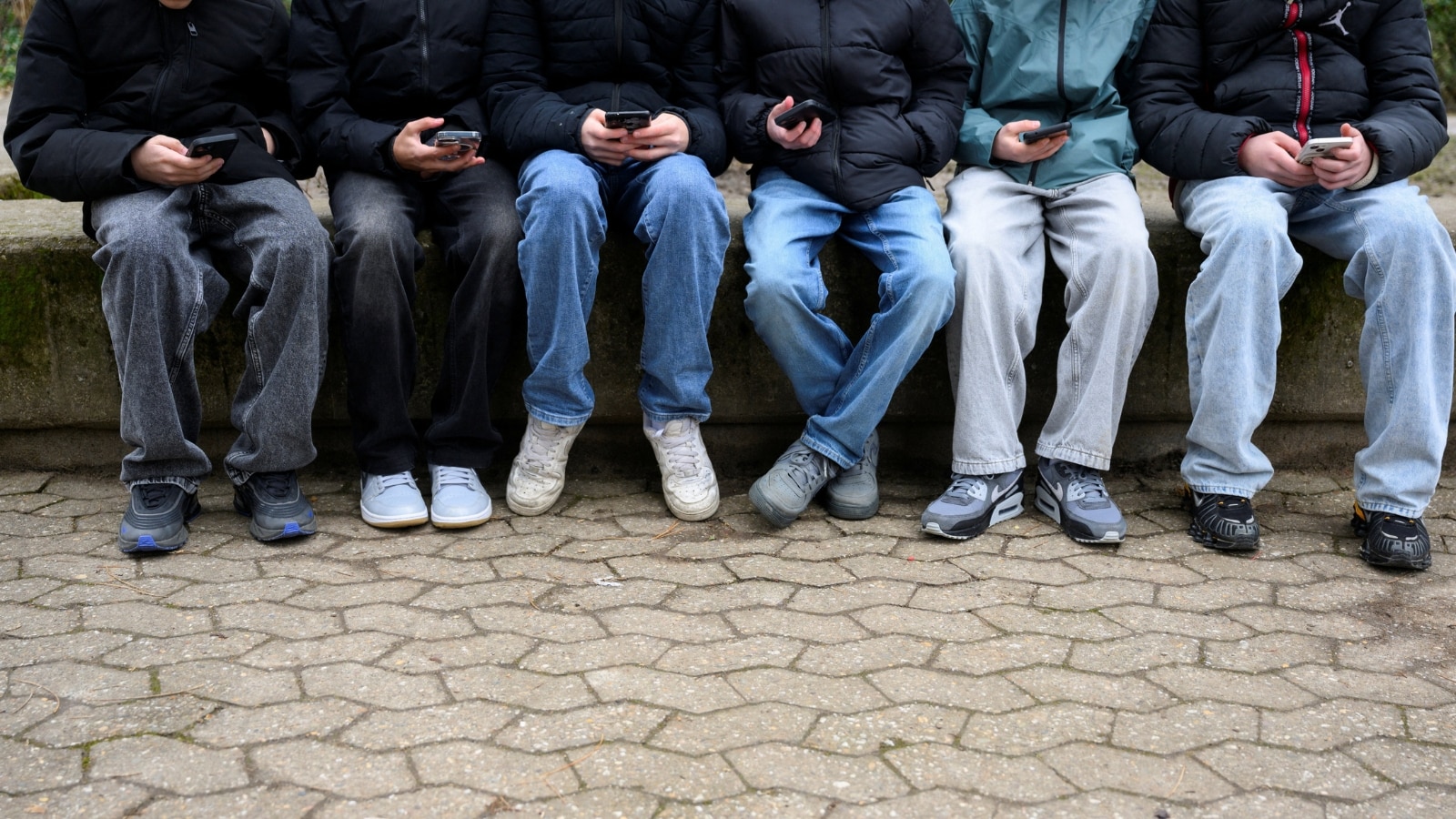
We have officially hit a wall in the debate over children and screens. For years, parents have been told to handle screen time on their own, as if they are somehow supposed to compete with billion-dollar algorithms designed by the world's most brilliant software engineers.
On July 13, 2026, European Commission President Ursula von der Leyen made a massive announcement that shifts this burden. She basically declared that the era of letting Big Tech have unregulated access to children is coming to an end. The European Union plans to propose a legally mandated, EU-wide "social media start date" for minors. Discover more on a connected topic: this related article.
"We do not expect children to design their own seatbelts," von der Leyen said, pointing out the absurdity of the status quo.
The headline grabber here is the recommended ban on unsupervised social media for children under the age of 13. But if you look past the splashy news titles, you will find a much more complicated, messy, and legally fraught reality. This is not just a simple age limit. It is an aggressive attempt to force platforms to rewrite how their apps work from the ground up. Additional analysis by ZDNet delves into comparable perspectives on this issue.
If you are a parent, an industry observer, or just someone wondering how on earth a government can actually block a 12-year-old from downloading Instagram, here is the real story behind Europe's new digital offensive.
The Social Media Plus Trap
Let's talk about what the EU is actually trying to ban. Most news outlets have focused strictly on apps like TikTok, Instagram, and Snapchat. But the expert panel advising the European Commission—co-chaired by French epidemiologist Maria Melchior and German psychiatrist Jörg Fegert—introduced a much wider term: "social media plus".
This definition is where things get tricky.
"Social media plus" does not just mean scrolling through video feeds. It covers any digital platform that uses highly personalized algorithms, endless scrolling, video autoplay, push notifications, and virtual social spaces.
This means the proposed rules could easily sweep in:
- Multiplayer video games with social lobbies (think Fortnite or Roblox)
- Artificial intelligence companions and conversational chatbots
- Video-sharing platforms like YouTube
- Interactive messaging spaces that kids use for school projects
The panel's report suggests a tiered approach. For toddlers under three, they want zero screen time. For kids between three and 12, internet use should be strictly time-limited and supervised by a parent or teacher. Only after age 13 should teenagers get "evolving autonomous use" of these services, and even then, only on platforms that can prove they are safe.
It sounds great on paper. In reality, it presents a massive enforcement nightmare.
Why Age Verification Is the Ultimate Catch-22
The biggest obstacle to any online age limit has always been verification. How do you prove a user is 13 without turning the internet into a surveillance state?
Right now, most platforms ask for a birthdate. Kids lie. Everyone knows they lie.
To solve this, the EU is working on a government-developed age verification app. The idea is that this app will let young users verify their age securely without handing over their personal ID, facial scans, or private data directly to Silicon Valley tech giants.
But this approach creates a classic double-edged sword.
If the verification app is too easy to bypass, the entire ban becomes useless. Kids are incredibly tech-savvy. They use VPNs, borrow older siblings' devices, or find alternative web-based portals before their parents even realize what happened.
On the flip side, if the verification system is incredibly strict, it raises massive privacy concerns. Are European citizens going to be comfortable using government-backed identity software just to let their kids look at memes or play games online? Many digital rights advocates are already deeply skeptical. They argue that creating centralized databases of verified users, even with privacy-preserving tech, creates a major target for hackers.
The Regulatory Patchwork Threatening Europe
The European Commission wants a harmonized, single-market rule. But the individual member states of the EU are growing incredibly impatient, and they are already moving ahead with their own radically different laws.
Look at the current state of play across Europe:
- France has already pushed to ban social media access for anyone under the age of 15.
- Spain is shooting for a hard limit of 16.
- Greece is implementing curbs for those under 15 starting in January 2027.
- Estonia, on the other hand, is loudly opposing these bans, arguing that blanket restrictions do not work and that the focus should remain solely on making platforms change their design.
This division is exactly what Brussels wants to avoid. Having 27 different sets of rules for 27 different countries makes it impossible for businesses to operate smoothly within the European single market.
If Spain bans under-16s but the EU standard is set at 13, what happens to a Spanish teen crossing the border into France? Do their apps suddenly lock them out, or does their digital access change based on GPS data? It is a logistical mess that lawmakers have yet to solve.
Shifting the Burden of Proof to Silicon Valley
The most radical part of von der Leyen's plan has nothing to do with the age numbers. It is the fundamental shift in legal liability.
Traditionally, the internet operates on a "buyer beware" model. Tech companies build addictive feeds, and parents are expected to police them. The EU wants to flip this entirely on its head.
"In Europe, whoever develops the product is responsible for its safety," von der Leyen stated.
This is known as the safety-by-design approach. Under the Digital Services Act (DSA), the EU is already investigating companies like Meta and TikTok for using features that exploit children's psychological vulnerabilities. Regulators are zeroing in on:
- Infinite scroll: The endless feed that deprives the brain of natural "stopping cues."
- Autoplay videos: Feeds that keep playing the next clip automatically to maximize watch time.
- Predatory notifications: Push alerts sent at odd hours of the night to drag teens back onto the app.
If the upcoming legislative proposal passes, tech companies will not just be asked to keep kids off their apps. They will have to actively prove to European regulators that their algorithms and features are not causing developmental or mental harm to minors before those minors are allowed to use them.
If they fail to do so, they face eye-watering fines of up to 6% of their global annual turnover. For a giant like Meta, that translates to billions of dollars.
What Happens Next
The European Commission is preparing to draft the formal legislation after the summer, likely timing the detailed announcement with von der Leyen’s annual address in September.
But do not expect these rules to take effect overnight.
Any draft law proposed by the Commission must undergo intense negotiations. It will be picked apart by the European Parliament and debated heavily by the 27 member governments. Tech lobbyists are already gearing up for a massive fight, arguing that overly restrictive bans will isolate teens from vital peer networks and educational digital tools.
If you want to prepare for the inevitable shift in the digital landscape, here are the immediate, practical steps you can take today:
- Audit your home devices: Do not wait for European law to catch up with reality. Use built-in parental controls at the operating system level (like Apple's Screen Time or Google Link) rather than relying on individual social media apps to police themselves.
- De-escalate the scroll: Turn off autoplay features and push notifications manually inside apps like YouTube, TikTok, and Instagram to reduce the algorithmic pull on your kids.
- Watch the legislative timeline: Keep a close eye on the EU's draft proposal in September. This draft will set the tone for global safety standards, likely forcing major tech platforms to redesign features worldwide, not just in Europe.
The era of unchecked, algorithmic experimentation on children is coming to an end. Whether these new rules are enforceable remains a massive open question, but the legal battle lines have officially been drawn.