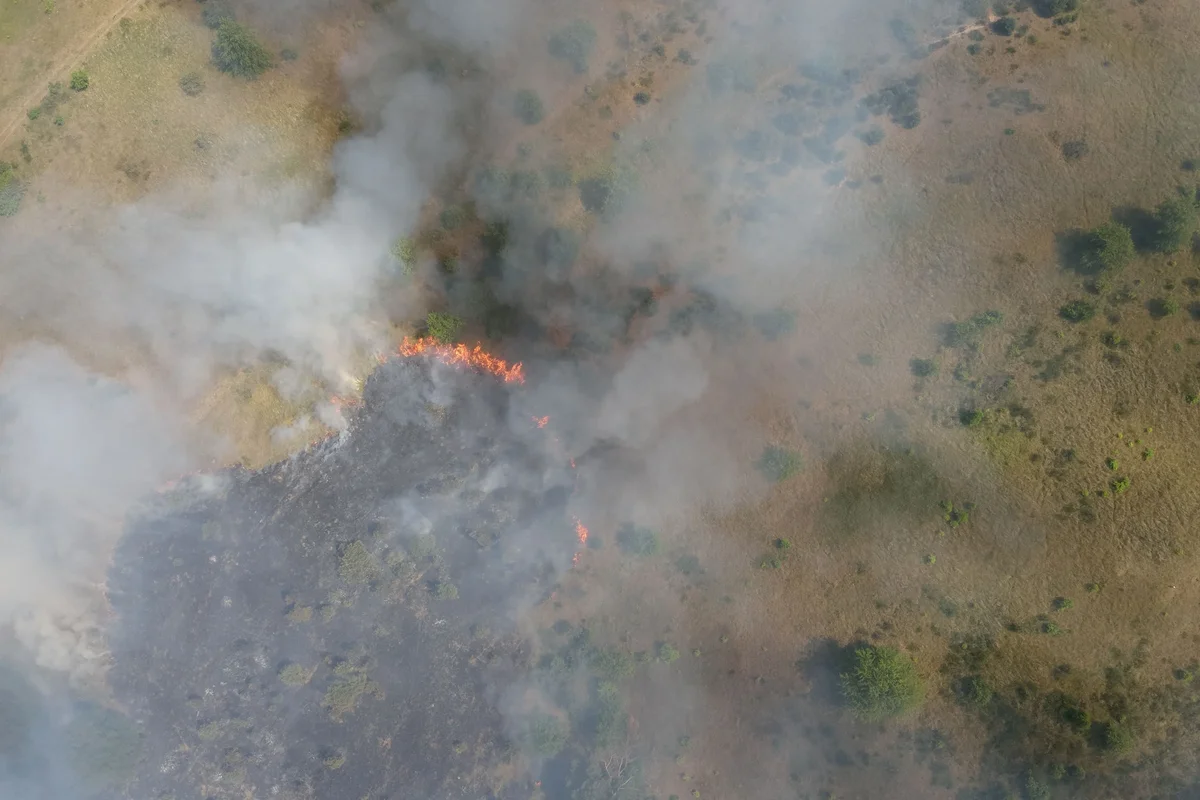
Imagine standing at the edge of a blazing forest, hose in hand, watching a wildfire consume hundreds of acres of pine and oak. You have the trucks. You have the water. You have the training. Yet, you cannot take a single step forward. You just have to sit back and watch it burn.
That's the terrifying reality facing emergency crews in Germany. When summer heatwaves strike the eastern and northern parts of the country, fires regularly break out in historic, heavily wooded zones. But these aren't normal forests. They are former military training grounds and Soviet tank ranges, packed to the brim with live, unexploded ammunition from World War II and the Cold War.
When a wildfire tears through these zones, the intense heat triggers a chain reaction of subterranean detonations. Firefighters don't just face smoke and flames; they face anti-tank grenades, artillery shells, and highly unstable phosphorus munitions buried right beneath their boots.
The 1000 Meter Danger Zone
When a major blaze ignites on a site like the former Soviet tank firing range in Müritz National Park or the notorious military grounds near Jüterbog, traditional firefighting tactics go right out the window.
Local authorities are forced to establish a strict 1,000-meter safety perimeter. That is over half a mile of mandatory distance. If a fire crew crosses that line, they risk stepping on a legacy mine or being caught in an explosion triggered by the heat of the fire.
Instead of moving in to smother the flames, more than 160 firefighters can do little more than cordon off the area. They park their rigs on safe, pre-cleared asphalt roads and spray water onto the edges of the surrounding forest, desperately hoping to contain the perimeter. It is purely defensive warfare. They wait for the interior to incinerate itself, listening to the muffled thuds of decades-old artillery cooking off in the distance.
Why Brandenburg and Mecklenburg Are Ticking Time Bombs
You might wonder why these areas are so prone to burning in the first place. The answer lies in a nasty combination of geology, botany, and military history.
Areas like Brandenburg—the state surrounding Berlin—and parts of Mecklenburg-Vorpommern feature incredibly sandy soil. This sand doesn't hold moisture well, meaning the ground dries out fast during a dry spell. Compounding the problem, these regions were heavily replanted with pine monocultures after the wars. Pine trees are highly resinous and burn like matchsticks.
When you layer that dry, resinous fuel over millions of tons of unexploded ordnance (UXO), you get a seasonal catastrophe. Brandenburg holds the grim title of being the most explosives-contaminated state in Germany. For decades, imperial German forces, Nazi divisions, and Soviet troops used these sprawling sandy expanses to test weapons and train tank crews. When the Soviet military packed up and left in the early 1990s, they left behind vast dumping grounds of live ammunition buried in the dirt.
Among the most dangerous remnants is white phosphorus ammunition. As it ages, the casing corrodes. If the dry summer heat dries out the soil and exposes the phosphorus to oxygen, it spontaneously ignites. The weapon literally lights itself, sparking a forest fire that cannot be safely approached.
High Tech and Bare Earth Defensive Tactics
Since humans cannot enter the hot zone, fire departments have to rely on alternative tactics to handle the crisis.
- Remote-Controlled Firefighting Robots: Heavy, tracked vehicles equipped with water cannons are steered by operators sitting safely miles away. These robots can trundle directly into the smoke, though a heavy anti-tank mine can still blow them to pieces.
- Armored Bulldozers: Specialized heavy machinery clears wide swaths of trees down to the bare earth, creating massive firebreaks to starve the blaze of fuel.
- Aviation Support: Police and military helicopters drop massive buckets of water from above, though changing winds and thick columns of smoke make low-altitude flights incredibly risky over a detonation zone.
Local communities are caught in the crosshairs of this historical nightmare. Smoke plumes from these blazes can often be seen for miles, prompting emergency apps to issue urgent warnings for locals to seal their windows, shut off ventilation systems, or prepare for immediate evacuation. To make matters more complicated, these summer fires often break out near massive public events, such as the famous Fusion music festival, putting local infrastructure and tens of thousands of visitors under immense strain.
What Needs to Happen Next
Resolving a crisis that has been buried in the dirt for eighty years requires structural, long-term action. Clearing these thousands of hectares of dense forest by hand is a financial and physical impossibility, but letting them burn unchecked every single summer is equally unsustainable.
If you live near or are traveling through these high-risk regions in eastern Germany during the dry summer months, there are immediate, practical steps to take:
- Monitor Official Alert Apps: Download and keep local warning apps like NINA or BIWAPP active on your phone. They provide immediate, localized updates on smoke direction, road closures, and evacuation orders.
- Respect Forest Closures: Do not venture off designated paths in any former military area or national park labeled as a Kampfmittelbelastet (munitions-contaminated) zone. The danger of stepping on old ordnance is real, even without a fire.
- Report Smoke Immediately: If you spot a plume of smoke anywhere near a known historic military site, call emergency services instantly. Minutes matter when trying to contain the perimeter before a fire slips deep into an inaccessible zone.