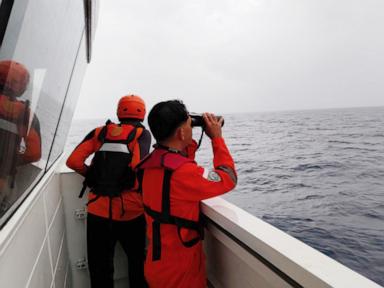
Clinging to a wooden fish trap in the middle of the open ocean for four straight days isn't just about survival. It's about luck. Pure, terrifying luck. That's exactly how five people, including a seven-year-old girl, managed to stay alive after the passenger boat KM Nurul Salsa went down in the rough waters of eastern Indonesia.
The ship experienced sudden engine failure and sank roughly 43 nautical miles from the port in the Selayar Islands. At least one woman is confirmed dead. While search teams managed to rescue 49 people immediately after the sinking and pulled five more out of the water days later, another 20 people are still missing.
This disaster highlights a massive, recurring issue that maritime authorities continue to ignore. The official manifest listed just 50 people on board. The reality? There were at least 78 passengers and crew crammed onto that vessel, alongside a heavy cargo of copra, cattle, and motorcycles. If you trust the official paperwork on an Indonesian passenger vessel, you're buying into a dangerous myth.
The Deadly Reality of Phantom Passenger Counts
When the KM Nurul Salsa left Jampea Island, the paperwork said one thing, but the deck showed another. This discrepancy isn't an isolated incident. It's standard operating procedure across the archipelago.
Local operators regularly pad their profits by taking on unregistered passengers and extra cargo right before departure. For the families waiting at the port in Benteng town, this practice turns a tragedy into an administrative nightmare. If the coast guard doesn't even know exactly who was on board, knowing when to stop looking becomes an impossible guessing game.
Muhammad Arif Anwar, head of the Makassar Search and Rescue Office, noted that the search teams are fighting waves reaching up to 2.5 meters high and biting winds. Trying to spot a human head bobbing in those conditions is hard enough when you have accurate numbers. When you're hunting for ghosts missing from a paper ledger, it's downright impossible.
Why Maritime Safety Rules Don't Stick
Indonesia consists of more than 17,000 islands. Boats aren't a luxury here. They're the equivalent of a public bus system. Because millions rely on these vessels for daily transit, the pressure to keep them moving overrides basic safety protocols.
You can blame the lack of enforcement on a few specific systemic failures.
- Corrupted Manifest Data: Port officials frequently look the other way when extra passengers board, or they simply fail to check the physical vessel against the logbook.
- Mixed Cargo Hazards: Combining heavy livestock, motorbikes, and loose agricultural goods like copra with human passengers creates massive stability issues if the ship loses power.
- Economic Survival Over Safety: Small-scale operators run on razor-thin margins. Turning away paying passengers because of a legal limit means losing money they desperately need.
When the engine failed on the KM Nurul Salsa, the crew couldn't fix it. The ship became a floating brick, entirely at the mercy of the sea. Without power to steer into the waves, a heavily overloaded boat will capsize rapidly.
The Miracle on the Fish Trap
The five survivors—one man and four women—were finally spotted by a passing fishing vessel near Matallang Island just before darkness fell. They didn't have high-tech life rafts or emergency beacons. They found a local fisherman's fish aggregating device, essentially a floating trap, and held on for ninety-six hours.
While their survival is miraculous, relying on floating debris shouldn't be the backup plan for maritime transit. The Indonesian Navy has deployed vessels to scale up the search area, but time is running out for the remaining 20 individuals.
If you're traveling through the Indonesian archipelago, don't assume the vessel you're boarding matches the safety standards of international cruise lines. Look at the waterline. If the boat looks low in the water or packed to the gills with motorbikes and cargo, don't get on. Your life shouldn't depend on finding a stray fish trap in the middle of the ocean.