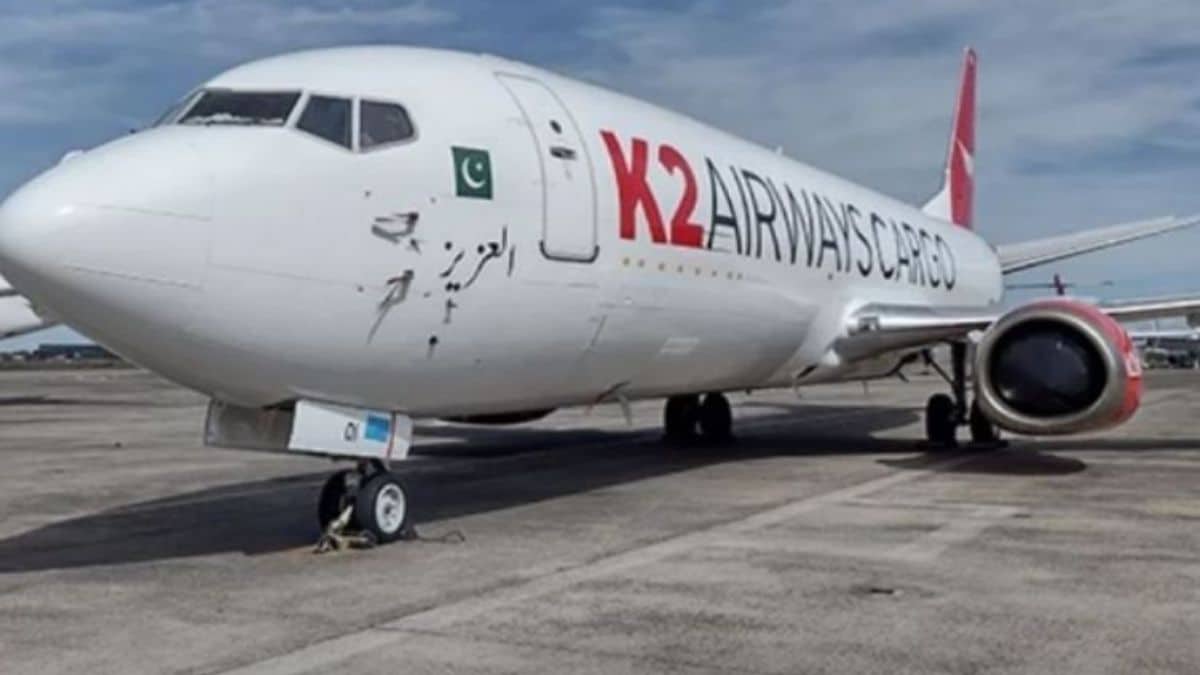
A cargo aircraft vanished into thin air on Tuesday night. It didn't just fade off the radar screens. It went through a series of violent, terrifying maneuvers that have left investigators baffled.
The plane, a 27-year-old Boeing 737-400 freighter operated by Karachi-based K2 Airways, was cruising from Sharjah to Karachi with five crew members on board. Everything seemed normal until the flight approached Pakistani airspace. Then, chaos hit the cockpit.
What followed was a sequence of extreme altitude changes that defy normal flight physics.
The Last Three Minutes of Flight AP BOI
At 9:18 pm Pakistan Standard Time, the crew contacted the Karachi Area Control Centre. They reported a critical navigational system problem. Air traffic controllers immediately jumped in to guide the aircraft manually.
It was too late.
Within three minutes, the situation deteriorated completely. At 9:21 pm, radar screens showed the plane making a sharp, erratic change in heading. Then came a terrifying plunge.
According to flight-tracking data from Flightradar24, the aircraft experienced an initial drop of 5,000 feet in less than 60 seconds. Suddenly, it rocketed back up, climbing nearly 6,000 feet in just 30 seconds. This wasn't a standard pilot maneuver. It indicates a severe struggle for control, either against failing mechanical components or erratic autopilot inputs.
After that brief, desperate climb to 36,550 feet, the aircraft entered a catastrophic, near-vertical dive.
The final telemetry broadcast from the aircraft placed it at just 1,100 feet above the sea. It was screaming toward the water at a vertical rate of minus 22,400 feet per minute. To put that in perspective, a standard emergency descent is usually around 4,000 to 5,000 feet per minute. A rate of 22,400 feet per minute means the plane hit the water at roughly 400 kilometers per hour.
Radar contact snapped. The plane went dark approximately 287 kilometers west of Karachi, near the coastal town of Ormara.
The GNSS Interference Factor
Aviation experts are looking closely at what happened earlier in the flight. Shortly after taking off from Sharjah, the Boeing 737 experienced Global Navigation Satellite System (GNSS) interference.
This wasn't an isolated event. Several other aircraft in the region reported degraded satellite navigation data near the United Arab Emirates at the same time.
For a brief period, the tracking data went fuzzy. Once the aircraft exited the interference zone, its Automatic Dependent Surveillance-Broadcast (ADS-B) signals cleared up. Flightradar24 picked up the data again.
Did the early satellite blackout mess with the plane's internal inertial reference systems? It's highly possible. When GPS signals are jammed or spoofed, flight computers can become confused, feeding bad data to the pilots and the autopilot. If the crew tried to correct a perceived error based on faulty instruments, they might have inadvertently pushed the plane into a fatal dive.
Aviation safety consultant Anthony Brickhouse urged caution, noting that extreme data points require deep verification, but admitted the flight profile is highly abnormal. Aerospace experts point out that even if both engines fail, a Boeing 737 doesn't just plummet. It glides. A drop rate this severe points to structural failure, catastrophic control surface malfunction, or total spatial disorientation by the crew.
The Tragic Reality of the Fleet
K2 Airways is a small private cargo outfit established in 2018. Here is the kicker: this Boeing 737-400, registered as AP-BOI, was the only aircraft in their entire fleet.
The plane itself has a long history. It started life back in 1999 as a passenger jet for Russia’s Aeroflot. It later moved to Garuda Indonesia, and in 2012, it was stripped out and converted into a freighter. From there, it flew for European cargo carriers like TNT Airways and ASL Airlines.
Before K2 Airways brought it into service in late 2024, the airframe sat in storage for nearly ten months in France and another six months in Karachi. Interestingly, flight logs show the plane had not been flown since June 28, sitting idle for over a week before this ill-fated Tuesday flight.
Massive Search Operations and Next Steps
The Pakistan Airports Authority immediately activated its Rescue Coordination Centre. A massive multi-agency search operation is currently scouring the Arabian Sea.
The Pakistan Navy deployed the frigate PNS Zulfiqar to the last known coordinates. Air support is active, with the Air Force sending out search planes alongside a Navy ATR surveillance aircraft operating out of Turbat. Even commercial shipping lines are involved, with a merchant vessel from the Pakistan National Shipping Corporation diverted to look for floating debris.
So far, no wreckage has been spotted, and the five crew members remain missing. The Bureau of Air Safety Investigation has already opened a formal probe, but they can't do much until they find the debris field.
If you are tracking maritime or aviation safety updates in the region, monitor official releases from the Pakistan Civil Aviation Authority. Avoid speculative tracking maps on social media, as false debris reports often clutter the narrative during the first 48 hours of an ocean recovery effort. Keep an eye out for the recovery of the flight data recorder and cockpit voice recorder, which hold the only real answers to those final, chaotic three minutes.