Your teen is sitting on the couch, phone in hand, talking to an AI chatbot. It looks like homework help, maybe a bit of casual gaming research. But what happens when that conversation shifts to "How do I deal with feeling hopeless?" or darker questions about self-harm?
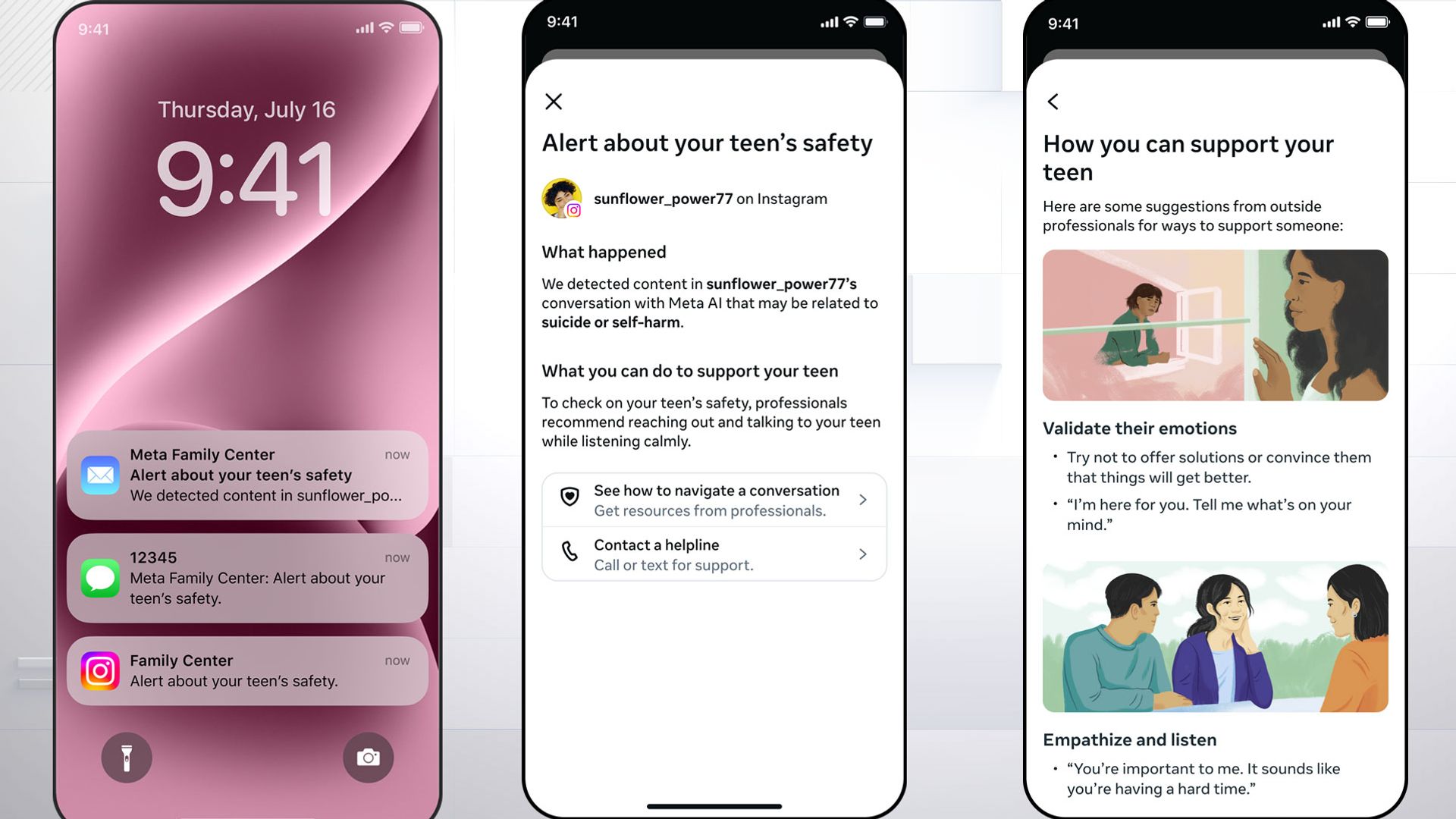
Meta—the parent company behind Instagram and Facebook—has officially rolled out a new safety feature designed to bridge the gap between digital interaction and real-world parental support. If your child’s conversation with Meta AI touches on suicide or self-harm, you may now receive a direct alert.
This isn't just about automated keyword flagging. It's a complex, human-vetted system meant to prevent silent crises. Here is exactly how it works, what triggers it, and why experts are still debating its effectiveness.
How the Meta AI Parental Alert System Works
You won't get a notification for every conversation your teen has. Meta has built a tiered safety architecture to balance user privacy with the urgent need for intervention. The system relies on three specific layers before a parent ever sees a notification.
1. Dedicated AI Detection
Meta has implemented a specialized model trained specifically to identify subtle and explicit language related to self-harm and suicidal ideation. This system doesn't just look for "keywords"; it analyzes intent. It’s designed to pick up on phrases that might be masked as academic curiosity or casual venting.
2. Mandatory Human Review
This is the most critical distinction between this tool and other automated filters. Meta explicitly states that every flagged conversation is reviewed by a human moderator before an alert is dispatched. This reduces "false positives"—instances where a teen might be researching a health topic for school or discussing a character in a book—from causing unnecessary parental panic.
3. The "Caution Principle"
Meta has admitted that if a teen’s intent remains ambiguous after review, they will "err on the side of caution." This means you might receive an alert even if the situation isn't an immediate emergency. The goal is to act as an early warning system, giving you the chance to open a dialogue before a situation escalates.
What Parents See (And Don’t See)
One of the most common misconceptions is that this feature grants you full access to your child’s private chat logs. It does not.
When an alert triggers, you receive a notification via your connected Instagram Parental Supervision account. This will arrive as an in-app notification, email, or text, depending on your settings. You will be provided with:
- Context: A notification that your teen discussed a sensitive topic.
- Resources: Expert-developed guides on how to approach the conversation with your child.
Crucially, you won’t see the raw transcript. Meta intentionally limits this access to protect the teen’s sense of privacy and autonomy. They argue that seeing the exact words can lead to accusatory parenting styles, whereas receiving a "heads-up" encourages a more supportive, open-ended check-in.
Why Teens Use AI for Sensitive Topics
If you receive an alert, don't panic. Data from Meta and independent safety researchers suggest that teens interact with AI about mental health for varied reasons, many of which are non-crisis related:
- Curiosity: Researching mental health topics for school or general knowledge.
- Support Seeking: Trying to figure out how to help a friend who is struggling.
- Emotional Processing: Using the AI as a "judgment-free" sounding board for overwhelming feelings.
- Testing Boundaries: Sometimes, teens treat the AI like a game, using shock language to see how the bot reacts.
Treating every notification as a mental health crisis is a mistake. Approach the information as a signal that your child is thinking about heavy topics and needs a safe space to talk to a human, not a machine.
Existing Limitations and Criticisms
While Meta is positioning this as a proactive safety move, child advocacy groups—including organizations like Fairplay—have been vocal in their skepticism. The core argument? This feature places the burden of monitoring on the parent rather than making the product itself inherently safe.
Critics point out several gaps:
- Opt-in Requirement: These alerts only work if you have already set up Instagram’s Parental Supervision tools. If you haven't linked your account to your teen’s, you won't receive anything.
- Platform Fragmentation: These features are rolling out by region (starting in the US, UK, Canada, and Australia) and are not yet global.
- The "Workaround" Problem: Tech-savvy teens can easily switch to other third-party chatbots that lack these safety guardrails.
Practical Steps for Parents Right Now
If you want to ensure your teen is protected, you have to move beyond passive observation. Follow this sequence to tighten your family’s digital safety net.
1. Enable Supervision Tools
Go to your Instagram Settings > Supervision and send an invitation to your teen’s account. This is the "master switch" for all safety features, including these new AI alerts and "Limited Content" settings.
2. Set "Limited Content" Mode
Ensure the "Limited Content" setting is toggled on for your teen’s account. This forces Meta AI to use its strictest filters, making the chatbot decline a much wider range of inappropriate or potentially harmful prompts automatically.
3. Have the "Before-You-Need-It" Talk
Don't wait for an alert to talk about AI. Ask your teen: "Have you ever asked an AI questions you wouldn't ask me?" Listen without judgment. Remind them that while AI can be a helpful tool for summaries or brainstorming, it is not a therapist, a doctor, or a crisis counselor.
4. Know Where to Find Real Help
If your child expresses genuine distress, bypass the technology entirely. Keep local crisis numbers or the 988 Suicide & Crisis Lifeline (in the US) saved in your phone and ensure your teen knows they are available 24/7 if they ever feel overwhelmed.
Technology can provide a safety net, but it is not a replacement for parental connection. Use the alerts as a prompt to listen, not to police.