Big money is rewriting the rules of primary elections, and nowhere is that clearer than in Michigan. If you want to understand how modern political campaigns actually work, you have to look at the jaw-dropping sums flooding the race to replace retiring Senator Gary Peters. The American Israel Public Affairs Committee, better known as AIPAC, is leading a record-breaking financial blitz. Along with its affiliated groups, the organization has channeled close to $30 million into the state's Democratic primary.
This isn't just about a single seat in Congress. It's a high-stakes proxy war over the soul and direction of the Democratic Party coalition.
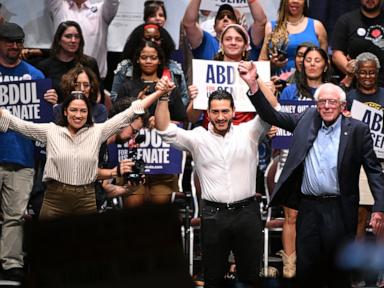
On one side is Representative Haley Stevens, a four-term lawmaker backed by millions of dollars in establishment support. On the other is Dr. Abdul El-Sayed, a progressive favorite and former Detroit health director backed by grassroots organizers, the United Autoworkers, and Senator Bernie Sanders. The financial mismatch is staggering, and it raises a critical question. Can grassroots organizing still beat an absolute avalanche of cash?
The Staggering Mechanics of a Thirty Million Dollar Primary
When you look closely at the numbers from recent federal disclosures, the scale of outside spending becomes clear. The top spender in this primary is the United Democracy Project, a super PAC closely tied to AIPAC. They've already dropped nearly $15 million directly into the state.
The spending split shows exactly how modern negative campaigning operates. The United Democracy Project used $9.3 million to boost Stevens with positive messaging. They directed another $5.7 million toward attack ads designed to sink El-Sayed.
That's just one piece of the puzzle. Another super PAC named A Stronger Michigan poured over $12 million into the race to lift Stevens. Because of how campaign finance laws function, groups like this can raise unlimited cash from wealthy donors and blanket the airwaves without the candidate ever having to coordinate directly.
Total outside spending in the Democratic contest has crossed $41 million. To put that in perspective, Stevens spent roughly $1 million from her actual campaign account on advertising. Her outside backers outspent her own campaign fifty to one.
Why the Ads Never Mention Israel
Walk into any living room in Detroit or Grand Rapids, turn on the television, and you'll see a constant stream of political ads. You'd think these ads would focus heavily on foreign policy given the main source of the funding. They don't.
Former Representative Andy Levin points out this specific strategy. Levin lost a brutal 2022 primary to Stevens after redistricting forced them into the same district. AIPAC spent millions to defeat Levin, who is Jewish but held critical views on Israeli government policy.
Levin notes that these groups never run ads focused on their primary mission. They don't talk about international relations or Middle Eastern policy. Instead, the commercials show images of former President Barack Obama or praise Stevens for her work on local manufacturing.
It's a clever tactic. The goal is to maximize appeal to average primary voters who care about inflation, local jobs, and standard party platform issues. Most voters watching these slickly produced television spots have absolutely no idea who is actually footing the bill.
The Ideological Fracture Inside the Democratic Party
The massive influx of cash highlights deep internal friction over how the party approaches international conflicts and campaign finance. El-Sayed has turned this financial onslaught into the central pillar of his campaign message. He frequently tells voters that the race represents a fundamental choice between people power and corporate-backed interests.
At recent rallies alongside Bernie Sanders, the messaging has been blunt. Sanders openly criticized the dependency on billionaire donors, arguing that candidates shouldn't effectively serve as employees for ultra-wealthy political action committees.
Stevens rejects that narrative completely. During a high-profile debate at the Mackinac Policy Conference, she pushed back firmly against the idea that outside money dictates her choices. She insisted that her support comes from her legislative record representing Michigan families. She maintains that no donor owns her vote or influences her policy stances.
Tracking the Strategy Shifts and Public Record Contradictions
Running a massive political operation across multiple states often leads to strange political contradictions. Political analysts tracking these groups have noticed a glaring double standard in recent ad campaigns.
Earlier this year, the United Democracy Project spent over $2 million attacking former Representative Tom Malinowski during a special election in New Jersey. The attack ads slammed Malinowski for voting to fund Immigration and Customs Enforcement (ICE) as part of a bipartisan border package, claiming he couldn't be trusted.
Yet in Michigan, the exact same super PAC launched a 30-second ad praising Stevens for standing up to previous administration border policies. The paradox? Stevens voted for the exact same ICE funding bill that the group used to attack Malinowski.
This proves that policy consistency isn't the primary driver behind these spending decisions. The underlying goal is securing victories for reliable allies and defeating structural critics, regardless of the specific legislative pretexts used in local television markets.
What This Massive Financial Surge Means for Future Primaries
The outcome of the Michigan vote will send shockwaves through the entire political system. If Stevens wins handily, it will reinforce the belief that massive outside spending can reliably insulate establishment candidates from progressive primary challenges. It will signal to wealthy donors that their strategy of massive, early spending remains highly effective.
If El-Sayed pulls off an upset, it will demonstrate a clear limit to the power of saturation advertising. It would prove that deep ties to organized labor, intense grassroots ground games, and local door-knocking operations can still overcome a thirty-to-one spending disadvantage.
Watch the final campaign finance filings in the closing days of the primary. Pay attention to the percentage of positive versus negative ad buys on your local networks. Talk to your neighbors about whether they know who funds the ads filling their commercial breaks. The real power in politics belongs to voters who look past the glossy television ads to see exactly who is paying for the message.