The numbers coming out of the eastern Democratic Republic of the Congo don't make sense to people who think we figured out how to handle Ebola years ago. We have vaccines now. We have treatments. Yet, the current outbreak has claimed at least 930 lives out of 2,344 confirmed cases since it was declared on May 15. A single 24-hour window recently saw 37 deaths.
If you think this is just another routine flare-up, you're missing the real story. This is the fastest-growing Ebola outbreak on record. The global health community isn't just dealing with a dangerous pathogen. They are running blind against a specific, rare strain that has no approved vaccine, operating in a war zone where health workers are striking because they aren't getting paid. In similar updates, read about: Why Australia Pulled Its Only Rapid At Home Sti Test Off Store Shelves.
The World Health Organization dropped a terrifying detail recently. They admitted that roughly 80% of newly confirmed Ebola cases are coming from completely unknown transmission chains. That means health officials have no idea who infected four out of every five new patients. The virus is moving silently through communities, always three steps ahead of the people trying to stop it.
The Nightmare Variant We Canted Vaccinate Against
Most people assume the vaccines used in previous African outbreaks will work here. They won't. Everyday Health has provided coverage on this critical issue in great detail.
Past crises largely involved the Zaire strain of the virus. Scientists built highly effective countermeasures for that specific variant, including the Ervebo vaccine. This current disaster is driven by the Bundibugyo strain. It's a less common version of the virus, first identified in Uganda back in 2007. Because it doesn't pop up as frequently, pharmaceutical development stalled.
Right now, there is zero approved vaccine or therapeutic treatment for Bundibugyo.
When a patient shows up at a treatment center in the Ituri province, doctors can't give them a silver-bullet antiviral drug. They rely entirely on supportive care. They give intravenous fluids, manage pain, and treat secondary infections. It’s a brutal, basic fight for survival. The virus works by hijacking the body's endothelial cells, destroying the lining of blood vessels, and causing massive internal and external bleeding. Without targeted medical tools, the patient’s own immune system has to do all the heavy lifting.
The Ghost Trails of Unknown Transmission
In epidemiological terms, contact tracing is everything. When someone tests positive, a team interviews them to find everyone they stood near, talked to, or touched over the previous three weeks. Those contacts are monitored daily. If they get a fever, they are isolated immediately. This breaks the chain.
That system has completely broken down in eastern Congo.
With 80% of cases appearing out of nowhere, the virus has achieved a state of community transmission that renders standard containment models useless. People are getting sick without any conscious history of meeting an Ebola patient. This happens because early symptoms look exactly like malaria, typhoid, or basic influenza. A person gets a headache, runs a fever, and feels joint pain. They go to a local pharmacy or a traditional healer. They ride in a crowded motorbike taxi. By the time they start vomiting or bleeding, they have exposed dozens of strangers who can't be tracked down.
The official count sits at 2,344 cases, but that number is almost certainly an underestimate. Many individuals are dying in remote villages without ever seeing a doctor. Their families bury them secretly, passing the highly infectious bodily fluids to mourners during traditional washing rituals. The virus spreads to new households before the local health zone even registers a single red flag.
Striking Doctors and Rebel Violence
You can’t fight a biological threat when the ground beneath your feet is exploding. Eastern Congo has suffered through decades of armed conflict involving dozens of rebel groups. The Ituri province, which sits at the center of this outbreak, is a flashpoint for militia violence.
Security fears actively prevent health teams from entering specific neighborhoods to track cases or safely bury the dead. If an ambulance can't drive down a road because an armed group controls the checkpoint, the virus wins that territory.
Local health teams face violence from the very communities they want to protect. At least 12 targeted attacks have hit health facilities and medical teams since mid-May. Rumors and deep-seated skepticism fuel these assaults. When a community sees foreign organizations arrive in white trucks and protective suits, taking away their sick relatives who often never return, fear turns into rage. People start believing the medical centers are actually creating or spreading the disease to make money.
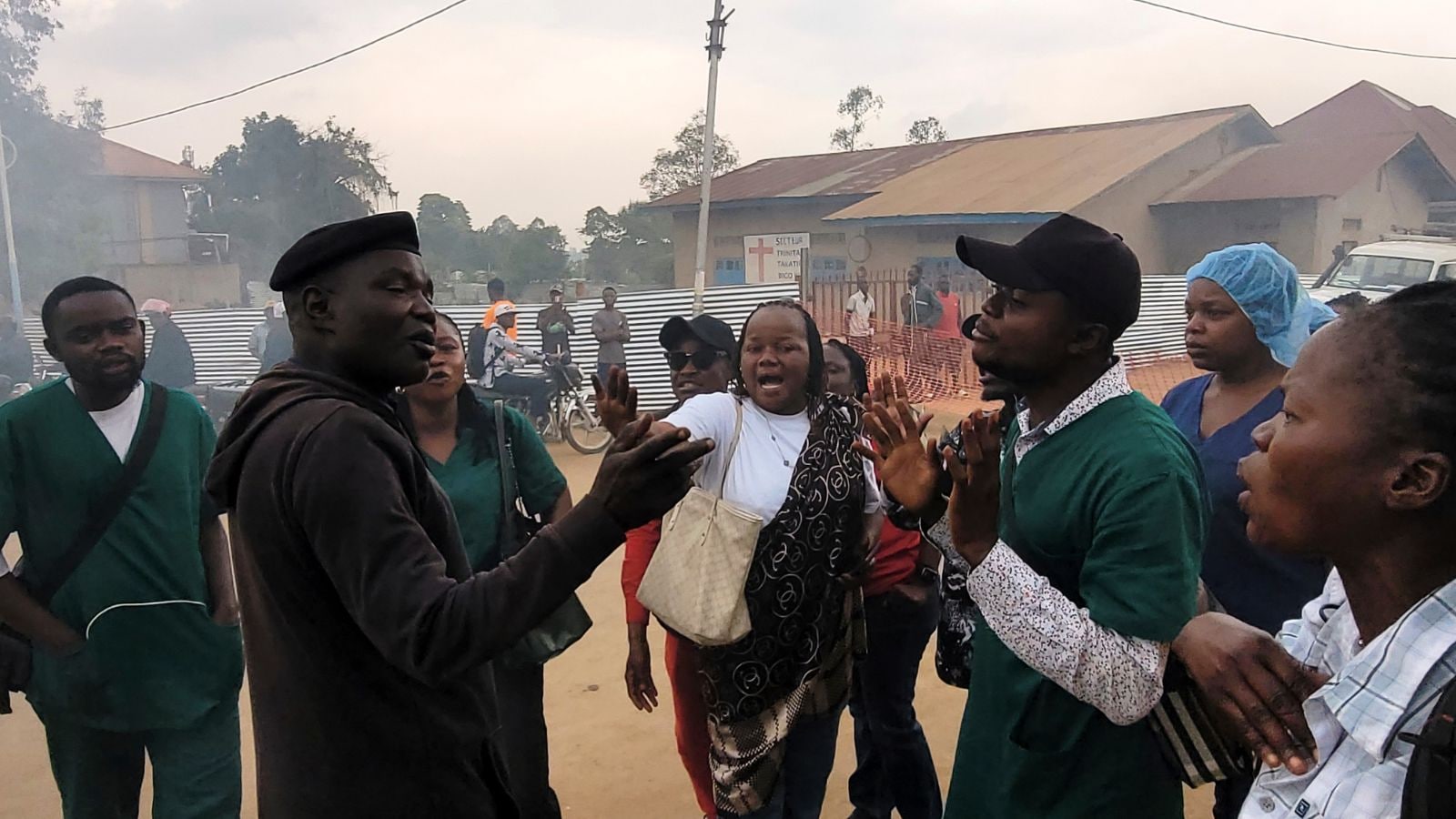
The defense line is breaking from within as well. Local healthcare workers have walked off the job to protest a total lack of payment. These men and women are risking their lives daily. At least 36 health workers have contracted the virus and died during this outbreak. Asking people to face a lethal pathogen with no vaccine while their families starve because the government isn't paying salaries is an impossible situation. When workers strike, isolation wards go understaffed, cleaning protocols slip, and the hospital itself becomes a transmission hub.
What Needs to Happen Right Now
Defeating this outbreak requires changing the strategy completely. Traditional containment methods are failing.
- Pay the local frontline workers immediately. External funding from international bodies must bypass bureaucratic bottlenecks and go directly into the hands of the nurses, doctors, and burial teams on the ground. You cannot stop a virus with a demoralized, unpaid workforce.
- Deploy rapid clinical trials for Bundibugyo candidates. While there is no approved vaccine, several experimental candidates exist in laboratory storage. Regulatory bodies must expedite emergency protocols to run ring-vaccination trials in affected health zones, offering at least some protection to high-risk individuals.
- Shift communication from massive agencies to local trusted figures. Aggressive public health campaigns run by outsiders often trigger defensive reactions. Training local religious leaders, elders, and market heads to explain symptom tracking and safe burial practices yields better compliance than armed escorts.
- Establish secure green corridors for medical transit. International peacekeepers and local authorities must prioritize securing roads specifically for epidemiological tracking teams, ensuring that the 724 patients currently in isolation continue to receive food and basic medical supplies.