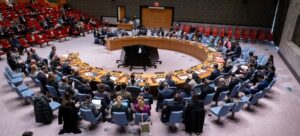
The race to replace António Guterres as United Nations Secretary-General in late 2026 is hurtling toward a predictable historic milestone. For the first time in 81 years, the world body is practically guaranteed to elect a woman. High-profile contenders like Michelle Bachelet, Rebeca Grynspan, and María Fernanda Espinosa have stepped forward, presenting bold vision statements to the General Assembly.
But let's be totally honest. Checking a diversity box won't fix an institution that's actively bleeding relevance.
If the next Secretary-General focuses solely on the historic nature of her appointment while ignoring the rot of backroom deals, she isn't shattering a glass ceiling. She's just stepping onto a glass cliff. The real crisis at the UN isn't just about who sits in the top office on the 38th floor. It's about the toxic culture of patronage, horse-trading, and national entitlement that paralyzes the global body from the inside out.
The Secret Deals Suffocating Global Governance
Right now, the UN selection process is less about finding the best global leader and more about satisfying the whims of the Permanent Five (P5) veto powers: the US, China, Russia, the UK, and France.
Historically, these superpowers treat top UN jobs like pieces on a diplomatic chessboard. The Security Council holds closed-door "straw polls." Superpowers barter their support in exchange for control over key departments.
This horse-trading has devastating consequences down the line. We see it every time a major country demands that its own citizen lead a specific UN agency as a condition for funding or political backing. When leadership roles are handed out as political favors rather than based on merit, competence flies out the window.
The result? A massive, risk-averse bureaucracy filled with leaders who answer to their home capitals instead of the UN Charter.
Beyond the First Female Secretary-General
Appointing a woman to lead the UN is decades overdue. However, academic research in social psychology warns about a phenomenon called the glass cliff.
The glass cliff is a pattern where women are finally given leadership roles precisely when an organization is facing an acute institutional crisis, making failure highly likely.
Look at the current state of the UN:
- The Security Council is completely paralyzed by geopolitical rivalries over conflicts in Europe and the Middle East.
- A severe financial crisis is worsening because member states refuse to pay their annual budget dues on time.
- Public trust is tanking as the gap between what the UN promises and what it actually delivers widens into a canyon.
If the next Secretary-General takes office without dismantling the patronage system, she'll inherit all the blame for an unmanageable system without any actual leverage to fix it. True transformation requires breaking the unwritten rules that keep the UN beholden to powerful states.
The Playbook for Real Reform
To avoid the glass cliff and bring the UN back to relevance, the incoming leader needs to pivot away from quiet diplomacy and implement hard institutional changes immediately.
Mandate Merit Over Nationality
The next leader must flatly reject the unwritten rule that certain powerful nations have a permanent monopoly on specific top-tier UN positions. Appointing under-secretaries-general based on strict competence, rather than national origin, will send a shockwave through the system and immediately boost organizational trust.
Call Out Budget Delinquency Publicly
Quietly asking member states to pay their bills isn't working. The new Secretary-General needs to use the moral authority of the office to publicly name and shame wealthy nations that withhold their financial contributions to extract political concessions.
Reclaim the Role of Global Advocate
The UN Charter didn't design the Secretary-General to be a passive administrator or a glorified clerk. The office demands a political advocate willing to take massive risks. That means setting up independent conflict-prevention hubs and using Article 99 of the UN Charter to force the Security Council to address bubbling crises before they turn into full-scale wars.
The world doesn't need another cautious steward who prioritizes a smooth second term over real action. Breaking the glass ceiling is just the starting line. True victory lies in building a United Nations that can actually stand up to the world's most powerful nations and deliver on its promises.