Imagine stepping onto an airplane at London Heathrow and not stepping off until your feet touch the tarmac in Sydney, Australia. No sprinting through Changi Airport in Singapore during a tight 90-minute connection. No wandering around Dubai at 3 a.m. in a daze. Just one massive, uninterrupted leap across more than 17,000 kilometers of airspace.
This is the reality Qantas is chasing with Project Sunrise, its highly publicized plan to launch the world's longest nonstop commercial flights.
But let's be entirely honest here. Spending up to 22 hours trapped inside a pressurized metal tube flying at 35,000 feet sounds less like a luxury travel upgrade and more like a grueling psychological experiment.
While the aviation world obsesses over the sheer engineering feat, the real hurdles aren't just technical. They are intensely human. Qantas isn't just trying to beat the clock. They are fighting deep-vein thrombosis, extreme jet lag, and basic human cabin fever.
The Relentless Delays of Project Sunrise
If you've been tracking this project, you know it has been a moving target. Qantas originally aimed to have these flights active by late 2025. Then the timeline slipped to 2026.
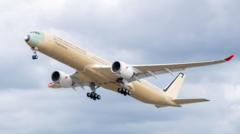
Now, Airbus has pushed things back again. Due to persistent aerospace supply chain bottlenecks and delays from part manufacturers, the first highly modified Airbus A350-1000ULR (Ultra Long Range) jet won't actually join the Qantas fleet until April 2027.
The airline insists that once that first plane arrives, the next four will follow in rapid succession, aiming to get back to a daily flight schedule by late 2027. But for eager travelers, the waiting game continues.
The Physics of Flying 22 Hours Nonstop
You can't just take a standard commercial jet, fill it with extra gas, and point it toward the other side of the planet. The physics simply won't allow it.
A standard Airbus A350-1000 is a mass people-mover built to hold somewhere between 350 and 410 passengers. If you packed that many people, their luggage, and the massive amount of fuel required to fly 22 hours into the air, the plane would be too heavy to safely take off.
To solve the weight equation, Airbus had to make heavy structural updates. They are installing an additional 20,000-liter fuel tank directly into the belly of the plane. To offset that immense weight, the cabin layout is being aggressively stripped back.
The Project Sunrise jets will carry a maximum of just 238 passengers. That is a massive reduction in density, meaning more than a hundred seats have been wiped off the map entirely.
Inside the Flight Living Room
Because Qantas is slashing the passenger count, the economics of this flight change drastically. This isn't a flight meant for casual budget backpackers. It is an elite, premium-heavy gamble.
Over 40 percent of the plane is dedicated to high-end real estate.
- First Class: Just six massive, private suites arranged in a spacious 1-1-1 configuration, featuring a flat bed and a separate reclining armchair.
- Business Class: 52 private suites with direct aisle access.
- Premium Economy: 40 seats with generous legroom.
- Economy: 140 seats, which sounds decent until you realize you're still in coach for nearly a full day.
For the folks sitting in the back, sitting completely still for 22 hours is a medical hazard. To prevent passengers' bodies from locking up, Qantas is introducing a dedicated "Wellbeing Zone" positioned between premium economy and the regular economy section.
This isn't a bar or a social lounge. It is a functional physical space featuring integrated handles for stretching, custom floor mats to ease joint pressure, and screens displaying guided stretching routines.
The Mental Grind of Eternal Daylight
The psychological toll of ultra-long-haul travel is something airlines are scrambling to figure out. When you cross up to ten time zones in a single flight, your internal circadian rhythm gets completely wrecked.
Qantas has been working closely with scientists at the University of Sydney’s Charles Perkins Centre to turn the cabin into a highly controlled environment. The entire flight is a calculated script.
The cabin lighting will use custom, high-definition LED scenes that mimic prolonged sunrises and sunsets, artificially forcing your body to adapt to Sydney or London time long before you land. Even the food menus are timed around sleep windows rather than traditional meal hours, utilizing specific ingredients designed to either stimulate alertness or promote deep rest.
Is the Time Saved Worth the Price?
Currently, a one-stop flight from London to Sydney takes roughly 24 to 25 hours depending on where you lay over. Project Sunrise will cut that down to roughly 19 to 21 hours depending on prevailing winds.
You're saving four to five hours.
Is skipping the stopover worth the premium price tag Qantas will inevitably charge? For corporate travelers and high-net-worth individuals, the answer is usually yes. Time is money. But for the average passenger, a mid-way stretch in Singapore's airport might actually be the healthier, more sane option.
If you are planning an ultra-long-haul trip before these direct flights launch, focus on maximizing your current transit comfort. Book layovers that are at least three hours long to give yourself a real buffer against delays, and map out airport lounges that offer shower facilities to reset your body clock during the journey.