Donald Trump just put Iran on notice with a signature, caps-locked social media warning. He claims 1,000 U.S. missiles are locked, loaded, and aimed directly at the Islamic Republic. It sounds like classic campaign-style bluster, but don't brush this off as simple posturing. The reality on the ground is far more dangerous. We are watching an uneasy ceasefire collapse in real time, and the latest spark came directly from a highly charged, state-sponsored funeral.
The immediate trigger for Trump's fury was the massive, multi-city funeral procession for Iran's former Supreme Leader, Ayatollah Ali Khamenei. Khamenei was killed months ago on February 28 in a devastating U.S.-Israeli airstrike that kicked off this current round of warfare. When Iran finally buried him this week, the ceremonies weren't just about mourning. They were a raw, highly orchestrated display of fury. Crowds held massive English-language banners reading "We will kill Trump" and "Kill Trump – $100 Million Iranian Bounty." Effigies of the American president were publicly hanged. Stones were hurled at his image.
Trump took to Truth Social to respond directly to those assassination threats. He warned that if Iran makes a move, the U.S. military will completely decimate all areas of the country. He even tacked on a controversial phrase, writing "- PRAISE BE TO ALLAH!" in a move that civil rights groups have slammed as deranged mocking.
But if you look past the loud internet rhetoric, the real crisis isn't just about mean signs at a funeral. It is about a vital trade route, rogue military factions, and a nuclear countdown that is rapidly running out of time.
The Battle for the Strait of Hormuz
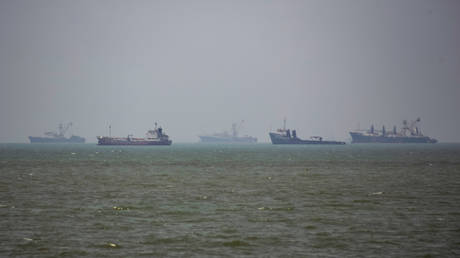
The real shooting war is happening over water. For decades, the international community treated the Strait of Hormuz as a shared global highway. Roughly a fifth of the world's traded oil and natural gas moves through this narrow choke point. If it closes, global energy markets choke.
Lately, Tehran decided to upend decades of international maritime law. They want total control. Iranian officials announced that any activity in the strait, including demining operations or clearing paths, rests exclusively with Iran. Even worse for global shipping companies, Iran is now demanding that vessels pay direct fees to Tehran just to pass through.
The U.S. countered by telling global mariners to take a southern route through Oman's territorial waters instead. That bypass bypassed Iranian authority completely, infuriating the Islamic Revolutionary Guard Corps (IRGC). Iran retaliated by attacking three commercial ships in the strait.
That brought a swift U.S. response. American forces launched days of heavy airstrikes targeting Iranian military installations. Iran fired back, launching retaliatory strikes against various nations across the Middle East. The fragile interim truce that both sides had been pretending to honor is officially in tatters. Trump himself announced that the ceasefire is over.
A Fractured Tehran and Rogue Hardliners
One of the biggest mistakes Western observers make is treating the Iranian government as a single, unified entity. It isn't. Right now, a vicious internal power struggle is ripping through Tehran, making it nearly impossible for anyone to negotiate a lasting peace deal.
Senior U.S. officials admit that a rogue faction of Iranian hardliners is actively trying to sabotage any diplomatic tracks. These hardliners don't want peace with Washington. They proved it during the funeral ceremonies. When Iranian President Masoud Pezeshkian and Foreign Minister Abbas Araghchi appeared at the procession, the crowd didn't cheer them. Instead, hardline loyalists heckled them, hurled insults, and threw stones at the diplomats. They view their own government leadership as weak and insufficiently committed to the war.
If the Iranian president can't even attend a state funeral without getting pelted with rocks by his own citizens, he certainly doesn't have the political capital to sign a peace treaty with Donald Trump.
The Nuclear Ultimatum
While the public watches the missile threats and the funeral footage, U.S. negotiators are working under a strict, ticking clock. Trump has given his diplomatic team a very limited window to force Iran into a permanent deal.
The core American demand is non-negotiable. Iran must completely turn over all of its enriched uranium. Washington is not interested in another complex monitoring agreement or a temporary freeze. They want the material out of the country entirely.
If Iran refuses to surrender its nuclear stockpiles, the alternative is clear. U.S. officials have openly stated they possess targeted military options designed to ensure Iran's nuclear infrastructure remains buried underground forever. They aren't talking about trade sanctions anymore. They are talking about total structural destruction.
What Happens Next
The situation is fluid, volatile, and highly unpredictable. If you want to understand where this crisis goes tomorrow, keep your eyes off social media and watch these specific pressure points.
First, watch the shipping lanes. If Iran attempts to seize another commercial tanker or enforce its new transit fees, the U.S. airstrikes will resume instantly.
Second, monitor the regional spillover. Rumors are swirling about fresh, unclaimed airstrikes hitting targets inside Iran. If Gulf Arab states are launching their own quiet operations to deter Iranian aggression, this war could expand far beyond a U.S.-Iran conflict.
The diplomatic window is closing fast. Trump wants a total victory, Iranian hardliners want revenge, and the global energy supply is caught directly in the crosshairs. Pack away the idea that this is just typical political theater. The missiles are prepped, the targets are selected, and a single mistake in the Strait of Hormuz could set the entire region on fire.