The standard image of a Viking is predictable. You think of bloodthirsty raiders, burning coastal monasteries, and lawless warriors shouting into the North Sea wind. It is an image pop culture loves, but a massive archaeological discovery in Denmark just blew that simplistic caricature to pieces.
Archaeologists digging near Aarhus have uncovered a massive, industrial-scale textile production site that shatters the myth of the Vikings as mere chaotic barbarians. They weren't just plotting their next raid; they were running highly structured factory lines.
If you want to understand how the Norse actually built their world, you have to look past the swords and start looking at the string.
The Sprawling Industrial Site at Søften
Located in Søften, roughly six miles north of Denmark's second-largest city, Aarhus, the newly unearthed site spans nearly 100,000 square meters. This wasn't a collection of scattered family farms. It was a massive, coordinated manufacturing complex operating between AD 600 and 950, a timeline bridging the late Iron Age and early Viking Age.
The team from Moesgaard Museum spent 10 months excavating the area, finding more than 80 pit houses. Pit houses are semi-submerged, sunken structures that the Norse built specifically because they stayed insulated and held moisture perfectly—ideal conditions for working with delicate fibers like wool and flax without them snapping.
Lead archaeologist Liv Stidsing Reher-Langberg noted that this site stands out because its primary purpose was industrial output. While typical settlements show a mix of basic farming and survival chores, the physical evidence at Søften points to a single, relentless focus: heavy textile manufacturing.
Inside the Ancient Production Line
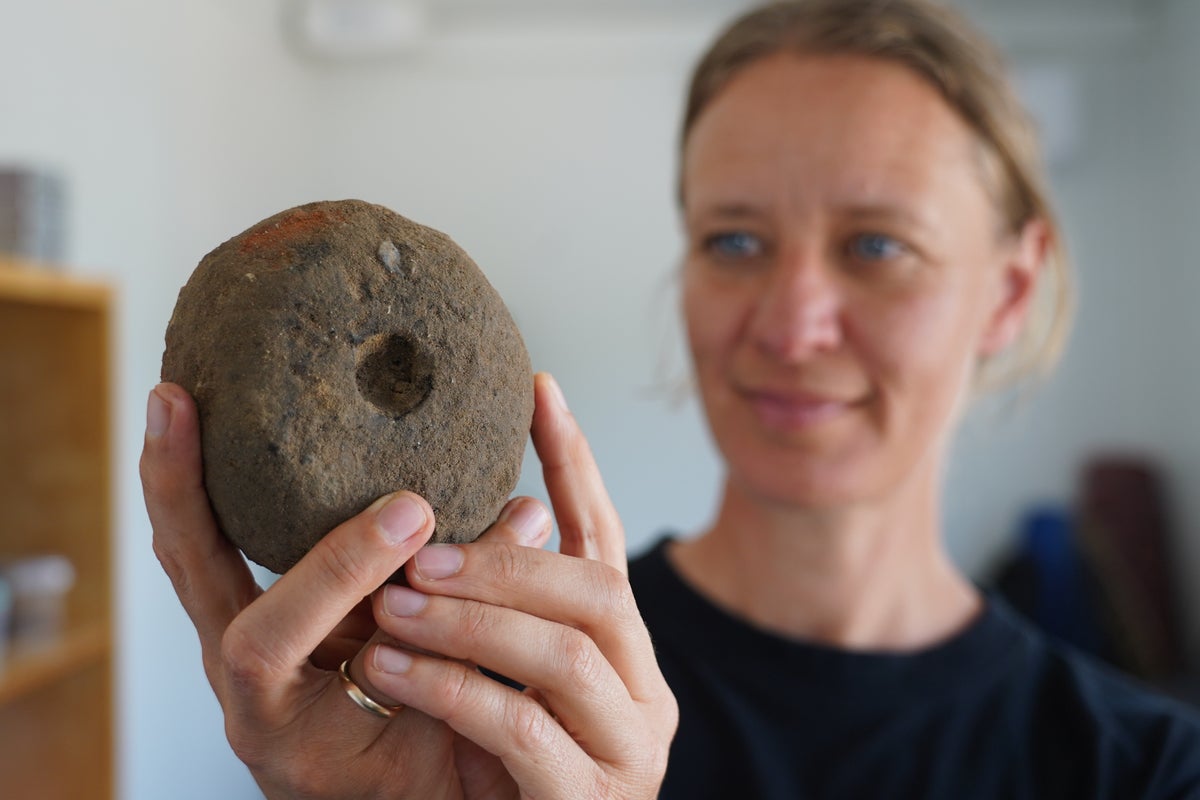
The dig workers found thousands of artifacts that reveal the mechanics of the operation. Spindle whorls and heavy loom weights cluttered the floors of the sunken workshops. The site also contained highly specific processing zones dedicated entirely to preparing flax, the raw material used to weave linen.
Making linen or sailcloth in the early medieval era was a brutal, multi-step process. You had to harvest the flax, rot the stems in water to loosen the fibers, beat the stalks to separate the useful threads, comb it, spin it into yarn, and then spend hundreds of hours on a vertical loom.
Doing this for your own family is one thing. Organizing 80 specialized workshops to do it simultaneously requires an entirely different level of social planning.
The layout of the Søften site proves that the work wasn't random. The workshops were separated into clear zones based on the type of craft. Standing above these workshops was a single, massive residential longhouse.
Archaeologists argue this setup indicates strict oversight. A powerful local elite or chieftain likely lived in that central house, controlling the raw materials, dictating the schedule, and managing the distribution of the finished goods. It looks less like an egalitarian tribal village and more like an early medieval corporate town.
Why Fabric Was the Real Currency of Expansion
People forget that the entire Viking expansion was completely dependent on textiles. A longship is just an expensive piece of firewood without a sail.
A single wool or linen sail for a Norse warship required more than 100 square meters of fabric. Producing that single sail swallowed up hundreds of pounds of raw wool and took a skilled weaver over a year of full-time labor. When you scale that up to a fleet of hundreds of ships navigating the rivers of Europe and the open waters of the Atlantic, the demand for cloth becomes astronomical.
The Søften factory wasn't producing clothes for the locals. It was feeding a massive supply chain.
During this exact era, nearby Aarhus—then known as Aros—was growing into a major trade hub and royal seat. Moesgaard Museum historian Kasper Andersen pointed out that rural manufacturing hubs like Søften were the engines behind that growth. The textiles made here were packed up and hauled down to the markets of Aros, where they entered international trade routes stretching across Europe and into Asia.
The site also yielded silver coins, glass beads, and fine pottery. These luxury items weren't made on-site; they were earned. The managers of this factory were trading their industrial output for global currencies and high-end foreign goods.
The Puzzle of the Aarhus Region
This factory discovery fills a critical gap in what we know about Danish power structures before the official unification of the country. Just last year, archaeologists found a high-status burial site and fortified manor in Lisbjerg, just a few miles away from this factory. That elite site, dating to the late 900s, was linked directly to noblemen serving King Harald Bluetooth.
The Søften site shows that the economic infrastructure was already locked into place centuries before Harald Bluetooth took the throne. The region north of Aarhus was a highly organized powerhouse of wealth and manufacturing long before the history books started recording the names of kings.
The discovery actually started with local volunteers. Over thirty years, amateur metal detectorists kept finding isolated silver coins in the farm fields around Søften. When plans emerged to build a new road and an industrial park in the area, the museum stepped in for a routine trial excavation. The trenches kept hitting workshop after workshop, forcing a massive ten-month rescue dig that finally exposed the scale of the operation.
Rethinking the Norse Economy
We need to stop viewing the Viking Age through the lens of sudden, chaotic violence. Raiding was certainly part of the equation, but you can't sustain an empire on stolen goods alone. The real backbone of Norse power was a highly sophisticated, planned production economy that could organize labor, manage agricultural resources, and exploit trade networks on a continental scale.
The people working the looms in the damp pit houses of Søften were just as vital to the expansion of the Norse world as the men pulling the oars on the longships.
If you want to track this historic shift yourself or explore the context of these finds, focus your research on these steps:
- Look into the Moesgaard Museum's updated digital archives regarding the Jutland peninsula excavations.
- Read up on the concept of the "sailcloth economy" in early medieval Scandinavia to see how fabric production metrics directly correlated to naval power.
- Track the geographic relationship between rural production sites like Søften and the early urban trade emporiums like Aros (modern Aarhus) to understand how wealth moved from fields to global markets.