Traditional cruise missiles are a logistical nightmare. They take years to build, cost millions of dollars a pop, and rely on fragile defense-specific supply chains that crumble under pressure. When a major conflict kicks off, military forces run through their deep-strike stockpiles in a matter of weeks, leaving commanders with empty magazines and few options.
Poland is trying to change that equation entirely.
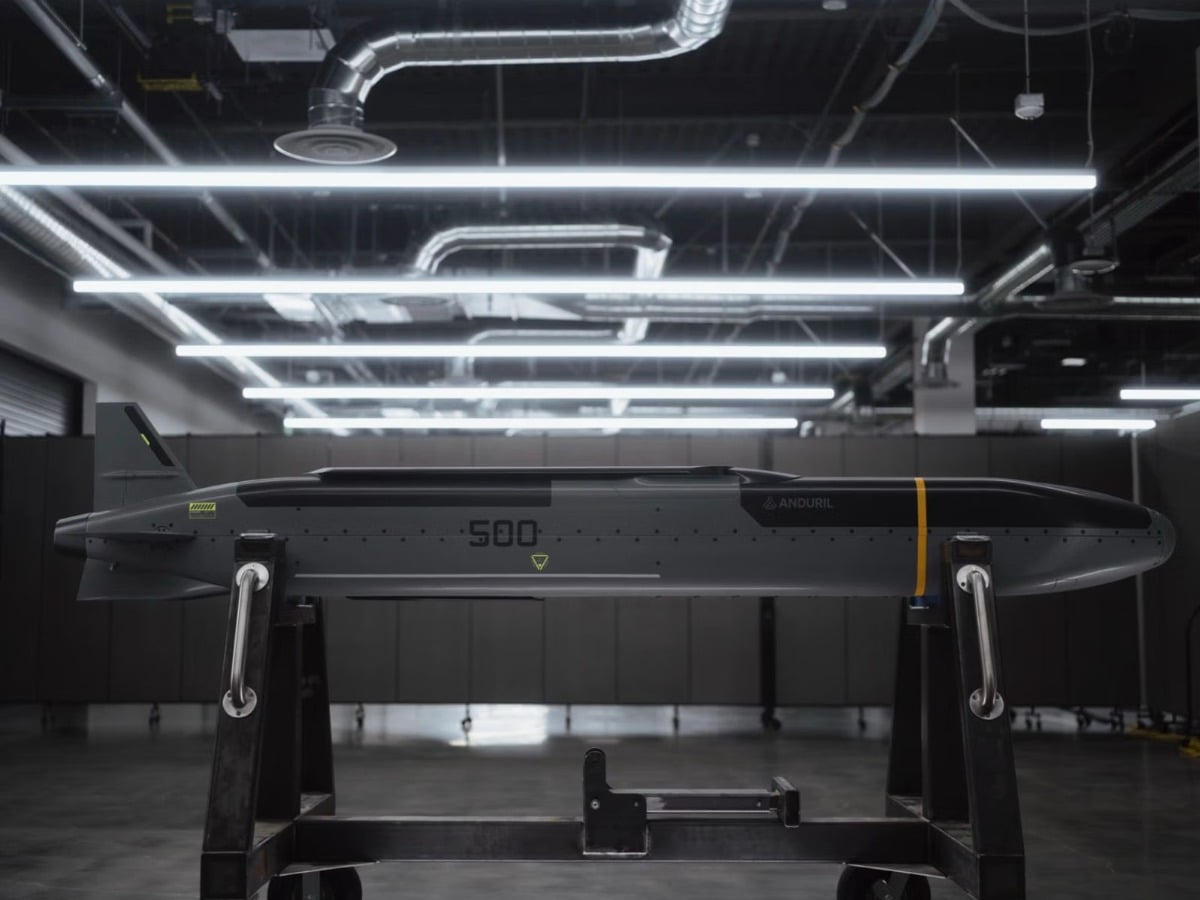
By locking in a massive manufacturing deal with American defense tech firm Anduril Industries, Poland's state-owned defense giant Polska Grupa Zbrojeniowa (PGZ) is establishing a local production line for a customized version of the Barracuda-500M. This isn't just about buying weapons off the shelf from Washington. It's an aggressive move to build a sovereign, high-volume production ecosystem right on NATO's eastern flank.
The Shift From Exorbitant Assets to High-Volume Mass
For decades, Western defense policy favored highly complex, hyper-expensive weapons systems. Think of a standard Tomahawk or Storm Shadow cruise missile—magnificent pieces of engineering, but they cost anywhere from $1.5 million to over $3 million each. You can't use them to saturate an adversary's airspace without bankrupting your treasury.
The Barracuda-500M flips this model on its head.
With an estimated target production cost hovering around $150,000 per unit, it provides long-range strike capability at a fraction of the cost. It blends the attributes of a traditional cruise missile with those of a jet-powered autonomous drone.
The hardware specs show exactly what Warsaw is getting:
- Operational Range: Over 500 nautical miles (roughly 926 kilometers).
- Payload Capacity: Exceeding 100 pounds (around 45 kilograms) for explosives, electronic warfare gear, or reconnaissance kits.
- Speed: Up to 500 knots (about 926 km/h) powered by a small, efficient turbojet engine.
- Loiter Time: More than 120 minutes of airborne endurance to hunt targets or await instructions.
- Maneuverability: Capable of pulling up to 5 Gs to evade defensive measures.
How the Tech Trashes the Traditional Defense Supply Chain
The magic of the Barracuda isn't just the flyaway price. It's how the thing is put together. Traditional missiles require highly specialized aerospace machinery, sterile cleanrooms, and hundreds of custom tools.
Anduril designed the Barracuda family to be built with ten or fewer standard assembly tools.
The entire system is broken down into six standardized subsystems. Instead of sourcing ultra-rare, military-grade chips and bespoke actuators that have a two-year lead time, Anduril uses commercially derived, widely available components. This commercial supply chain means Poland can scale up production rapidly if a crisis hits, without waiting on a single specialized component vendor to clear a massive backlog.
It takes 50% less time to assemble, requires 95% fewer tools, and uses half as many parts as a legacy cruise missile. For PGZ, introducing these manufacturing techniques across its domestic factory network changes how the Polish defense industry operates.
A Customized Autonomous Strike Tool for Polish Defenses
The deal signed between PGZ and Anduril isn't for a generic American export model. It focuses on a "Polonized" variant tailored specifically to the tactical demands of the Polish Armed Forces.
The Polish military needs extreme launch flexibility because of its geographic positioning. The Barracuda-500M delivers exactly that. It can deploy from standard internal weapons bays of fifth-generation stealth fighters or ride on the external rails of older fourth-generation aircraft like Poland's F-16s.
Even better for Poland's defensive posture is the system's platform-agnostic design. Using simple, modular solid-propellant rocket booster kits attached to the tail, the weapon can transform into a ground-launched asset. Polish forces can pack these missiles into standard cargo planes like the C-130 and deploy them via palletized drop systems, or fire them from mobile ground launchers hidden in the country's dense forests.
Software drives the tactical utility here. The missiles run on Anduril's Lattice for Mission Autonomy platform. Instead of flying a rigid, pre-programmed path, a pack of Polish Barracudas can communicate with each other mid-flight. They can share threat data, coordinate arrival times to overwhelm air defense radars, and dynamically assign targets autonomously without needing constant human intervention from a distant command post.
Securing NATO's Eastern Flank Against Aggression
Warsaw is spending heavily on defense, pushing its military budget well past 4% of GDP. Buying tanks and air defense batteries from global suppliers keeps the country safe today, but building long-range precision strike platforms locally secures tomorrow.
By taking charge of the Barracuda-500M production pipeline, Poland insulates itself from foreign political gridlock or shipping bottlenecks during wartime. If regional tensions explode, the factories in Poland can keep rolling out airframes and integrating local warheads and electronics without waiting for resupply lines across the Atlantic.
This moves Poland from a frontline buffer state to a regional defense production hub. Taiwan has already made similar moves to manufacture the Barracuda locally, showing a clear global trend toward distributed, high-volume production of cheap autonomous weapons among frontline democracies.
Next Steps for Regional Security Monitors
If you want to track how this project reshapes the European defense landscape, look for these upcoming milestones:
- Watch for official regulatory sign-offs from both the U.S. State Department and the Polish government to clear the initial technology transfer frameworks.
- Monitor PGZ announcements regarding which specific domestic manufacturing plants will be selected and overhauled to house the new automated assembly lines.
- Keep tabs on upcoming integration test schedules, particularly ground-launch trials using Polish-supplied military vehicles and regional test ranges.