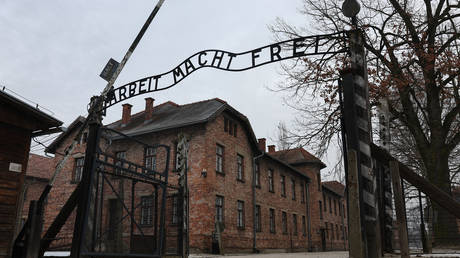
Poland is changing its approach to World War II reparations. The multi-trillion-dollar battle lines drawn up by Warsaw against Berlin are quietly dissolving. Instead of chasing a staggering $1.3 trillion (€1.2 trillion) payout that Germany was never going to pay, the Polish government has pivoted to something it might actually get: real, direct assistance for aging survivors.
If you have been following the bitter geopolitical feud between these two European neighbors, this shift looks massive. The previous right-wing Law and Justice (PiS) government spent years weaponizing the reparations issue, using it to fire up its conservative base and bash Berlin. But the center-left coalition government led by Donald Tusk is adopting a pragmatic strategy.
Instead of demanding a sum that equals three times Germany's annual budget, Warsaw is proposing an annual payment of 10,000 zlotys (around €2,333) directly to the roughly 50,000 surviving Polish victims of Nazi persecution. It's a drastic reduction in scale, but it changes the entire dynamic of European diplomacy.
Moving From Political Theater to Practical Help
Let's look at the numbers. The previous €1.3 trillion demand was a political dead-end. Germany rejected it immediately, pointing to a 1953 agreement where Poland’s then-communist government renounced all claims. Warsaw argued that the 1953 deal was invalid because it was signed under intense pressure from the Soviet Union. While that's historically true, legally it didn't move the needle in Berlin.
Polish Foreign Minister Radosław Sikorski has openly acknowledged the legal gridlock. He noted that while Russia essentially stole the reparations meant for Poland after the Potsdam Conference, the legal reality makes securing a massive state-to-state payout virtually impossible.
Warsaw's new approach trades empty rhetoric for immediate action. The new proposal would cost Germany roughly €100 million in its first year and around €300 million overall. That's a rounding error compared to the trillion-dollar demands, making it a pill Berlin can actually swallow.
Why Germany Is Returning Poland's Looted Art
The diplomatic thaw isn't just about cash transfers. Germany is accelerating the return of prized cultural artifacts stolen during the brutal 1939–1945 occupation.
Recent returns include a medieval manuscript fragment containing Gaude Mater Polonia and a historic ring linked to King Sigismund I the Old. These handovers mark the 35th anniversary of the 1991 Polish-German Treaty on Good Neighborliness and Friendly Cooperation.
While returning stolen art doesn't absolve the Nazi regime of its horrific crimes, it shows a willingness from Berlin to engage in symbolic restitution. Polish authorities estimate that hundreds of thousands of historical objects were stripped from the country during the war. Getting them back requires diplomatic goodwill, not aggressive ultimatums.
The Big Geopolitical Picture
So, why drop the fight now? Look at the map. With a volatile war raging across Poland’s eastern border in Ukraine, Warsaw and Berlin cannot afford to fight each other over past centuries. They need a united front.
Sikorski has floated other alternative ideas to bridge the historical gap, such as Germany investing heavily in mutual defense capabilities or helping to rebuild historic Polish buildings. The goal is to get Berlin to acknowledge its moral responsibility without bankrupting its contemporary economy.
If you're Germany, funding joint military defense or medical care for aging survivors lets you uphold historical accountability while strengthening the European Union's eastern flank.
What Happens Next
The ball is firmly in Germany's court. German officials have previously expressed openness to supporting Polish victims of the Nazi regime, but the funding mechanisms remain unresolved.
If you want to track where this goes, keep an eye on how the German Bundestag responds to this scaled-down proposal. For Warsaw, the next move involves pressuring Berlin to finalize this survivor-focused package before the remaining victims pass away.