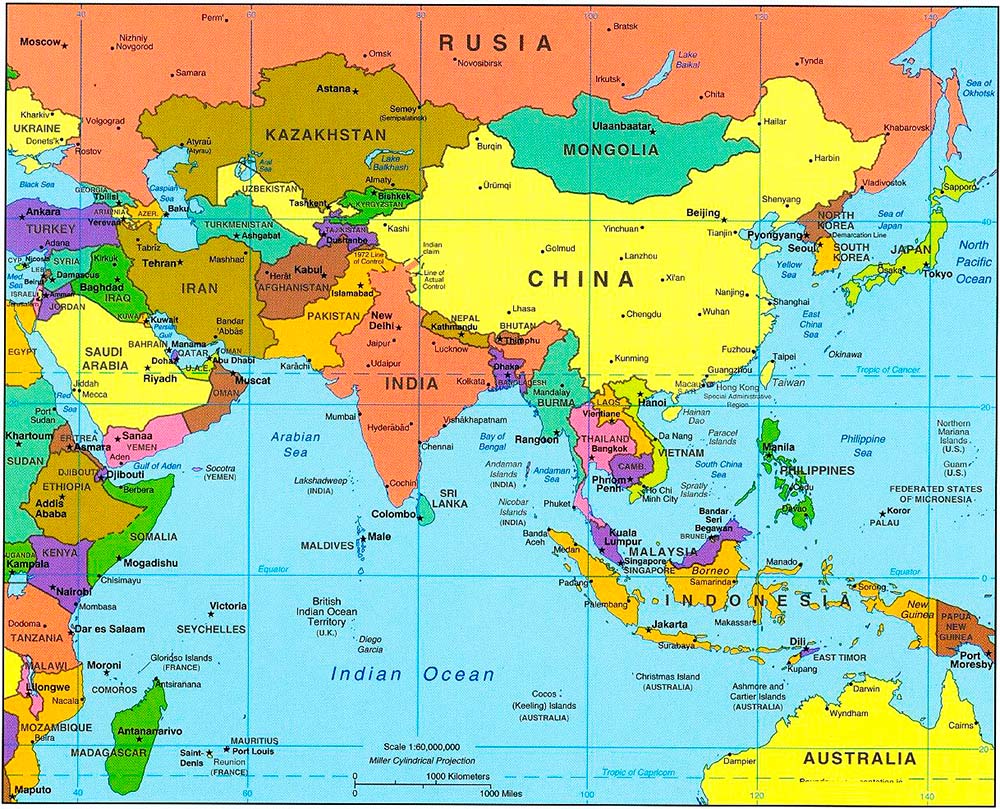
Western politicians love talking about cutting China reliance. They call it de-risking, decoupling, or friend-shoring. It sounds great in a speech. It makes for excellent campaign slogans. But the math behind actually doing it is terrifying. Recent economic research shows that completely severing supply chain ties with Beijing would cost Western economies a staggering $23 trillion.
That is not a typo. We are talking about $23 trillion. To put that in perspective, that is roughly the entire annual economic output of the United States.
If you think your weekly grocery bill or monthly rent is high right now, imagine the financial shockwave of rebuilding the global industrial engine from scratch. For decades, the West outsourced its manufacturing to China because it was cheap, efficient, and highly scalable. Pulling the plug on that relationship means every factory, shipping route, and component source must be replaced. It is the ultimate economic forced divorce, and the alimony is going to ruin us if we do not get smart about how we manage it.
The Astronomical Price of Decoupling
When economists look at the cost of cutting China reliance, they are not just looking at the price of moving an iPhone assembly line to India or Vietnam. They are calculating the total systemic disruption to global commerce.
Building new factories requires trillions in upfront capital. Finding trained workers in regions without an established industrial base takes years. Then there is the loss of massive economies of scale that China spent forty years perfecting. When you duplicate supply chains across five different countries just to avoid one, you lose efficiency. That loss translates directly into higher prices for consumers.
The $23 trillion price tag reflects this exact friction. It represents decades of stranded assets, redundant infrastructure, and inflated operating expenses. Western companies would have to abandon perfectly functional facilities in Shenzhen or Shanghai and rebuild them in Ohio, Monterrey, or Hanoi.
It is a massive duplication of effort. We would spend trillions of dollars just to get back to the exact same level of production capability we have today. Economically speaking, it is running as fast as you can just to stay in the same place.
Why Moving Factories Is Not Just About Labor
A common mistake business leaders and politicians make is treating manufacturing like a game of checkers. They think if labor gets too expensive or politically risky in China, you just slide the piece over to Mexico or Vietnam.
It does not work that way. China is not dominant just because of cheap labor. In fact, Chinese wages have been rising steadily for years. China dominates because of its unparalleled industrial clusters.
If you run a factory in Dongguan making electronics, your plastic molder is two miles down the road. Your semiconductor distributor is across the street. The specialist who fixes your high-end CNC machines can be at your facility in fifteen minutes. The regional port is massive and optimized for hyper-speed shipping.
If you move that assembly plant to a country without that infrastructure, your supply chain stretches out across thousands of miles again. You end up importing the components from China anyway, assembly happens elsewhere, and then you ship the final product to the West. This creates a bizarre illusion of independence while actually increasing logistics complexity and carbon footprints. It is a shell game.
The Invisible Dependencies We Overlook
Think about the transition to clean energy. Every Western government wants electric vehicles, solar panels, and massive grid batteries. They want them yesterday.
But China controls the processing of critical minerals required to build these technologies. They process the vast majority of the world's lithium, cobalt, graphite, and rare earth elements. Even if an electric vehicle is assembled in Germany or the United States, the materials inside its battery almost certainly passed through Chinese hands.
Building alternative mineral processing plants in the West is an absolute nightmare of environmental regulations, local protests, and massive capital requirements. It takes a decade to get a new mine or heavy processing plant permitted and operational in North America or Europe. China can build them in a fraction of that time.
Trying to force a rapid transition away from these established networks will cause severe shortages. It will stall the green energy transition and drive up the cost of technology to levels the average consumer simply cannot afford.
Who Actually Suffers the Financial Damage
Let's be brutally honest about who pays this $23 trillion bill. It is not politicians. It is you.
When companies face massive capital expenses to relocate and endure higher operating costs, they do not just absorb the loss out of the goodness of their hearts. They pass those costs down. Margins get squeezed, stock portfolios dip, and retail prices climb.
We saw a tiny preview of this during the supply chain chaos of the pandemic era. When shipping ports clogged and factories shut down, inflation skyrocketed. Multiply that chaos by a factor of ten, stretch it out over a decade, and you get the reality of a forced economic split.
Corporate earnings would crater. The money that companies should be spending on research, development, and worker benefits would instead be swallowed up by concrete, permits, and redundant shipping logistics. It is a recipe for long-term economic stagnation in the West.
A Realistic Path Forward for Smart Businesses
Total independence from China is a fantasy. It is too expensive, too complicated, and frankly impossible without triggering a global depression. But relying blindly on a single country for critical goods is also a massive gamble.
The smart play is not a total breakup. It is targeted diversification.
Instead of panic-selling Chinese assets and trying to pull out completely, smart executives are adopting a strategy often called China Plus One. They keep their highly efficient core manufacturing hubs in China to serve global and Asian markets. At the same time, they build smaller, secondary facilities in places like India, Malaysia, or Eastern Europe to handle overflow and create a safety valve.
This approach keeps costs manageable while giving businesses a backup plan if geopolitical tensions boil over. It avoids the catastrophic $23 trillion penalty while still building resilience.
If you run a business, stop waiting for politicians to settle their trade disputes. They are playing a different game. You need to audit your tier-two and tier-three suppliers right now. Find out exactly where your sub-components and raw materials come from. If they all trace back to a single industrial park in Ningbo, you have a vulnerability that needs fixing. Diversify those components gradually. Do it before geopolitical events force your hand, because a forced move is always the most expensive move you will ever make.