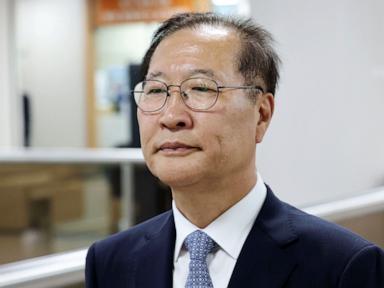
Power grabs have consequences. In South Korea, those consequences look like a 25-year prison sentence for a man who was supposed to protect the nation's legal system.
On June 22, 2026, the Seoul Central District Court didn't just hand down a heavy punishment to former Justice Minister Park Sung-jae. It sent a definitive message to the rest of the world about what happens when public officials choose political loyalty over the constitution.
The ruling shocked observers because it actually exceeded the 20-year sentence that special prosecutors had requested. Park, who had been fighting the charges without being detained, was immediately cuffed and taken into custody right inside the courtroom. The judges feared he might try to destroy evidence if left free.
This isn't an isolated trial. It's the latest domino to fall in the clean-up of the chaotic, short-lived "self-coup" attempted by ousted President Yoon Suk Yeol on December 3, 2024.
The Six Hour Coup that Ruined a Cabinet
To understand why a justice minister is going away for a quarter of a century, you have to look back at the frantic six hours that redefined modern South Korean history.
In late 2024, President Yoon Suk Yeol was locked in a bitter political stalemate with the liberal-controlled legislature. Frustrated and desperate, Yoon declared martial law in a midnight broadcast, claiming the opposition consisted of "anti-state forces" rigging elections and paralyzing the government.
He sent armed troops and helicopters to seal off the National Assembly. But the plan failed. Lawmakers scaled fences, pushed past security, and successfully voted to overturn the declaration within hours.
While soldiers were surrounded by angry citizens outside parliament, Park Sung-jae was busy inside the Ministry of Justice turning the gears of the state to support the authoritarian push.
How a Justice Minister Weaponized the Law
Park tried to defend himself during the trial by claiming he was just doing his job during a national emergency. The court completely rejected that excuse.
Presiding Judge Lee Jin-gwan noted that Park didn't just follow orders. He actively mobilized his ministry to ensure the insurrection succeeded. According to court records and prosecutors, Park ran a series of middle-of-the-night directives to lay the groundwork for a full political purge.
- Prison Capacity Checks: Park ordered senior correctional officials to audit the capacity of the country's prisons. The goal was simple. He needed to make sure there was enough room to hold the flood of opposition politicians and dissidents targeted for arrest under martial law.
- Prosecutorial Deployment: He drafted plans to dispatch state prosecutors directly to Yoon’s Martial Law Command. This would have given the military regime a legal arm to aggressively investigate and silence political rivals.
- Border Lockdowns: Park instructed immigration authorities to staff up immediately so they could enforce rapid travel bans, preventing key political figures from escaping the country.
Judge Lee didn't hold back in his assessment, stating that Park turned his back on his constitutional duty because he believed the coup would succeed.
"Due to the actions of the defendant, the country nearly faced a situation in which the people's fundamental rights and the basic order of liberal democracy could have been violated," the judge said during the sentencing.
A Government Behind Bars
Park is far from the only high-ranking official currently trading a business suit for a prison uniform. South Korea's judiciary has been methodically dismantling the entire leadership structure that supported the 2024 decree.
The scale of the legal fallout is staggering.
- Ex-President Yoon Suk Yeol: Sentenced to life in prison in February 2026 for leading an insurrection. He also picked up an extra 30-year sentence for separate charges involving a bizarre plot to send drones to North Korea to manufacture a national crisis to justify his actions.
- Former Defense Minister Kim Yong-hyun: Serving a 30-year sentence for planning the military mobilization and ordering troops to the parliament building.
- Former Prime Minister Han Duck-soo: Sentenced to 23 years for forcing the decree through a rigged Cabinet meeting and lying under oath.
Why This Judgement Shifts the Global Precedent
South Korea has a turbulent history with authoritarianism, but its modern democracy is fiercely protected by its citizens and its courts. What makes Park’s 25-year sentence unique is the rejection of the "only following orders" defense for civilian bureaucratic heads.
In many historical coups, the blame stops with the dictator and the generals. By hammering the Justice Minister with a sentence longer than what the prosecution even asked for, the Seoul court is making it clear that civilian enablers face the exact same risks as the people carrying the rifles.
Park’s legal team hasn't announced an appeal yet, but given the trajectory of the other trials from the 2024 cabinet, his chances of reversing the decision look incredibly slim. The country has moved on, and its legal system is busy ensuring that the cost of attacking democracy remains too high for anyone to try it again.