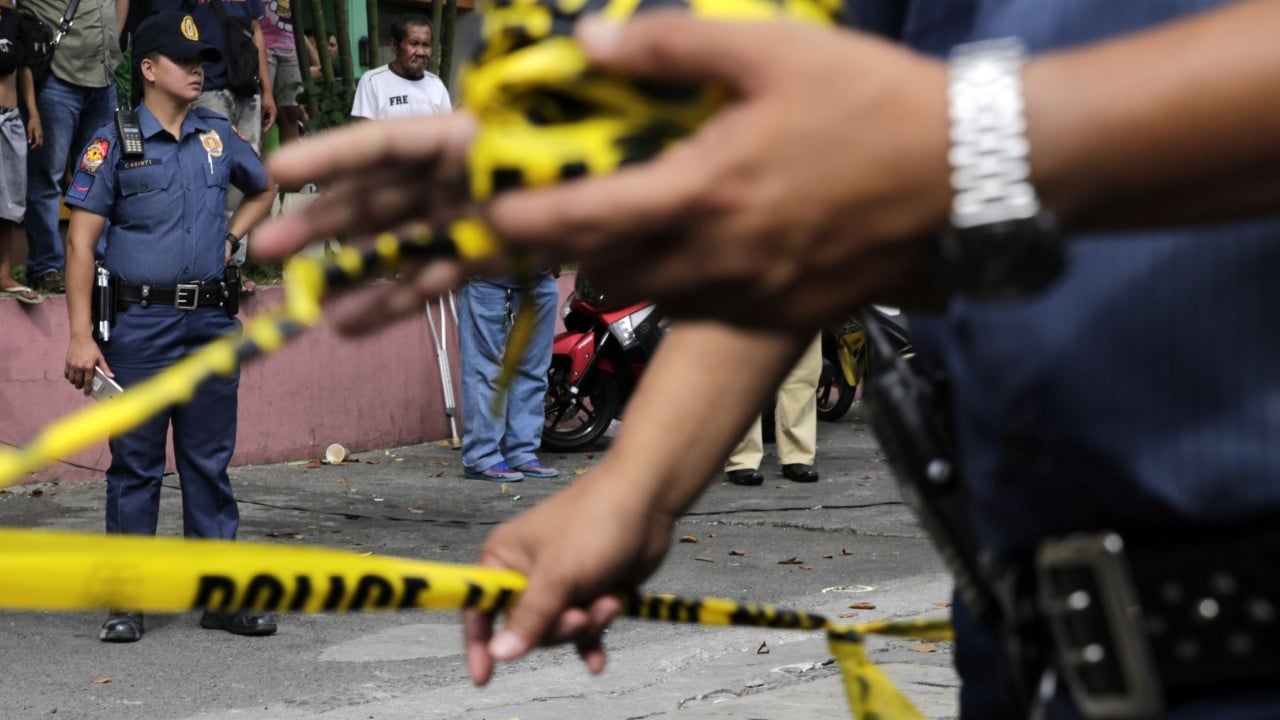
School shootings don't happen in the Philippines. That's the comforting lie people told themselves for decades. While gun violence runs rampant across the country, classrooms always felt like a rare sanctuary.
Not anymore.
On Monday morning, June 22, 2026, two shooters shattered that illusion at San Jose National High School in Tacloban City. The attack left three students dead and five others wounded. It happened right around 9:00 a.m. while lessons were actively underway. Imagine sitting in class, taking notes, and suddenly hearing pistols firing down the hallway. Social media footage quickly captured the terrifying echo of gunshots cutting through the morning school routine. It's a nightmare Filipinos usually watch on American news, not on their own feeds.
The tragedy hits a country already struggling to control an massive black market of unlicensed firearms. Police rushed to the campus, eventually taking two male suspects into custody. One of them is a 15-year-old Grade 9 student from the exact same school. He's legally classified as a Child in Conflict with the Law. Tacloban City police chief Noelito Getigan dropped a heavy detail shortly after the capture. He pointed to alleged bullying as the spark that triggered the bloodshed.
The Breakdown of What Happened in Tacloban
The attack wasn't a slow-moving crisis. It was fast, chaotic, and targeted.
First responders faced a frantic scene at the government-run campus, which crams in more than 1,500 students. Police managed to grab the 15-year-old student right at the scene. The second suspect took off, sparking a tense foot chase through the neighborhood before officers tackled him and grabbed the pistol.
The immediate toll stands at three dead and five injured. All three fatalities were students, young lives cut short over unresolved hallway conflicts. Medical teams scrambled to treat the five wounded victims, while the Philippine National Police deployed extra forces to lock down the campus and secure the surrounding area.
The national police issued a standard plea for calm, urging locals to stop spreading unverified rumors online. But the panic is already out there. Parents rushed to the school gates, desperate to find their kids.
The Deadly Reality of Unlicensed Guns in the Philippines
To understand why this happened, you have to look at the country's toxic relationship with firearms. The Philippines has a massive gun problem. It just rarely spills into schools.
The country is flooded with what locals call paltik—homemade or smuggled weapons that bypass any sort of government registry. Estimates usually put the number of loose, illegal firearms in the hundreds of thousands. Gun culture runs deep, driven by political rivalries, security fears, and weak enforcement at ports.
Mass casualty events in schools remain rare compared to the United States. The last major campus attack occurred in July 2022, when a gunman opened fire at the Ateneo de Manila University graduation ceremony. But that wasn't a school shooting in the traditional sense. It was a targeted assassination of a former mayor that happened to take place on campus grounds.
The Tacloban incident is fundamentally different. It's a peer-on-peer attack inside a high school. A student brought a handgun to school to settle a score with classmates. That shifts the entire paradigm of campus safety in the country.
Bullying and the Mental Health Crisis We Ignore
If Chief Getigan's initial assessment holds true, bullying drove a teenager to pick up a gun. This highlights a massive blind spot in the Philippine education system.
Schools across the archipelago are notoriously overcrowded. Guidance counselors are severely outnumbered, often looking after thousands of students simultaneously. Mental health resources in public schools are basically non-existent. When a kid gets pushed to the brink by relentless bullying, there's no safety net to catch them.
The standard response to campus issues has always been disciplinary, not preventative. Teachers are overworked, underpaid, and untrained to spot the warning signs of extreme violent radicalization.
This tragedy proves that ignoring teenage mental health and campus bullying carries a lethal price tag. You can build higher walls and install metal detectors, but if a student is determined to smuggle a small pistol inside a backpack, they will find a way.
Immediate Action Steps for Philippine Schools
Relying on the government to pass sweeping gun control laws overnight is a losing strategy. Real change has to start at the school level right now.
- Enforce strict, random bag checks at the gates. School guards need to move past superficial visual inspections and actively look for weapons.
- Set up anonymous reporting channels. Students always know who has a weapon or who is talking about violence long before the teachers do. They need a safe way to blow the whistle.
- Mandate active shooter drills. Most public schools practice for earthquakes and fires. They have no protocol for an armed intruder. That lack of training costs lives.
- Audit school security infrastructure. Perimeter fences need repair, and entry points must be restricted to a single, heavily monitored gate during school hours.
The illusion of the safe classroom is gone. San Jose National High School became a crime scene because the system failed to address both the flow of illegal weapons and the mental wellbeing of its youth. It's a harsh wakeup call that requires immediate action before another hallway turns into a shooting gallery.


/LouvresengchyeteoGettyImages-5a14669aaad52b00370c599e.jpg)