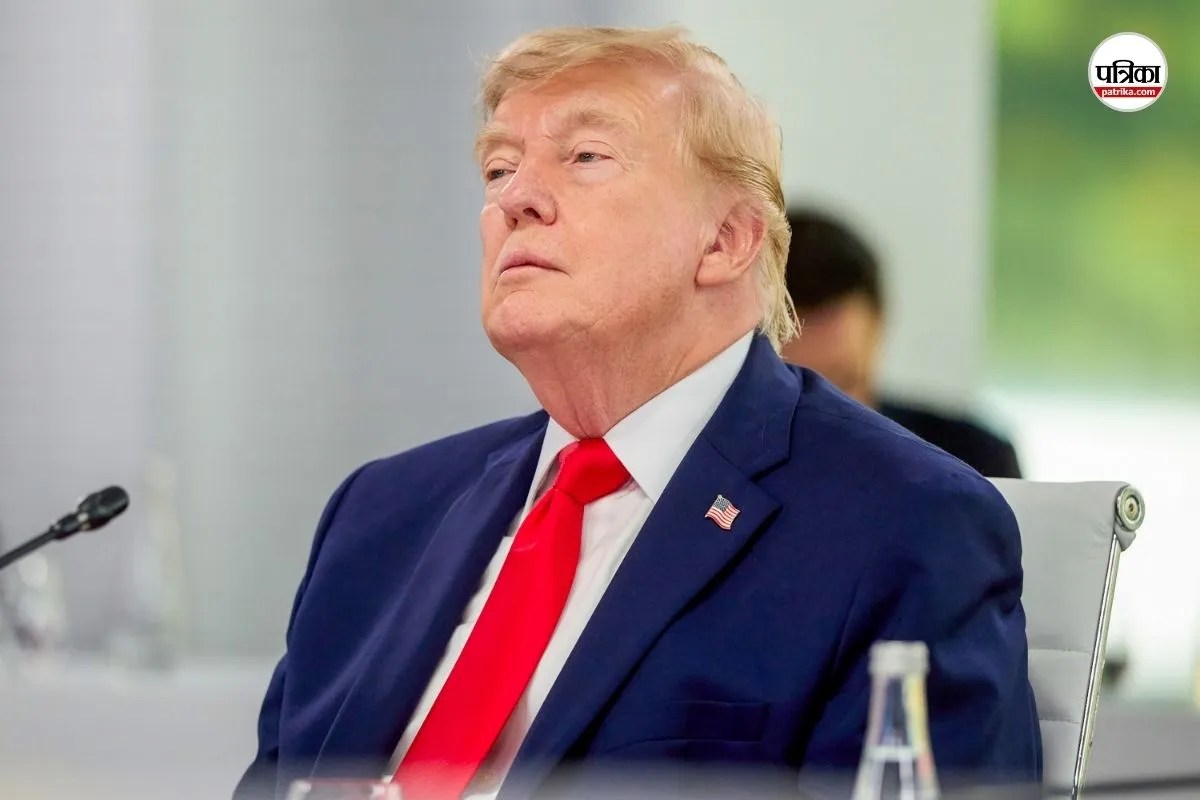
You can't make this stuff up. Donald Trump just admitted out loud what many Middle East analysts have whispered for years. He fundamentally misjudges the complex social fabric of the Islamic Republic. Speaking during an interview with Axios, Trump expressed outright shock at the sight of thousands of Iranians weeping openly at the funeral proceedings for the late Supreme Leader Ayatollah Ali Khamenei.
"I thought people hated him," Trump blurted out with his trademark bluntness. He even speculated that they might be shedding "fake tears."
This isn't just a classic Trumpian soundbite. It's a glaring window into a flawed foreign policy mindset that assumes every citizen under an authoritarian regime is secretly a Western-style democrat waiting to be liberated. When you combine this worldview with the high-stakes chess match of rewriting the 2015 Iran nuclear deal, you get a highly volatile mixture. Trump thinks Tehran is cornered, begging for a deal, and completely broken. But history shows that cornering Iran usually just makes them more dangerous.
The Funeral Realization and the Illusion of Total Dissent
Let's look at the raw details of what went down. Following the monumental escalation earlier this year where US and Israeli strikes hit Iranian infrastructure—resulting in Khamenei's death—Tehran plunged into an official week-long period of mourning. Trump, speaking around the 250th anniversary of US independence, revealed that the US and Iran agreed to a temporary operational pause in hostilities out of respect for the funeral rituals.
In typical fashion, Trump framed this as an act of American benevolence. "We gave him a week off for a funeral because we're nice," he remarked. He didn't stop there. He noted that with so many senior Iranian officials gathered in one place for the funeral ceremonies at the Imam Khomeini Mosalla Grand Mosque, the US military could theoretically "take them all out" with a single strike. He refrained, he claimed, because "then we would have nobody to negotiate with."
But the real shocker for the administration was the visual of millions of citizens flooding the streets of Tehran, visibly distraught.
Trump's confusion highlights a classic intelligence trap. Don't mistake genuine anger at domestic economic corruption or social crackdowns for a desire to see foreign missiles dismantle your state institutions. Iran has a deep-seated nationalist identity that spans millennia. When an external adversary kills their leadership or threatens their borders, internal grievances often take a backseat to an intense, defensive unity. Trump saw the massive protests in January and assumed the regime had zero domestic legitimacy. The massive turnout at the funeral proved that assumption wrong.
Why Trump Thinks Time Is on His Side
Right now, the official US line is that Iran is desperate. Trump explicitly claimed that Tehran is "begging to make a deal" and "dying to settle" after the severe military and economic pounding they’ve taken.
Behind the scenes in Switzerland and Doha, negotiators are trying to hammer out a framework to replace Barack Obama's 2015 Joint Comprehensive Plan of Action (JCPOA), a pact Trump famously trashed as "one of the worst deals ever made."
The administration’s current leverage strategy relies on three main pillars.
- Extreme Sanctions: Total economic isolation that has driven Iran's currency to historic lows against the US dollar.
- The Threat of Total Annihilation: Direct warnings that any retaliation in strategic corridors like the Strait of Hormuz will result in overwhelming military force.
- Enforced Deadlines: Demanding complete, permanent dismantling of uranium enrichment facilities rather than temporary "sunset clauses."
Trump posted on Truth Social that talks are moving in an "orderly and constructive manner." He explicitly instructed his representatives—including Secretary of State Marco Rubio—not to "rush" into a final agreement. The White House operates under the belief that the longer Iran starves economically, the better the final terms will be for Washington.
The Hidden Risks of the "Maximum Pressure" Strategy
We’ve seen this script before, and it rarely ends with a clean signature on a piece of paper. Republican hawks and former officials like Mike Pompeo are already sounding the alarm, terrified that Trump’s team might accept a watered-down deal that mirrors Obama’s original framework. They argue that giving Iran any sanctions relief will immediately enrich the Islamic Revolutionary Guard Corps (IRGC) and reignite regional proxy conflicts.
On the flip side, America's key ally in the region, Israeli Prime Minister Benjamin Netanyahu, is walking an incredibly tight political tightrope. Netanyahu wants a deal that completely eliminates the nuclear threat, removes all enriched material from Iranian soil, and ends the missile program. But he also knows better than to publicly criticize Trump the way he criticized Obama back in 2015.
The danger of assuming your opponent is completely broke and friendless is that you miss their asymmetric options. Iran has spent decades perfecting the art of irregular warfare. If they feel a diplomatic resolution offers them nothing but total surrender, they can easily pivot. They can choke off global energy shipping lanes in the Strait of Hormuz, activate highly armed regional proxies, or clandestinely push their remaining nuclear program deep underground into fortified facilities.
The Reality of What Happens Next
If you're tracking this geopolitical crisis, ignore the theatrical rhetoric about "fake tears" and focus on the hard calendar dates. The temporary funeral pause is expiring, and formal negotiations are scheduled to pick back up in mid-July.
To see if a real, lasting deal is actually possible or if we're just sliding toward a wider regional war, watch these three concrete indicators.
- The Inspection Timeline: Look closely at whether Iran actually permits international inspectors back into its sensitive military sites "long into the future," as the White House claims they’ve promised. Real access is the only metric that matters.
- The Enrichment Cap: Watch the specific wording around uranium stockpiles. If the US allows Iran to keep even a minimal indigenous enrichment capability for civilian energy, expect a massive revolt from conservative lawmakers in Washington and military brass in Tel Aviv.
- The Succession Power Vacuum: With Khamenei gone, the internal battle for the position of Supreme Leader is underway behind closed doors in Qom and Tehran. A highly insecure, transitional Iranian regime is far more likely to take erratic, aggressive actions to prove its strength to its domestic base than an established one.
Trump wants a historic foreign policy win that outdoes his predecessors. But achieving it requires looking past the curated television footage and understanding that national pride is a powerful motivator. If Washington continues to mistake complex internal mourning for simple weakness, they are going to miscalculate the final price of peace.