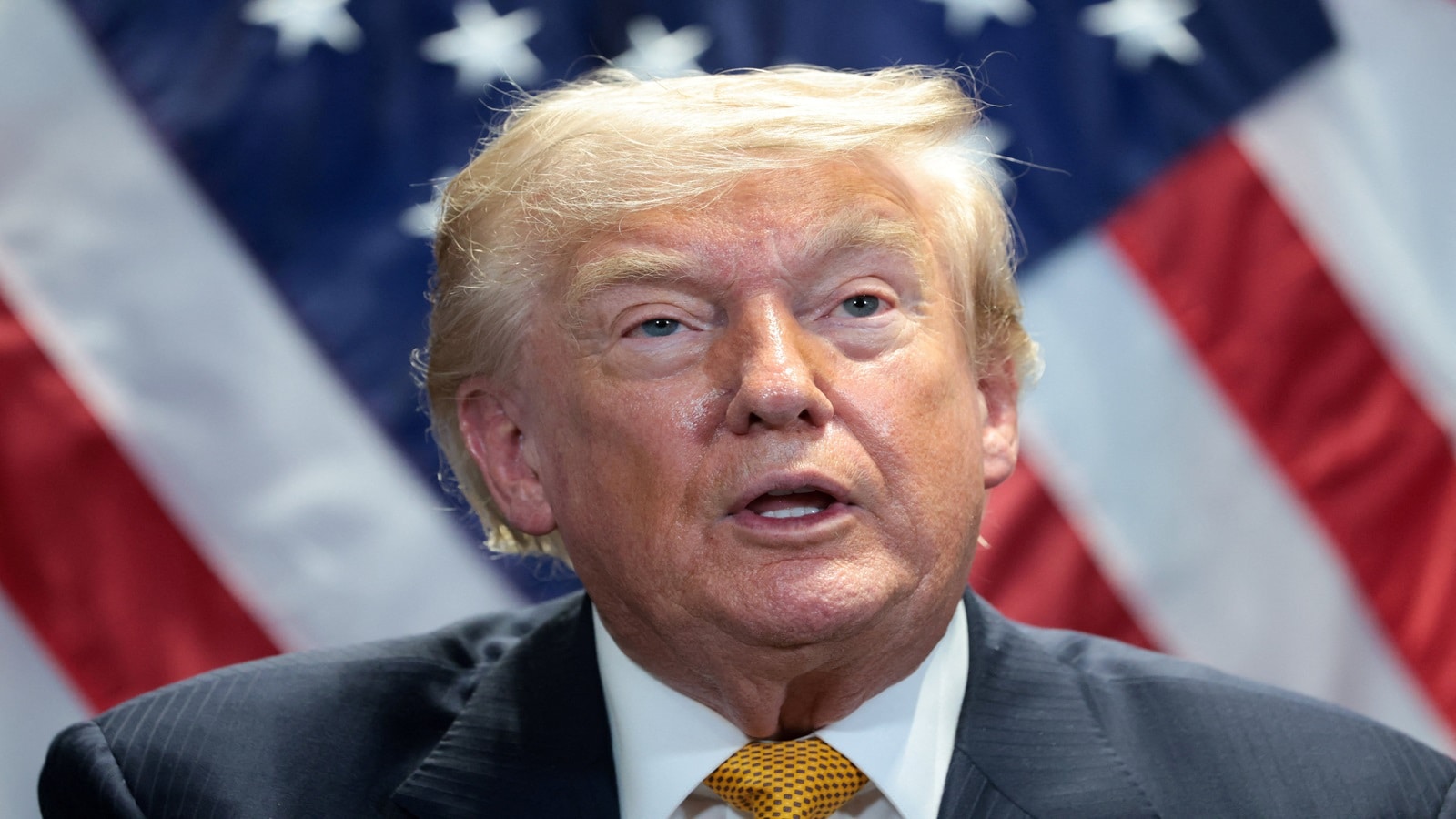
Donald Trump wants Greenland, but he can't have it. The real-world theater of international diplomacy hit a boiling point at the NATO summit in Ankara, where the American president renewed his blunt demand for the United States to take control of the massive Arctic island. The response from both Nuuk and Copenhagen was swift, sharp, and entirely predictable.
Greenland is not for sale, and the world needs to stop treating this like a bizarre real estate joke.
When Greenlandic Prime Minister Jens-Frederik Nielsen and Danish Prime Minister Mette Frederiksen fired back on July 8, 2026, they weren't just swatting away another wild social media post. They were defending a sovereign territory facing unprecedented geopolitical pressure. Trump's insistence that Greenland needs to be controlled by the United States, not by Denmark, has triggered a massive diplomatic standoff that has been building since his return to the White House.
To understand why this fight matters, you have to look past the absurd headlines of trying to buy a country. This is a battle over the future of Arctic security, massive mineral wealth, and the right of 56,000 people to determine their own destiny.
The Ankara Summit Explosion and the Reality of Greenland is Not for Sale
Arriving at the NATO summit in Turkey, Trump wasted no time reigniting the spark. He openly stated that Denmark is incapable of protecting the island from Russian or Chinese influence, claiming that the territory is a big problem for the United States. His solution is simple. The US should just take it over.
Nielsen didn't hold back in his response, taking to social media to state that repeated calls for the takeover or control of his country do not change the basic facts. The island belongs to its people. Meanwhile, Frederiksen took the extraordinary step of invoking NATO's Article 5 framework, reminding reporters that Denmark is ready to defend every inch of its territory, including Greenland.
This isn't 2019 anymore. During Trump's first term, the idea of purchasing Greenland was dismissed by many as a eccentric distraction. Today, it's the core of an aggressive, nationalist foreign policy that has already seen threatened tariffs on European allies and military posturing in the North Atlantic.
The Trillion-Dollar Icy Prize
Why is the White House so obsessed with this giant block of ice? It comes down to basic geography and geology. As global temperatures rise and the Arctic ice sheet melts, Greenland is turning into the ultimate strategic prize.
First, think about the shipping lanes. Meltdown in the Arctic means new, faster trade routes are opening up across the top of the world. Whoever controls Greenland controls the gateways connecting the Atlantic and Pacific oceans. The Pentagon views this region as a critical defensive barrier. If the United States doesn't secure it, Washington fears that Russian submarines or Chinese commercial fleets will dominate the northern waters.
Then there are the minerals underneath the ice. Greenland holds some of the largest untapped deposits of rare earth elements on earth. These materials are critical for manufacturing smartphones, electric vehicle batteries, defense systems, and wind turbines. Right now, China controls the vast majority of the global supply chain for these minerals. The American administration sees the island as a shortcut to breaking that monopoly.
But treating a self-governing nation as an unmined treasury completely ignores the people who live there.
A Long History of American Land Grabs
The current crisis looks wild, but it's actually part of a long historical pattern. The United States has been trying to acquire Greenland for over a century.
Washington first floated the idea of buying the island back in 1867, around the same time they successfully purchased Alaska from Russia. In 1910, American diplomats suggested a land swap. The most serious attempt happened right after World War II. In 1946, President Harry Truman offered Denmark 100 million dollars in gold to buy Greenland, even hinting at swapping parts of Alaska to sweeten the deal. Denmark refused, though they did allow the US to build Thule Air Base—now known as Pituffik Space Base—under a 1951 defense treaty.
The US military has always maintained a footprint on the island. Around 130 active-duty American service members are permanently stationed there. Trump uses this existing military presence to argue that the US is already doing the heavy lifting for the island's security. From his perspective, formal control is just the next logical step.
The Legal Illusion of Buying a Sovereign People
The biggest mistake American commentators make is assuming this is a real estate transaction. You can't buy Greenland because international law and the Danish constitution don't allow it.
Greenland is a self-governing, autonomous territory within the Kingdom of Denmark. In 2009, Greenlanders voted overwhelmingly in a historic referendum that granted them expanded self-rule. That agreement established a clear, legal pathway to total independence whenever the local population decides they want it. Under the current setup, Denmark handles foreign affairs and defense, while the local government in Nuuk controls domestic policy, justice, and natural resources.
Danish legal experts have repeatedly pointed out that Copenhagen doesn't own Greenland like a piece of property. They can't sell it to the highest bidder. If Greenland ever cuts ties with Denmark, it will become an independent nation, not an American territory.
Fish Sovereignty and the View from Nuuk
On the streets of Nuuk, where winter temperatures regularly plunge below minus 20 degrees Celsius, people are tired of being treated as pawns. The local economy doesn't need an American buyout to survive.
Greenland boasts a thriving fishing industry that accounts for roughly 90 percent of its total exports. Local residents worry that becoming an American territory would destroy their strictly managed fishing grounds, bring unwanted environmental destruction from rushed mining projects, and introduce American-style inflation and taxes.
The local population identifies as Kalaallit. They have spent decades fighting for their language, culture, and independence from European rule. They didn't spend generations loosening ties with Copenhagen just to turn around and hand their sovereignty over to Washington. Nielsen made it clear that while his country is open to trade and foreign investment, it's completely closed to annexation.
The Fragmented NATO Alliance
Trump's aggressive stance is creating a massive rift inside NATO at the worst possible moment. By threatening European allies with heavy import tariffs unless they cooperate with his Arctic ambitions, the White House is pushing long-term partners away.
European leaders are moving to support Denmark. Major powers like France and Germany have backed the creation of new security missions in the region to counter American pressure. The UK government has openly criticized the use of trade threats to force a territorial change.
Instead of securing the Arctic, the American push is isolating Washington from its closest allies. It creates an opening for rivals like Russia and China to exploit divisions within the Western alliance.
What Happens Next
The standoff over this Arctic territory isn't going away anytime soon. If you are watching this diplomatic crisis unfold, look for these specific developments over the next few months.
First, keep a close eye on Greenlandic domestic politics. The local government will likely tighten its regulations on foreign mining licenses to ensure that any extraction of rare earth elements benefits local communities rather than foreign powers.
Second, expect Denmark to increase its own military deployments to the Arctic. Copenhagen has already sent elite arctic warfare units to the region to signal its commitment to defending its territory.
Finally, watch the trade numbers. If the White House follows through on its threats to impose punitive tariffs on European nations over this dispute, it could trigger a broader economic conflict that impacts global markets far beyond the Arctic Circle.
The age of powerful nations buying up smaller populations is over. The sooner Washington accepts that reality, the safer the global security environment will be.