You have probably seen photos of them online. Eerie, pale tree trunks rising out of glass-like water, looking like the masts of a ghost ship fleet. Most travel blogs pitch lakes with underwater forests as mythical, magical wonders that you need to add to your bucket list immediately. They give you three sentences of basic copy, a recycled stock image, and move on.
That does not help you if you actually want to visit. The reality of these places is far more complicated, gritty, and fascinating than a standard travel brochure lets on. Some of these lakes are freezing cold, others are choked with mud, and a few require you to hire a rugged off-road vehicle just to get within striking distance.
If you are looking for an escape from predictable vacation spots, these bizarre aquatic environments offer something genuinely distinct. Let's break down what it is actually like to stand on the shores of these five unique waters, how they formed, and what you need to know before you pack a bag.
The Cold Truth of Clear Lake Oregon
Tucked into the Cascade Mountains, Clear Lake is an absolute nightmare if you hate freezing water, but it is a paradise if you want to see an ancient ecosystem frozen in time. Around 3,000 years ago, a nearby volcano erupted. The lava flow poured into the valley and created a natural dam across the McKenzie River. The water backed up rapidly, drowning an entire old-growth forest of Douglas firs.
Normally, submerged wood rots away within a few decades. Clear Lake defies this rule because of its temperature. The water here comes directly from underground springs fed by melting snowpack from the mountains. The temperature stays around 43 degrees Fahrenheit all year round. Because it is so cold, the microbial activity that causes wood to decay is incredibly slow.
If you take a kayak or a rowboat out onto the water, you can look straight down through 100 feet of perfectly clear water and see the massive trunks still rooted to the lake bed. They look like giant, petrified toothpicks standing upright in the depths.
Scuba divers love this place, but you shouldn't just jump in with a standard wetsuit. You need a drysuit and proper cold-water training, or hypothermia will set you straight within minutes. If you aren't a diver, stick to renting a non-motorized boat from the local resort. The lake does not allow motorized watercraft, which keeps the surface smooth and the water clean.
The Ghostly Masts of Lake Kaindy Kazakhstan
If Clear Lake is pristine and clear, Lake Kaindy is moody and haunting. Located in the Tian Shan Mountains of southeastern Kazakhstan, this lake is the result of a massive 7.4 magnitude earthquake that struck the region in 1911. The tremor caused an enormous limestone landslide that choked off a mountain gorge. Rain and glacial runoff filled the basin, submerging a thick forest of Schrenk’s spruce trees.
Today, the top halves of these trees stick out above the water line like bleached spears. They have been completely stripped of their bark and needles by decades of wind, sun, and snow. They look dead, grey, and entirely barren.
The real magic happens beneath the surface. Because the water is freezing cold, the submerged parts of the spruce trees still have their branches and needles intact. When you dive under, you are swimming through a green, algae-draped forest that looks like a fairy tale gone wrong. The water has a surreal, milky-turquoise hue caused by heavy lime deposits in the soil.
Getting here is an adventure by itself. Do not try to rent a cheap economy car in Almaty and drive out here. You need a serious Russian-style 4x4 or a hired driver who knows how to navigate rough dirt tracks, river crossings, and muddy mountain paths. The lake sits at over 6,600 feet above sea level, so pack layers even if you are visiting in the middle of July.
The Living Maze of Caddo Lake Texas
Most lakes with underwater forests feature dead wood that is being preserved by the cold. Caddo Lake, sitting right on the border of Texas and Louisiana, turns that concept completely upside down. This is a living, breathing, thriving wetland filled with the largest flooded bald cypress forest on earth.
Geologists think the lake formed around a thousand years ago when a massive, natural log jam on the Red River forced water to back up into the low-lying bayous. Bald cypress trees actually thrive in standing water. They grow massive, flared bases and send up woody projections called "knees" from their root systems to help stabilize themselves in the soft mud.
When you paddle through Caddo Lake, you are navigating a maze of Spanish moss-draped trees that look like they belong in a horror movie. It is incredibly quiet, save for the sounds of herons, frogs, and the occasional splash of an American alligator.
The biggest mistake travelers make here is getting lost. The lake is a 26,000-acre labyrinth of interconnected channels, bayous, and sloughs. Everything looks identical after twenty minutes of paddling. If you rent a canoe at Caddo Lake State Park, stick strictly to the marked paddling trails or hire a local guide with a flat-bottomed mud boat to show you the historic backwaters.
The Industrial Relic of Lake Volta Ghana
Not every underwater forest is a product of ancient volcanic activity or natural landslides. Lake Volta is entirely man-made, and its story is deeply tied to modern engineering and human cost. Created in the mid-1960s by the construction of the Akosombo Dam, it is one of the largest artificial reservoirs by surface area in the world.
When the dam flooded the Volta River basin, it submerged thousands of square miles of tropical hardwood forests and displaced roughly 78,000 people. The trees were never cleared before the waters rose. Today, tens of thousands of tropical hardwood trunks sit completely submerged or poke their jagged tops through the surface of the water.
This is not a recreational diving hotspot like Clear Lake. Lake Volta’s underwater forest is a serious industrial and maritime hazard. The jagged tree trunks frequently snag the nets of local fishermen and have caused numerous fatal boat accidents over the decades.
There is a strange economic twist here. Because tropical hardwoods like ebony and mahogany are incredibly dense and resistant to water rot, the timber sitting at the bottom of Lake Volta is worth billions of dollars. Companies have used specialized underwater sawing equipment to harvest this trapped wood, turning an environmental and navigational nightmare into a high-tech logging operation.
The Haunting Stumps of Lake Periyar India
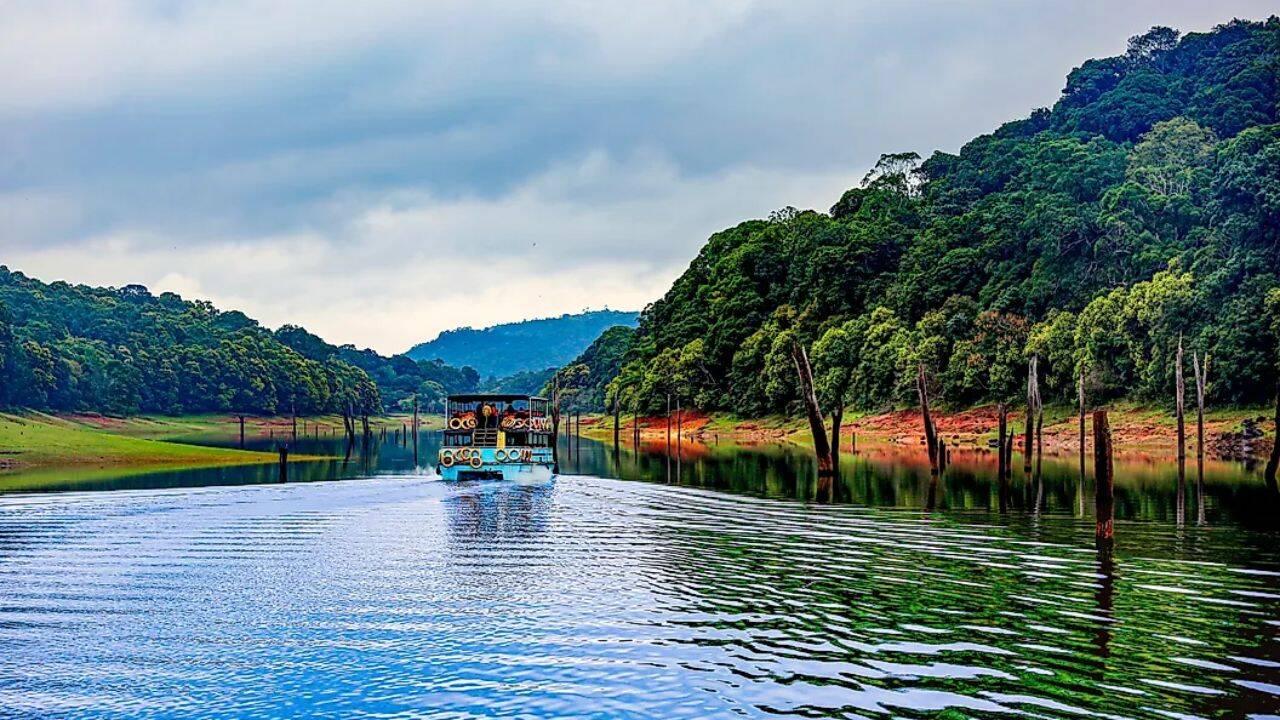
Deep in the Western Ghats of Kerala, Lake Periyar offers another look at what happens when human engineering collides with nature. This reservoir was formed back in 1895 when the Mullaperiyar Dam was built across the Periyar River. The rising waters drowned a dense valley forest, leaving behind a stark, skeletal landscape.
Unlike Caddo Lake’s living cypress trees or Kaindy’s preserved needles, the underwater forest of Lake Periyar consists of dead, blackened tree stumps that rise out of the water like charred fingers. They have been weathered by more than a century of tropical sun and monsoons, creating an incredibly stark, minimalist aesthetic against the backdrop of the surrounding green hills.
The best way to see this is by taking a boat safari organized by the Periyar Tiger Reserve. While you cannot swim or dive here due to safety regulations and wildlife protection, the lake is a prime spot for viewing wild elephants, wild boars, and various bird species that use the dead tree stumps as fishing perches.
Why Submerged Wood Defies Decomposition
You might wonder why these trees don't just turn to mush after a few years under water. It comes down to a simple lack of oxygen.
The fungi and bacteria responsible for rotting wood require oxygen to break down cellulose and lignin. When a forest is rapidly submerged in deep, stagnant, or freezing water, the oxygen levels drop to near zero. Without oxygen, standard decay stops dead in its tracks. In places like Clear Lake and Lake Kaindy, the near-freezing temperatures further paralyze the microscopic organisms that would otherwise destroy the timber. It is a natural preservation system that works better than any human-made chemical wood treatment.
Practical Next Steps for Your Journey
If you want to see these incredible underwater forests for yourself, don't just wing it. Use these practical steps to plan your trip.
- Pick your style: Decide if you want to look from a boat or get in the water. If you want to dive, look into Clear Lake (Oregon) or Lake Kaindy (Kazakhstan). If you prefer kayaking through a living swamp, book a cabin at Caddo Lake State Park in Texas.
- Get the right gear: For cold-water destinations, a standard swimsuit won't cut it. Look into local shops that rent drysuits and cold-water gear. For swamp environments, high-quality insect repellent and a waterproof GPS unit are mandatory.
- Respect the hazards: Submerged forests are dangerous. Sunken branches can snag kayak paddles, trap divers, or damage boat motors. Always check local water conditions and never explore these environments alone.
Skip the generic travel blogs and choose the lake that matches your tolerance for adventure. Whether you are navigating the tight channels of Texas or bouncing along a dirt road in Kazakhstan, seeing a forest preserved beneath the waves is something you won't forget.