The illusion of peace in the Middle East didn't even last a month. On Wednesday, July 8, 2026, the shaky interim truce between Washington and Tehran officially went up in flames. US warplanes scrambled from regional bases, launching a massive wave of precision airstrikes across southern Iran. Port cities like Bandar Abbas, Konarak, and Chabahar shook from explosions. Part of the coast completely lost electricity.
This isn't just another minor border scuffle. President Donald Trump flatly declared on Truth Social that the ceasefire is over. He warned that if Iran keeps targeting ships, things will get much worse.
If you are trying to understand why your energy bills are about to spike or whether we are on the brink of World War III, you have to look at the Strait of Hormuz. That narrow strip of water controls a fifth of the world's oil and liquefied natural gas. The truce was meant to keep that water open. Instead, we are right back to trading bombs.
The Trigger Behind the Latest Bombing Wave
The immediate catalyst for the July 8 strikes was a series of Iranian attacks on commercial shipping. Iran struck three merchant vessels navigating near Omani waters, including the Marshall Islands-flagged M/T Al Rekayyat and the Saudi-flagged M/T Wedyan. One tanker actually caught fire.
The US Central Command didn't wait around. CENTCOM ordered a massive retaliatory blitz, sending nearly 40 fighter jets—including F-35s, F-15s, and F-16s—to pound over 80 targets. They hit coastal radar networks, air defense systems, and dozens of Islamic Revolutionary Guard Corps small boats. Iranian state media claimed the initial strikes killed eight military personnel. Tehran didn't blink. The Islamic Revolutionary Guard Corps fired back fast, targeting US military assets at Sheikh Isa airbase in Bahrain and launching ballistic missiles and drones into Kuwait.
While US officials confirmed that American forces intercepted the incoming fire without suffering casualties, the strategic damage was already done. The delicate diplomatic architecture built over the last month is completely shattered.
What Both Sides Get Wrong About the Ceasefire
The fundamental flaw of last month's memorandum of understanding was that both sides signed it with completely opposing definitions of control. Washington expected the deal to grant unconditional free passage for international shipping. Tehran viewed the truce as an acknowledgment of its right to manage traffic, demand transit fees, and block access to vessels moving through Omani waters.
Trump is treating this like a brief corporate negotiation, musing from a NATO summit in Ankara that the conflict will be over very quickly. He even floated the idea of taking over Kharg Island, the heavily fortified terminal that processes 90% of Iran's crude exports. He threatened to bomb civilian infrastructure, including desalination plants and power grids.
But thinking a conflict with Iran can be wrapped up fast is a dangerous gamble. Iran's leadership is deeply divided right now, making them unpredictable. Pragmatists want sanctions relief to save their cratering economy. Hard-liners see control of the Strait of Hormuz as their only real leverage against Western pressure. When Parliament Speaker Mohammad Bagher Qalibaf posted on X that the era of bullying is over and Iran won't fold, he wasn't just talking to his citizens. He was telling Washington that military pressure won't force a surrender.
The Real Economic Toll Facing Global Markets
This conflict isn't happening in a vacuum. Brent crude oil futures instantly surged over 8% following Trump's declaration. The global economy is still reeling from the high costs of the wider war that kicked off back in February, and a prolonged shutdown of the strait will trigger severe energy shocks.
Right now, roughly 6,000 seafarers are trapped in the maritime combat zone. Shipping companies are forcing vessels to take massive, expensive detours around Africa rather than risking the gauntlet of the Persian Gulf. Trump has already revoked the temporary waiver that allowed Iran to sell oil globally, threatening to reinstate a strict naval blockade on Iranian ports.
The Complicated Timeline in Tehran
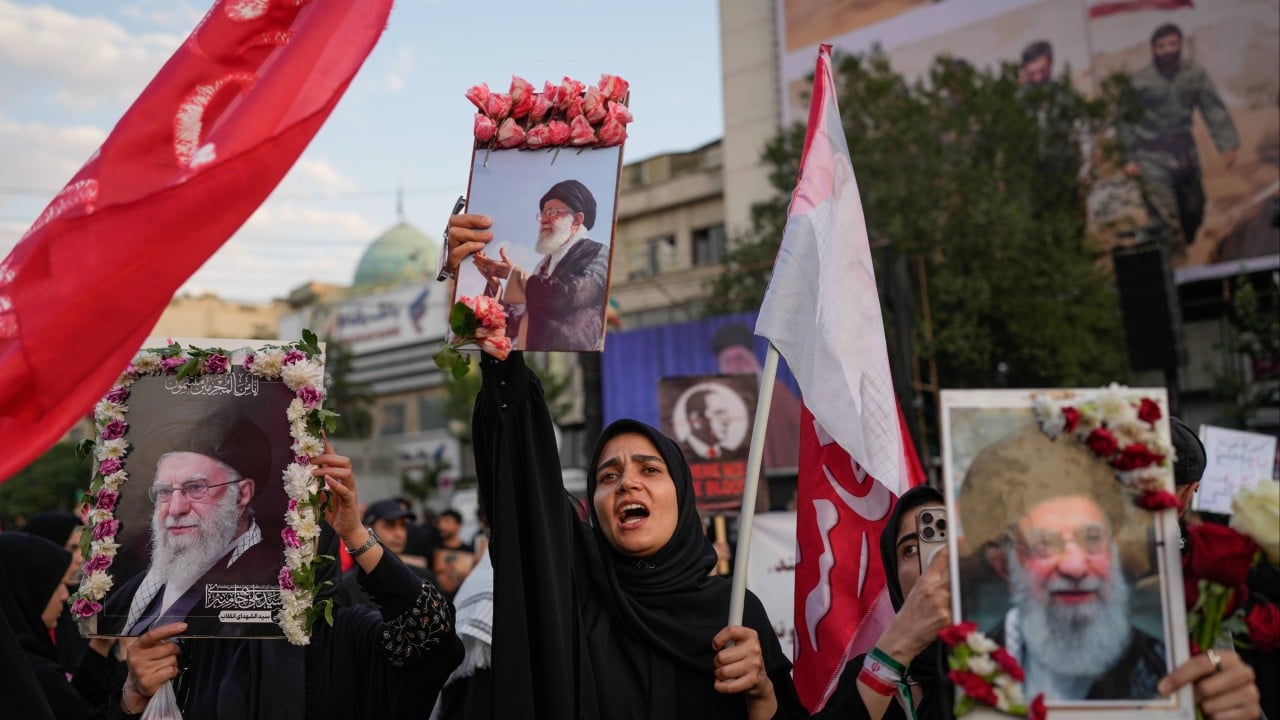
The timing of this escalation couldn't be messier. The renewed fighting boiled over right during the final days of the mass funeral ceremonies for Iran's late Supreme Leader Ayatollah Ali Khamenei. Khamenei was killed back in late February during the opening salvos of the US-Israeli military campaign.
The weeklong mourning period was supposed to act as a diplomatic cooling-off window. Broad negotiations regarding Iran's nuclear program and billions in frozen funds were scheduled to resume right after the burial in Mashhad. Instead of diplomats sitting at a table, the region got fighter jets, blackouts, and burning tankers.
What Happens Next
Expect immediate economic and military shifts over the coming days. If you are tracking this conflict, look for these specific developments:
- Watch the Shipping Lanes: Track whether major maritime transport hubs completely halt traffic through the Gulf of Oman, which will instantly drive consumer shipping prices higher.
- Monitor Kharg Island: Watch for any deployment of US naval blockades around Kharg Island, as an actual physical siege there will push oil past $90 a barrel.
- Look to regional mediators: Keep tabs on diplomatic backchannels out of Qatar and Pakistan. They are the only entities currently capable of dragging both sides back to a ceasefire framework.