The ground didn't just shake in Venezuela on Wednesday evening. It snapped twice in less than a minute.
A massive magnitude 7.2 earthquake tore through the Caribbean coast near Morón. Just 39 seconds later, before anyone could even process what was happening, a second, even larger 7.5 magnitude mainshock hit the exact same pocket of the country.
This wasn't a standard earthquake followed by minor aftershocks. It was a classic, devastating seismic doublet.
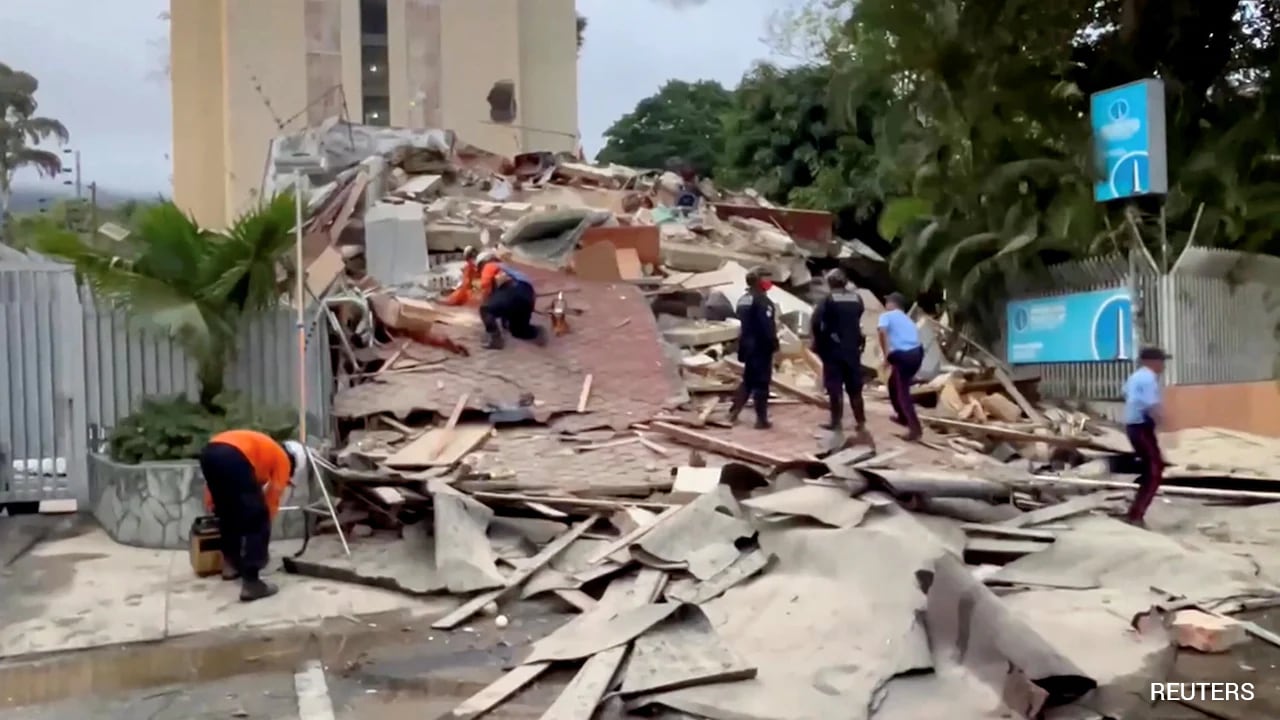
The results have been catastrophic for Caracas. Walls peeled entirely off multi-story apartment buildings, exposing living rooms and furniture to the open air. Plumes of thick concrete dust choked the air in neighborhoods like Altamira and Los Palos Grandes, where people were out enjoying a public holiday.
Rescue crews are currently digging through fractured concrete slabs to extract survivors.
If you're wondering how twin quakes of this scale managed to flatten modern structures and trap dozens of residents in a major South American capital, the answer comes down to a lethal mix of rare geology and a long-neglected infrastructure crisis.
The Nightmare of a Seismic Doublet
Most people think of an earthquake as a single big jolt. You ride it out, check for damage, and deal with smaller aftershocks. A seismic doublet ruins that script.
When the 7.2 foreshock hit at a shallow depth of 22 kilometers, it shook buildings violently from side to side. It compromised structural pillars, cracked support beams, and sent residents fleeing down dark stairwells in sheer panic.
Then, 39 seconds later, the 7.5 monster hit at an even shallower depth of 10 kilometers.
Buildings already structurally compromised by the first shock simply couldn't handle the second wave of energy. The shallow depth meant the energy didn't have time to dissipate through the earth before hitting the foundations of Caracas. It hit with maximum force.
While countries along the Pacific Ring of Fire—like Chile or Mexico—build their cities to withstand constant seismic shifting, Venezuela rarely sees events of this magnitude. The country sits right where the Caribbean Plate meets the South American Plate, making it seismically active, but massive 7+ magnitude dual events are incredibly rare here. The last time Caracas faced something truly comparable was the deadly 1967 earthquake, and older residents are already stating this feels significantly worse.
Why the Damage is So Severe
Take a look at the neighborhoods bearing the brunt of the destruction. Altamira and Los Palos Grandes are dense, busy districts filled with high-rise residential apartments, offices, and restaurants.
The structural failure here highlights two major vulnerabilities:
- Concrete degradation: Years of severe economic hardship in Venezuela mean that routine building maintenance, structural inspections, and retrofitting have been nonexistent for a vast majority of the capital's older concrete high-rises.
- The holiday factor: The quakes struck just after 6 p.m. on a major national holiday. Restaurants were packed, and families were gathered at home. Instead of empty commercial districts, the tremors hit exactly when residential buildings were at peak occupancy.
Interior Minister Diosdado Cabello confirmed that the situation in Altamira remains critical. In nearby Chacao, local officials reported that emergency workers managed to pull 18 survivors from the wreckage of just one collapsed building.
The official death toll stands at 32 but is expected to climb dramatically as search dogs and heavy machinery clear deeper layers of debris.
A Capital Paralyzed
The immediate aftermath has pushed the city's threadbare infrastructure to a total breaking point. Large swaths of Caracas lost power and cellular connectivity instantly, leaving millions of families inside and outside the country in deep distress, unable to confirm if their loved ones survived the initial collapses.
Acting President Delcy Rodríguez declared a national state of emergency, highlighting the severity of the damage outside residential zones. Simón Bolívar International Airport in Maiquetía sustained massive structural damage to its terminals and runways, forcing a complete shutdown of all incoming and outgoing flights.
Hospital de Clínicas and other major medical centers in the capital ordered all medical staff to double up on night shifts to handle the massive influx of hundreds of injured citizens arriving by the hour.
What to Do Right Now
If you have family in the area or are currently near the affected zones in north-central Venezuela, you need to follow strict survival protocols over the next 48 to 72 hours.
- Stay out of damaged structures: Do not re-enter any building that shows visible cracks, missing plaster, or misaligned door frames. The risk of major aftershocks is high, and structures that survived the doublet might collapse under a smaller tremor.
- Move to open plazas: Local authorities are instructing residents to gather in wide, open public squares away from power lines, glass facades, and heavy concrete overhangs.
- Clear the roads: Keep driving to an absolute minimum. Emergency vehicles, ambulances, and fire trucks are struggling to navigate streets blocked by toppled electric poles and masonry. Motorists must yield the right of way instantly.
- Conserve phone batteries and bandwidth: Keep voice calls short to avoid completely jamming the remaining cellular networks. Use SMS text messages to communicate status updates to family members instead.