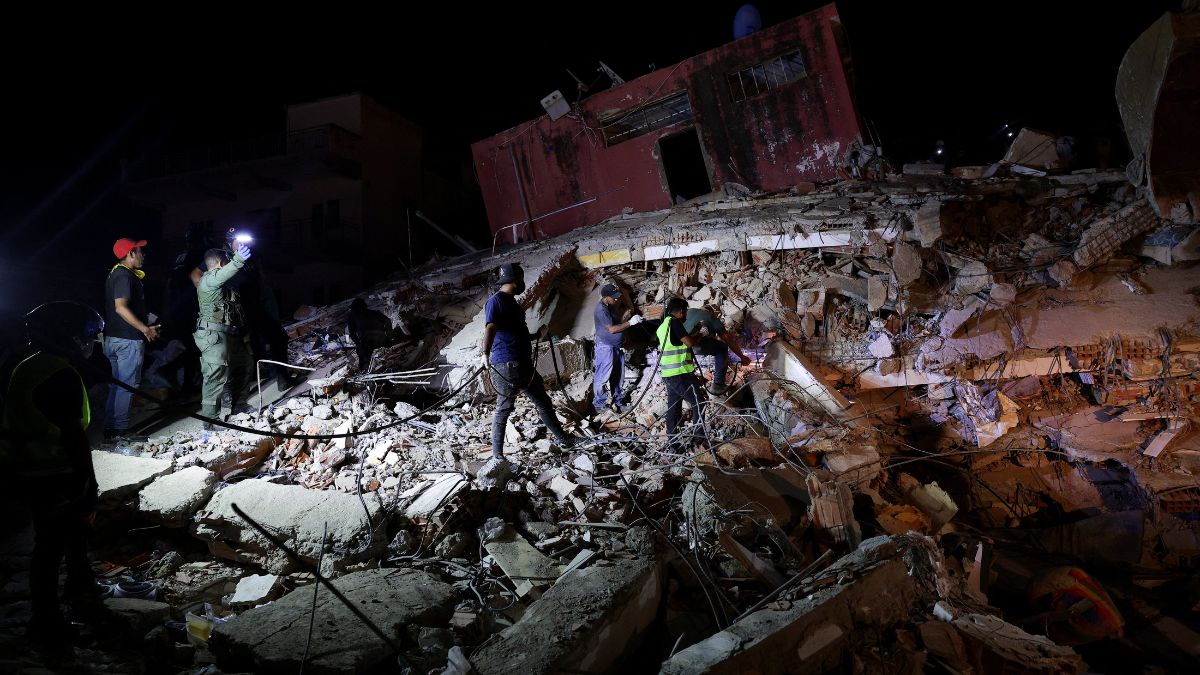
When back-to-back earthquakes flattened northern Venezuela, people didn't wait for heavy machinery. They couldn't. Neighbors and desperate parents used their bare hands, scratching through concrete slabs and twisted rebar to reach muffled screams beneath the ruins. What shocked everyone wasn't just the sheer violence of the 7.2 and 7.5 magnitude tremors that hit on Wednesday evening. It was the sudden, glaring absence of the state. In the first 48 hours of Venezuela's worst natural disaster in over a century, the heavily militarized government was nowhere to be found in the hardest-hit towns.
The official death toll has jumped to 920. United Nations aid chief Tom Fletcher warns that over 50,000 people remain missing. With the US Geological Survey projecting final casualties to top 10,000, every single second matters. Yet, in communities like La Guaira, where over a hundred buildings collapsed into dust, residents say the army simply didn't show up when the digging mattered most.
Why does a nation with one of the highest soldier-to-citizen ratios in Latin America leave its people to fend for themselves during a historic tragedy? The answer lies in a mix of broken infrastructure, political paralysis, and a leadership structure completely unprepared for actual public service.
The Panic in La Guaira and the Missing Armed Forces
When the twin quakes hit within less than a minute of each other during a public holiday, the destruction was instant. La Guaira, the coastal hub just north of Caracas, took the brunt of the force. High-rise apartments pancaked. The main international airport suffered severe structural damage, cutting off the primary gateway for immediate help.
For the first day and a half, local rescue squads, firefighters, and ordinary citizens did the heavy lifting. Families formed human chains, moving heavy debris piece by piece. Motorcycle clubs from Caracas and Valencia rode through the night, carrying whatever food and water they could strap to their bikes. It was an impressive display of community survival, but it highlighted a massive failure. Where were the troops?
National Assembly President Jorge Rodriguez went on state television on Friday to announce a major military deployment to La Guaira. But for the people who spent Thursday listening to their children die under concrete, that announcement felt like a cruel joke. It was too late for many.
The military has spent decades securing its position as the ultimate broker of power in the country. They run logistics, handle food distribution, and guard state infrastructure. But when it came to deploying search-and-sound equipment or mobilizing heavy transport to clear blocked coastal roads, the system froze.
Political Distraction Over Public Safety
You can't understand this delayed response without looking at the chaotic political reality in Caracas. Interim President Delcy Rodriguez took power earlier this year following the dramatic arrest of her predecessor in a US-led raid back in January. The new administration has been hyper-focused on consolidation, defense, and weeding out political rivals.
When a government spends all its energy worrying about its own survival, genuine emergency preparedness drops to zero. Resources that should go toward maintaining civil defense vehicles, stocking disaster warehouses, and training engineering battalions have been diverted into political security.
The state ran out of steam long before the ground started shaking. Decades of economic decay left local fire departments without working trucks, let alone specialized search gear. When the quakes hit, the state couldn't just flip a switch to activate a rescue plan. The tools simply weren't there, and the command structure was too paranoid to move without direct orders from the top.
Foreign Aid Arrives While Local Systems Stumble
The irony is that international teams managed to get boots on the ground almost as fast as Venezuela's own army. Rescuers from Mexico, Chile, and Switzerland arrived at military airfields with trained sniffer dogs and acoustic detection gear. Even Spain and Colombia sent specialized crews to assist.
In an unexpected twist, Washington even suspended its heavy economic sanctions on Caracas to prevent any bottlenecks in the rescue pipeline. The US went a step further, mobilizing two warships along with transport planes and $150 million in direct aid.
While foreign soldiers and international NGOs set up camp, local citizens are still left wondering why their own taxpayers' money bought tanks instead of rescue saws. The arriving aid is a lifeline, but foreign teams can't fix the underlying logistical nightmare. Shifting tons of rubble requires massive domestic coordination. If local authorities can't clear the roads or secure the perimeter, foreign experts spend half their time just trying to reach the disaster zones.
What Needs to Happen Now
The window to pull living survivors out of the rubble closes fast. If you want to support the relief efforts or understand what needs to change to prevent this level of neglect from happening again, watch these critical areas.
- Demand Unhindered Access for International K9 Units: Foreign teams have the specialized sound gear and dogs required to find trapped survivors in deep pockets. Pressure must stay on local officials to cut through red tape at the Aragua and La Guaira airfields.
- Support Grassroots Logistics Networks: Because state distribution is unreliable, direct aid through local churches and civic networks is the most effective way to get water and medical supplies to coastal victims. Groups like World Vision are already operating on the ground through established community connections.
- Push for Decentralized Disaster Funding: Future aid packages must bypass centralized military commands and go directly to local municipal firefighters and civil protection units who actually know the terrain and respond first.
The tragedy in northern Venezuela isn't just a story about tectonic plates. It is a harsh reminder of what happens when a government prioritizes regime survival over the basic safety of its people. The twin quakes broke the ground, but the state's slow response broke the public's trust completely.