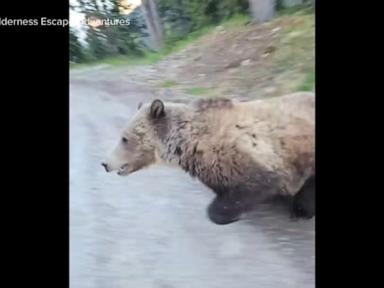
A video shot in Kananaskis, Alberta, is currently tearing up the internet. It shows a woman named Jessie walking her dog, Skoki, down a gravel path with a cup of morning coffee in her hand. Suddenly, a juvenile grizzly bear weighing roughly 180 kilograms starts stalking them. The shaggy predator locks its eyes onto the dog. It trails them closely. Then, it lunges and bluffs a charge.
The internet is calling the woman an absolute hero for her steady camera work and her deep, calm voice telling the apex predator, "Stop it. Go away. Enough."
But behind the viral praise lies a terrifying reality that wildlife experts want you to understand. This scenario happens more often than it should, and the way it played out highlights exactly what to do—and what dangerous mistakes to avoid—when you walk a dog in bear country.
The Magnet Effect of Dogs in Bear Country
A lot of people think their family dog is a shield against wild animals. Online commenters love to brag that their hound would scare a bear away or die protecting them. In reality, dogs are often the spark that ignites a bear attack.
When a dog encounters a grizzly bear, one of two things usually happens. Either the dog gets aggressive and barks, which the bear views as a direct threat, or the dog gets terrified and runs straight back to its owner. Guess who follows the dog? The bear.
Data from wildlife agencies across North America shows that more than half of all negative bear encounters involve off-leash dogs. In this viral video, Jessie kept her dog Skoki on a leash. That single detail might have saved both of their lives. When the grizzly charged, Skoki couldn't bolt, and Jessie didn't have to chase a panicked pet into the brush. They remained a single, stable unit.
What Went Right and What Went Terribly Wrong
Let's look at the hard facts of this encounter near Mount Engadine Lodge. Alberta Forestry and Parks officials instantly issued a bear warning for Mount Shark Road and the Rummel Lake Trail following this incident. They did that because the bear exhibited predatory behavior, not just simple curiosity.
The Survival Wins
Jessie handled the actual confrontation with rare presence of mind. She didn't turn around and run. Running triggers a grizzly's chase instinct, and you can't outrun an animal that hits 50 kilometers per hour.
Instead, she backed away slowly while facing the animal. She kept her voice firm and assertive. When the grizzly lunged, she stood her ground and yelled forcefully. This project of dominance is exactly how you handle a bluff charge from a curious or testing juvenile bear.
The Dangerous Mistakes
Despite her incredible bravery, Jessie made a massive mistake before she even left the house. She went into deep grizzly territory with a cup of coffee and a bear bell, but no bear spray.
A bear bell is basically a dinner bell in dense brush; it alerts wildlife to your presence, but it won't stop an aggressive animal. Bear spray has a success rate above 90% in stopping active charges. Relying on a calm voice and a thrown coffee cup against an apex predator is a gamble you'll lose nine times out of ten.
The Golden Rule: Never step foot into bear country without a canister of bear spray securely strapped to your hip or chest. Keeping it inside a zipped backpack is the same as not having it at all.
🔗 Read more: map of the mesopotamia region
How to Handle a Grizzly Encounter with Your Pet
If you find yourself on a trail and a grizzly bear appears, your strategy needs to be immediate and precise.
Actionable Steps for Your Next Hike
Don't let a viral video make you complacent about wildlife. Before you hit any trail in western Canada or the American northwest, take these steps to protect yourself and your pet.
- Buy fresh bear spray: Check the expiration date on your canister. The propellant degrades over time, leaving you with a useless can when you need it most.
- Practice the quick-draw: Buy an inert practice canister and practice pulling it from your hip holster and flipping the safety off. You have less than two seconds to react when a grizzly charges.
- Leave the dog home if it barks: If your dog cannot stay completely silent and calm on a leash around strange animals, do not take it into known bear country.
- Check local trail reports: Government agencies regularly post active bear sightings and trail closures. Check these reports an hour before you leave.