Summer hasn't even officially peaked, and Western Europe is already baking under a terrifying atmospheric block. The newest heatwave has turned deadly, triggering emergency protocols from Paris to Madrid. This isn't just about uncomfortable commutes or sweaty afternoons anymore. It is a genuine public safety crisis that is catching major infrastructure completely off guard.
French health authorities just confirmed a spike in fatalities directly tied to the soaring temperatures. Searing weather pushed the country into high alert as thermometers crossed 40 degrees Celsius in multiple regions. If you think Europe can just breeze through these recurring summer spikes, you're missing the grim reality on the ground. The continent's built environment simply wasn't designed for this kind of sustained thermal stress.
Searing Realities and the Breaking Point of Public Infrastructure
The tragedy hitting France right now is deeply personal and entirely preventable. Two young children, aged just two and four, lost their lives inside a parked vehicle in the southern town of Carpentras. Local prosecutors are identifying extreme heat as the core line of investigation. With outside temperatures in the area breaching 39 degrees Celsius, the interior of a sealed vehicle can easily hit lethal thresholds within minutes.
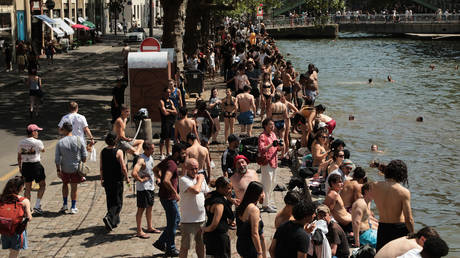
But the danger extends far beyond hot cars. As desperate citizens seek any possible relief from the oppressive air, accidental drownings have skyrocketed. Over a single weekend, French emergency cells tracked 13 drowning deaths. People are jumping into unsupervised rivers, lakes, and channels without realizing how cold water shock can paralyze muscles instantly. The state has stepped in with unprecedented restrictions, outright banning public alcohol consumption in high-threat red zones. The logic is simple. Alcohol severe alters your body's natural thermal regulation and clouds your judgment when you need it most.
Around 49 regional administrative areas in France are sitting under the highest tier heat alert. Over 1,300 schools either closed their doors or completely altered their schedules because old schoolhouses lacked proper insulation or cooling systems. The state rail authority, SNCF, had to deploy thousands of extra workers to manually monitor tracks. Searing heat causes steel rails to expand, bend, and warp, creating a massive risk of high-speed train derailments.
The Broader European Threat
France isn't isolated in this misery. Spain's Basque region is facing temperatures almost double its historical average for this time of year. Cities like San Sebastian are touching 40 degrees Celsius. Nighttime offers zero relief, with baseline low temperatures refusing to drop below 30 degrees Celsius in southern Spanish provinces. When the night stays that hot, the human body never gets a chance to shed its accumulated core heat, heavily increasing the risk of sudden cardiovascular collapse in elderly populations.
Across the English Channel, the United Kingdom issued its own rare red warning for extreme heat. Commuters on the London Underground face blistering conditions inside historic subway lines built deep underground without modern climate control. Wildlife shelters in Belgium and northern France are also filling up with hundreds of heat-stricken animals. Searing rooftops are forcing nesting birds to literally jump from their nests early to escape baking alive.
The underlying mechanics of this current event track back to a recurring weather phenomenon called a heat dome. A strong ridge of high pressure parks over the continent, acting like a heavy pot lid that traps hot air underneath and compresses it. This compression bakes the air further while pushing away cooling cloud covers. Climate researchers note that while heatwaves are natural weather anomalies, the baseline springboard has fundamentally shifted. Decades of industrial carbon emissions have loaded the lower atmosphere with extra energy, making these seasonal high-pressure blocks far more intense and lengthy than anything seen in the previous century.
How to Protect Yourself and Survive the Peak Hours
Staying safe requires moving past basic advice like drinking more water. You need an active strategy to keep your core temperature down when ambient air is hotter than your skin.
Keep your windows completely shut during the day. This sounds counterintuitive to many people who want a breeze. But when the outside air is 40 degrees Celsius, opening a window just invites a furnace inside. Close the glass and pull thick curtains shut to block out direct solar radiation. Open things up only late at night when the outside air drops below your inside temperature.
Prioritize electrolyte intake over plain tap water. Chugging gallons of pure water without replacing lost salts can cause a dangerous drop in blood sodium levels, a medical emergency known as hyponatremia. Mix in electrolyte powders, or eat small, salty snacks alongside your fluids.
Know the difference between heat exhaustion and heat stroke. Exhaustion involves heavy sweating, a rapid pulse, dizziness, and nausea. You can usually fix this by moving to a dark room, loosening clothing, and applying damp towels. Heat stroke is a true medical emergency where your body stops sweating entirely. Your skin becomes hot and dry, confusion sets in, and internal organs begin to fail. If someone around you displays confusion or loses consciousness in extreme heat, call emergency services immediately and douse them in cold water while you wait.
Never assume a quick errand in a car is safe for pets or kids. Even with a cracked window, a dark car interior absorbs solar energy like a greenhouse. Internal temperatures can skyrocket by 10 to 15 degrees within ten minutes, creating a lethal trap before you even finish paying at a checkout counter.
The current European crisis proves that our seasonal expectations are totally outdated. Treat extreme heat as an active environmental hazard, adjust your daily routines, and look out for vulnerable neighbors who might be suffering in silence behind closed blinds.