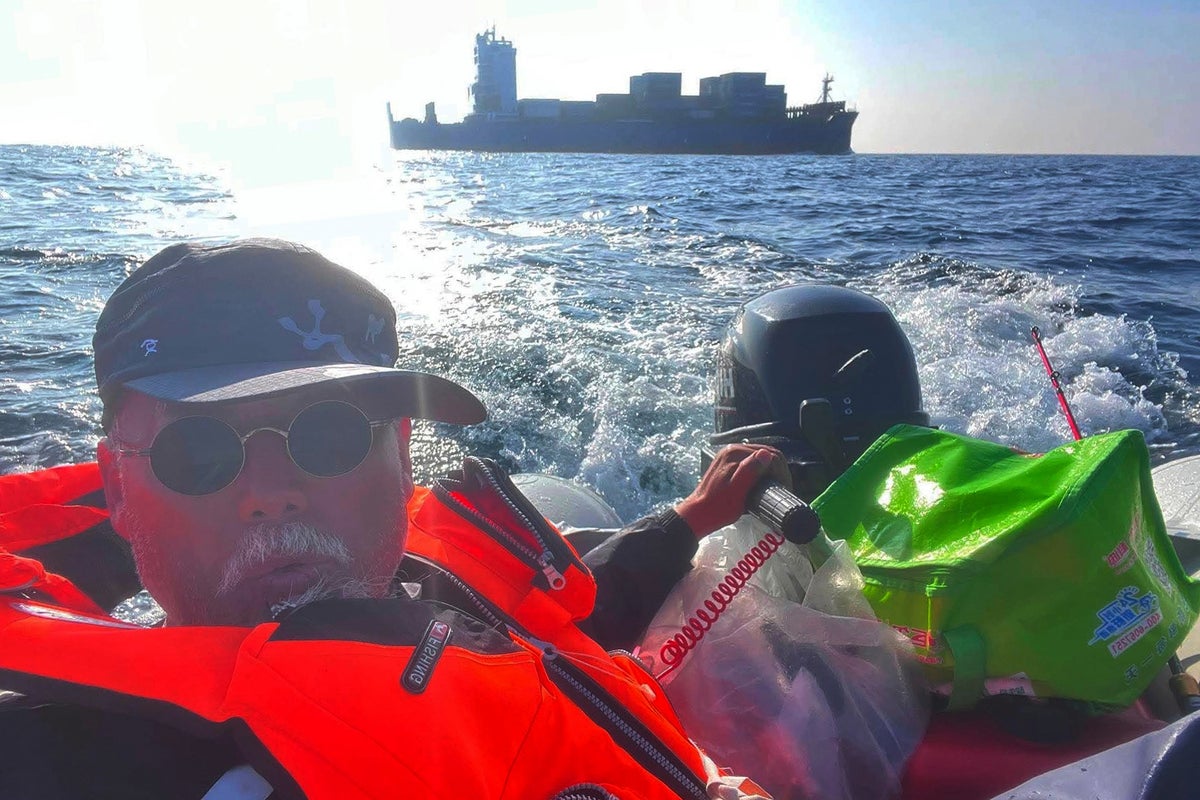
Imagine sitting in a 3-meter rubber dinghy in the middle of the Yellow Sea. The sky and ocean have blended into a blinding, featureless wall of white fog. Your phone—your only navigation tool—is down to its final bar of battery. The backup power bank is dead. The tiny 9.9-horsepower motor is sputtering, threatening to leave you stranded in open water where a single heavy wave will flip you over.
You're 68 years old. You've been jailed multiple times, tracked by state security, and stripped of your pension. If you turn back, you face a prison cell. If you go forward, you might drown.
For Tiananmen activist Dong Guangping, the choice wasn't even close. He pushed the throttle forward.
His arrival in Toronto ends a brutal, 10-year odyssey of escapes, captures, and deportations. It's a story that highlights just how far Chinese dissidents have to go to find safety when neighboring countries refuse to protect them.
The Breaking Point of a Former Cop
Most people don't realize that Dong Guangping used to be part of the system. He served as a soldier and later worked as a police inspector in Zhengzhou. His father was a military general. He grew up in a comfortable, well-connected household. His life changed when he signed a petition commemorating the victims of the 1989 Tiananmen Square massacre.
The state didn't tolerate dissent from its own officers. The police force fired him in 1999. By 2001, he was serving a three-year prison sentence for "inciting subversion of state power."
When you protest in China, the punishment doesn't end when you leave prison. After his release, Dong found himself in a legal gray zone. He couldn't get a job. He couldn't access his retirement benefits. The government refused to renew his passport, effectively trapping him within the borders while keeping him under constant surveillance.
"Living back in the country is like living in a cage. Very suffocating," Dong said after landing in Canada. "Being alive is little different than being dead. So there is no point fearing death."
A Decade of Brutal Failures
The crossing in May 2026 wasn't his first attempt to flee. It was his fourth known bid for freedom, capping off a decade of heartbreaking close calls.
In 2015, Dong managed to slip into Thailand with his wife and daughter. The United Nations refugee agency (UNHCR) officially recognized them as refugees. They were preparing to move to Canada when Thai immigration police detained him. Despite intense lobbying from human rights groups, Thailand handed Dong over to Chinese police.
His family made it to Toronto. Dong was sent back to a Chinese prison for another three and a half years.
Once he got out in 2019, he tried a desperate physical feat: swimming from mainland China to Kinmen, a cluster of islands controlled by Taiwan. He misjudged the currents, nearly drowned, and was pulled from the water by fishermen who turned him back over to mainland authorities.
By 2020, he tried the southern route, crossing illegally into Vietnam. He spent months hiding in Hanoi, waiting for Canada to finalize his asylum paperwork. In August 2022, Vietnamese authorities arrested him. Just like Thailand, Vietnam stayed silent about his whereabouts and quietly deported him back to China, where he served another 11 months for "illegal border crossing." He was released in October 2023, only to find himself right back where he started—monitored, broke, and separated from his family.
Thirty Hours in a Rubber Dinghy
On May 24, 2026, Dong decided to copy a tactic used by activist Kwon Pyong, who famously escaped China on a jet ski in 2023. Dong traveled to Weihai, a coastal city in Shandong province. He bought a light gray, 11-foot inflatable rubber boat and attached a small outboard motor.
He launched into the open ocean, initially aiming for Japan because he believed Tokyo wouldn't deport him. But the sea doesn't care about political asylum.
The next day, heavy fog rolled in. With zero visibility and a dead phone, he lost his bearings entirely. Realizing he couldn't make Japan, he turned toward South Korea.
He spent more than 30 hours on the water without sleep. The engine began to fail just as he entered South Korean waters near Taean County. Exhausted and close to fainting, he spotted the lights of a fishing boat around 9:30 p.m. The first boat missed his cries for help. The second boat stopped, pulled him out of the dinghy, and called the coast guard.
The Secret Diplomatic Deal
South Korea has notoriously strict immigration laws. The country approves fewer than 2% of asylum applications. When the coast guard detained Dong for illegal entry, human rights activists worried Seoul would bend to diplomatic pressure from Beijing and deport him, just as Thailand and Vietnam had done.
But this time, the legal framework held. A South Korean court rejected a formal arrest warrant, ruling that Dong wasn't a flight risk. He was transferred to an immigration refugee center in Incheon.
Behind the scenes, Canadian diplomats and the UNHCR moved quickly. While in the center, a manager unexpectedly asked Dong for his height, weight, and eye color—details needed to process emergency travel documents.
Within weeks, Dong was on an Air Canada flight to Toronto. He reunited with his family and celebrated his first night of freedom with a bowl of tomato, egg, and shrimp noodles.
What Happens Next
Dong is safe, but he isn't quiet. At 68, he plans to find work as an Uber or truck driver to support his family, but his main focus remains political. He has already stated his intention to continue advocating for democratic reform in China from abroad.
He's also looking for legal accountability. Dong plans to consult lawyers to see if he can sue the governments of Thailand and Vietnam for violating international law by deporting him back to face persecution in 2015 and 2022.
If you want to track how these international asylum laws are shifting, look up the active campaigns by groups like Human Rights in China and Amnesty International. They regularly document the safety of dissidents in transit countries throughout Southeast Asia.