Europe wants you to believe it's a serious contender in the artificial intelligence gold rush. It's not. While Washington and Beijing pour hundreds of billions into custom silicon, massive cluster farms, and foundational compute, Brussels is busy writing rulebooks. The continent is caught in a terrifying vice between American venture capital and Chinese state-backed deployment. The harsh truth is that Europe isn't just losing the battle. It's playing an entirely different game.
Look at the headlines. You'll see politicians boasting about European sovereignty and local champions. They point to startups fighting bravely against Silicon Valley. But look closer at the math, the infrastructure, and the regulatory chokeholds. The gap isn't shrinking. It's widening every single day. If you want to understand why the old continent is stuck in the slow lane, you have to look past the political speeches and face the brutal economics of modern tech.
The Massive Scale Divide That Capital Markets Cant Fix
Let's talk about the money because money buys computing power. Without compute, your models are toys.
A lot of noise was made when French darling Mistral AI pulled off a €1.7 billion Series C funding round, heavily backed by semiconductor kingpin ASML to the tune of €1.3 billion. That pushed Mistral’s valuation to a respectable €11.7 billion. They even grabbed another $830 million in debt to hook up 13,800 Nvidia chips for new data centers near Paris and in Sweden.
It sounds massive. It feels like Europe is finally playing hardball. But it's pocket change.
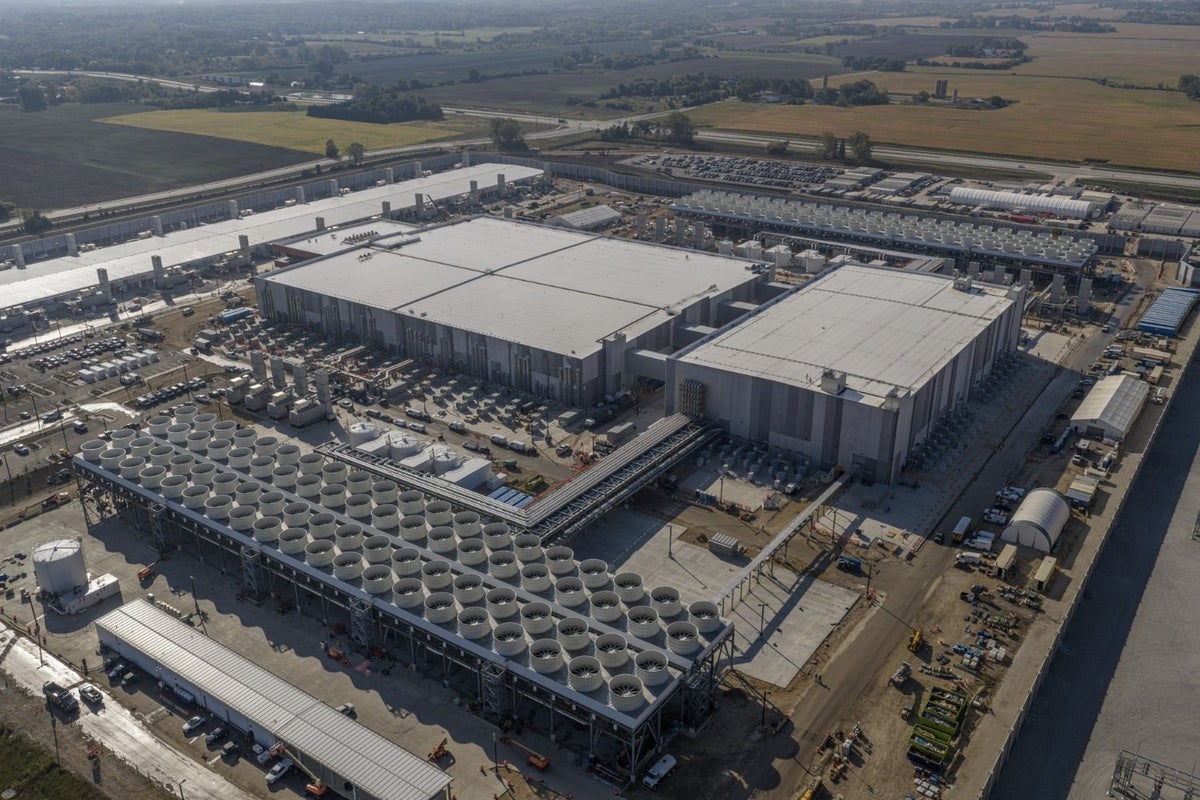
Compare that to the American titans. Meta, Microsoft, Google, and Amazon are tracking capital expenditures that cross the $50 billion mark annually per company. A single US tech giant spends more on data centers in a quarter than the entire European ecosystem raises in a year. The capital markets in Europe are fractured, conservative, and terrified of big risks.
American startups can raise hundreds of millions on a slide deck and a promise. European founders spend months begging fragmented venture funds for a fraction of that amount. By the time a European startup secures its seed round, an American rival has already gone through three training cycles and locked down enterprise distribution.
China operates on another planet entirely. Beijing treats artificial intelligence as a national security imperative. When the state decides to scale infrastructure, it doesn't wait for private venture capital to debate valuations. The government coordinates state-owned telecom firms, local tech leaders like Baidu, Tencent, and Alibaba, and specialized labs to construct computational infrastructure at a scale that defies market logic. New power grids are built specifically to feed these massive server farms. Europe cannot compete with American capital markets, and it certainly cannot compete with Chinese state mobilization.
The Regulatory Chokehold of the AI Act
Europe’s primary export these days seems to be regulation. The EU AI Act is now fully active, and it is a bureaucratic monster.
The European Union claims this framework makes technology safer and builds public trust. What it actually does is create a compliance nightmare that heavily penalizes early-stage innovation. The law categorizes systems by risk levels, implementing outright bans on specific biometric practices and slapping heavy obligations on general-purpose models.
If you're a multi-billion-dollar American corporation, compliance is just an administrative line item. You hire fifty more lawyers, fill out the paperwork, and keep moving. If you're a ten-person startup out of Berlin or Paris, those same rules are a terminal diagnosis.
The transparency mandates alone require developers to document their training data down to the atom. This creates an immediate legal minefield regarding copyright and data access. The rules hit exactly when companies need to move fast. Instead of refining their algorithms, European engineers are spending their afternoons with compliance officers making sure they don't trigger massive fines.
[Traditional Innovation Loop]
Build -> Test -> Ship -> Iterate

[European Regulatory Loop]
Build -> Consult Lawyers -> Audit Data -> Risk Assessment -> Regulatory Approval -> Ship -> Re-audit
This regulatory wall also drives away foreign investment. Why would a global venture fund pump capital into a European firm knowing that its product might be tied up in Brussels' red tape for months? The predictable result is happening right now. Brilliant European researchers are packing their bags and moving to San Francisco or Shenzhen, where they can build things without asking permission from a committee.
The Open Source Illusion and Industrial Survival
Faced with a lack of raw compute and crushing regulations, Europe has leaned heavily into the open-weights movement. Mistral AI built its reputation on open models like its Mixtral series, letting developers worldwide download and modify them.
It was a brilliant strategy to gain adoption quickly. It created a massive community and proved that European engineering could match the efficiency of closed-source giants like OpenAI or Anthropic.
But open source is a precarious business model when you're fighting for survival. Giving away your core intellectual property makes it incredibly difficult to build a highly profitable enterprise. Mistral knows this. It's why they pivoted toward proprietary enterprise tools, launching their agentic productivity tool called Vibe, introducing advanced OCR models, and offering closed systems for high-stakes industries.
They are trying to survive by embedding themselves deeply into Europe's remaining industrial base. They are partnering with Airbus for aerospace operations, helping the BMW Group build large industry models for crash simulations, and working with ASML to optimize semiconductor lithography.
This is a smart tactical play. Europe still has elite manufacturing, automotive engineering, and industrial infrastructure. By focusing on secure, highly specialized B2B workflows where data privacy is paramount, European players can find profitable niches.
It won't make them global consumer platforms. It won't give them the cultural influence of a ChatGPT or a TikTok. It's a defensive strategy designed to keep European industry from becoming completely dependent on foreign software. It is survival, not dominance.
The Critical Data Starvation Problem
Models need data to grow smarter. The quality and volume of your training sets dictate the ceiling of your intelligence capabilities. Here again, Europe is starving.
The American ecosystem benefits from an incredibly unified, highly consumerist English-speaking market. Tech companies pull vast pools of consumer behavioral data, web text, and media with minimal friction. China possesses a massive, homogenous digital population operating inside closed super-apps like WeChat. Chinese developers have access to a mountain of real-world operational data that is perfectly cleaned, centralized, and sanctioned by the state for development purposes.
Europe is a patchwork of twenty-four official languages, distinct cultural norms, and strict national privacy laws. GDPR was just the beginning. The continent’s data pools are siloed across borders and locked down by intense privacy restrictions. Training a model to understand the subtle nuances of medical records across French, German, Spanish, and Polish systems is a logistical horror show.
This fragmentation means European models are often trained on public datasets that lack the depth and real-world messiness of the proprietary data pools held by American tech monopolies or Chinese state systems. You can have the most elegant model architecture in the world, but if you feed it clean corporate press releases while your competitor feeds their model the entire real-time conversational firehose of the internet, you lose.
What a Pragmatic Tech Strategy Actually Looks Like
Europe needs to stop pretending it's going to build the next dominant consumer chatbot. That ship sailed years ago. If the continent wants to retain any form of digital autonomy, it has to ditch the delusions and execute a focused, pragmatic playbook immediately.
Stop Trying to Copy Silicon Valley
Trying to build another venture-backed consumer tech ecosystem is a waste of time. The infrastructure isn't there, and the capital markets won't support it. Europe must double down on its actual strengths: advanced manufacturing, robotics, scientific research, and complex engineering. The goal should be embedding highly specialized, hyper-secure intelligence into physical machinery, supply chains, and industrial workflows.
Create Cloud and Compute Sanctuaries
Relying entirely on American hyperscalers like AWS, Azure, and Google Cloud for infrastructure is a massive sovereign risk. The current push for new data centers in Europe needs to be aggressively accelerated through direct state subsidies, bypassing normal bureaucratic zoning hurdles. Europe needs dedicated sovereign compute clusters that are legally insulated from foreign surveillance laws and completely optimized for local enterprise use.
Carve Out Regulatory Safe Zones for Startups
The AI Act needs immediate adjustments. Small teams and pre-revenue startups must be granted total exemption from the heavy compliance burdens placed on systemic models. If a company has fewer than fifty employees, it should operate in a regulatory sandbox where it can experiment, train, and deploy models with the same freedom enjoyed by competitors in the US and Asia.
Leverage Open Source as a National Infrastructure Policy
Instead of treating open source as a casual startup marketing trick, European governments should adopt it as a formal infrastructure standard. Public funds should directly finance the development of open-weights foundational models designed specifically for public administration, healthcare, and education. This ensures that the public sector remains technologically independent without forcing government agencies to pay licensing fees to foreign monopolies.
The window for action is shutting down fast. If Europe keeps relying on heavy regulation and small funding rounds, it will end up as a tech colony, paying rent to American compute platforms while watching Chinese applications dominate global markets. The time for proud speeches is over. It's time to build infrastructure or accept global irrelevance.