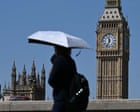
The 40C Summer Is No Longer A Statistical Freak Event
The Met Office just dropped a rare red weather warning for Wednesday and Thursday. Think about that for a second. We aren't even into July or August yet, and parts of England are staring down the barrel of 38°C with a very real 25% chance of breaking the 40°C barrier. The UK Health Security Agency expanded its red heat health alerts across six regions. If you think this is just a bit of nice beer garden weather, you're fundamentally misreading the situation.
The conversation always shifts back to the legendary summer of 1976. People love to reminisce about that blazing June half a century ago as if it proves British summers have always been like this. It's a comforting myth. But it completely ignores reality. The 1976 heatwave was a massive, isolated spike in a much cooler global climate baseline. What we are living through right now in 2026 is an entirely different beast. It is a systematic shift.
When Kew Gardens recorded 35.1°C back in May, it wasn't an anomaly. It was a warning shot. The UK is actively transitioning into a country where 40°C isn't a once-in-a-generation headline. It is becoming the benchmark.
Why British Infrastructure Is Melting
Our built environment was designed to keep heat in, not let it out. For centuries, British architecture focused on surviving damp, freezing winters. We built thick brick terraces, installed small windows, and insulated everything to trap every single watt of thermal energy. Put those same buildings under a multi-day 40°C plume of Saharan air combined with high humidity, and they turn into literal brick ovens.
Look at the transport network this week. Chiltern Railways slashed more than half its timetable. LNER is telling people flat out not to travel. Network Rail is panic-imposing speed restrictions across the board. This isn't because rail bosses are lazy or overly cautious. It's basic physics.
British rail tracks are made of steel. They are stressed to a specific neutral temperature of around 27°C, which helps them withstand typical British winter cold and summer warmth. But when air temperatures hit 38°C, the actual metal rail tracks can absorb radiation and soar past 50°C. When steel gets that hot, it expands. If it expands too much with nowhere to go, it buckles. A buckled rail derails trains.
The overhead power lines aren't doing any better. Intense heat causes the copper wires to sag, getting caught in train pantographs and tearing down the electric grid. We don't have a resilient system because we never built one for a Mediterranean climate.
The Secret Danger of Tropical Nights
Everyone focuses on the daytime peak. The big flashy number on the weather app gets all the clicks. But the real medical crisis happens after the sun goes down.
Meteorologists call them tropical nights. That's when the overnight temperature refuses to drop below 20°C. This week, we are looking at widespread tropical nights across southern England, especially inside major cities like London, Birmingham, and Manchester.
Your body needs a thermal break. During the day, your heart works overtime to pump blood to your skin to sweat and shed heat. If the ambient air stays hot all night, your cardiovascular system never gets to rest. It just keeps pumping at top speed.
Dr Mehri Khosravi from the University of East London pointed out that our housing stock worsens this dramatically. If you live in a modern, poorly ventilated apartment block or a top-floor flat, the indoor temperature during a tropical night can easily stay above 28°C. This is exactly how heat becomes a silent killer. It doesn't look violent like a flood or a tornado, but the stress it puts on elderly bodies, or anyone with pre-existing kidney and heart conditions, is immense.
The Super El Nino and the Jet Stream Block
Why is 2026 turning out to be so brutal? You can trace a lot of it back to the Pacific Ocean. The Super El Niño setup that developed over the last year has basically acted as a massive global heat pump, driving up global atmospheric anomalies to 1.4°C above pre-industrial levels for the fourth straight year.
On top of that, the jet stream is acting weird. Instead of rushing across the Atlantic and bringing us our usual mild, wet weather, the jet stream has developed a massive, static high-pressure block right over the British Isles. This high-pressure system acts like a giant dome. It traps the air underneath it, bakes it under continuous June sunshine, and draws up incredibly hot, humid air masses from North Africa.
The soil moisture deficit is compounding the issue. Because parts of the country experienced a weirdly dry and fast-drying spring cycle, there is very little moisture left in the ground to evaporate. Usually, when the sun beats down, a lot of that solar energy goes into evaporating water from the soil and plants. When the ground is bone dry, 100% of that solar radiation goes directly into heating the air. It creates a nasty feedback loop. The hotter it gets, the drier the soil gets, which makes the next day even hotter.
The True Cost of a Changing Climate
This isn't just about personal discomfort or buying a cheap desktop fan from Argos. The economic and social ripple effects are already tearing through the UK economy this summer.
Water companies are already struggling to maintain water pressure. South East Water reported massive supply issues across Kent, leaving thousands of properties without stable water because treatment plants simply can't keep up with peak demand. When everyone turns on their taps at the exact same moment to cool down or water dying gardens, the pressure drops instantly.
Then there is the labor market shock. Unlike countries in southern Europe, the UK has no legal maximum working temperature. We don't have an established culture of siestas or shifting working hours to the early morning. People are expected to commute on melting trains into offices with subpar air conditioning, or worse, work manual construction jobs under direct sunlight during peak UV hours.
We are also seeing a terrifying spike in accidental drownings. The Royal Life Saving Society issued urgent alerts after 15 people, including nine children, died in water-related incidents during the early heat spikes. People see a river or a quarry lake and jump in to cool off, completely unaware of toxic algae blooms or cold water shock, which can paralyze your muscles in seconds regardless of how hot the air is.
How to Actually Protect Yourself This Week
Stop doing what you traditionally did during sunny days. The old British instinct to throw open every window the second the sun comes out is the worst thing you can do during a 40°C heatwave. If the air outside is 38°C and the air inside your house is 24°C, opening the window just lets the furnace inside.
Here is what you actually need to do to keep your living space liveable.
Keep your windows completely shut during the hottest parts of the day. Pull your curtains, blinds, or better yet, pin up light-colored sheets or tin foil on the outside of your windows to reflect the solar radiation before it hits the glass. Once glass heats up, it radiates that heat directly into your rooms like a radiator.
Only open your windows late at night or early in the morning when the outside air drops below the indoor temperature. Create a cross-breeze by opening windows on opposite sides of the house to force the hot, stagnant air out.
Ditch the heavy meals. Your body generates significant metabolic heat just trying to digest complex proteins and fats. Stick to light foods that don't require you to turn on the oven or stove, which just adds more ambient heat to your kitchen.
If you use a fan, don't just point it at your face expecting it to cool the room. Fans don't cool air; they just move it. If the room is hotter than 35°C, blowing hot air over your skin can actually accelerate dehydration and heat exhaustion. Instead, place a large bowl of ice or frozen water bottles directly in front of the fan. This creates a crude but highly effective evaporative cooling effect that lowers the actual temperature of the air stream.
Watch your hydration levels closely. Drinking water is good, but if you're sweating continuously, you're losing essential electrolytes. Mix in a rehydration sachet or drink a sports drink to keep your sodium and potassium levels balanced. If you start feeling dizzy, get a throbbing headache, or stop sweating altogether despite being hot, you're moving past heat exhaustion and straight into heatstroke territory. That's a medical emergency. Get into a cool bath or call emergency services immediately.