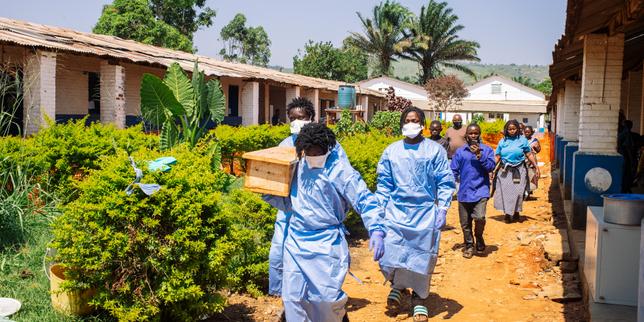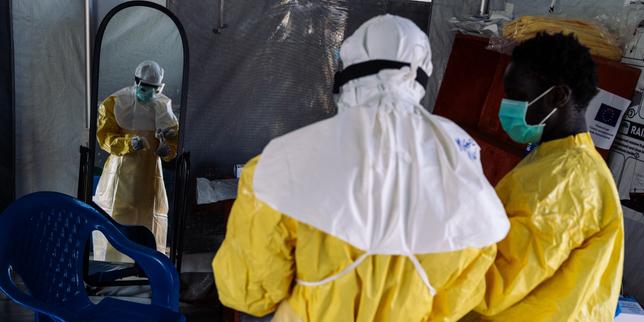
The headlines look scary. For the first time in history, a patient has been diagnosed with the Ebola virus directly on French soil. The news broke on June 24, 2026, when the French Ministry of Health confirmed that a humanitarian doctor returning from the Democratic Republic of Congo tested positive.
If you just look at the raw alerts hitting your phone, it sounds like the plot of a pandemic thriller. A commercial flight from Kinshasa lands in Paris. A medical worker begins feeling sick mid-air. Five nearby passengers are suddenly tracked down and forced into isolation.
But if you are ready to panic, take a deep breath.
This isn't 2020 all over again. The transmission dynamics of this pathogen don't allow for sneaky, invisible super-spreader events in grocery stores or subway cars. Let's break down exactly what happened, why our existing medical countermeasures face a unique hurdle with this specific outbreak, and what the actual risk is to the public.
What Happened on the Flight to Paris
The patient is a French doctor working with the humanitarian group ALIMA (The Alliance for International Medical Action). He had been on the frontlines of the latest outbreak in the Democratic Republic of Congo. When he boarded his Air France flight from Kinshasa, he felt completely fine except for a mild headache.
Things changed mid-flight. His condition began to decline.
Because he was a medical professional who knew the exact risks of his environment, proper protocols were triggered immediately. When the wheels touched down at Paris-Charles de Gaulle airport, medical teams were already waiting. He didn't walk through the terminal. He didn't line up at customs. He was transferred directly from the tarmac to a specialized isolation unit with negative pressure rooms designed specifically for highly dangerous biological agents.
The health ministry noted his viral load was incredibly low when tested. That is a massive detail. In the world of virology, a low viral load combined with an early stage of illness means the patient was barely contagious, if at all, during the journey. To play it safe, health officials tracked down the five passengers who sat directly next to or near the doctor on the aircraft. Those five individuals are currently undergoing a mandatory 21-day home quarantine.
The Catch Nobody is Talking About
Here is where we need to look at the hard scientific data. Most people remember that scientists successfully developed highly effective vaccines during the major outbreaks of the last decade. Ervebo, the primary vaccine used globally, is highly effective.
But it won't work here.
The current outbreak, which was officially declared in the eastern Ituri province of the DRC on May 15, 2026, isn't caused by the familiar Zaire strain. It is driven by a much rarer variant called the Bundibugyo strain.
The structural proteins of the virus dictate how our bodies fight it off. In the diagram of the virion, you can see the Glycoprotein spikes protruding from the outer membrane. These spikes are what the virus uses to bind to human cells. They are also the primary target for vaccines. The genetic sequence of the Glycoprotein in the Bundibugyo strain is different enough from the Zaire strain that our existing stock of vaccines cannot bind effectively.
Currently, there is no approved vaccine and no specific, licensed antiviral treatment for this particular variant. That sounds terrifying, but the reality on the ground shows that modern supportive care makes a profound difference.
In past decades, getting infected meant a coin flip with death, showing mortality rates near 50% or even 90%. In this current 2026 outbreak, official tallies report 1,048 cases and 267 deaths. That puts the fatality rate at roughly 25%. While that is still a severe number, it proves that early medical intervention and aggressive fluid management drastically change the outcome. We also have a blueprint for recovery: just last month, an American missionary surgeon who contracted the same strain in Africa was evacuated to a specialized center in Berlin. After 17 days of intensive care using experimental therapies, he walked out of the hospital completely cured.
Why Local Transmission in Europe is Highly Unlikely
Public health agencies like the European Centre for Disease Prevention and Control explicitly categorize the risk to the general public as very low. To understand why they are so confident, you have to look at how the virus spreads.
It is not an airborne disease. You cannot catch it by breathing the same air as an infected person. It requires direct contact with infected bodily fluids like blood, vomit, or sweat. Furthermore, a person infected with the virus cannot transmit it until they are actively showing severe symptoms, such as a high fever, profound weakness, and gastrointestinal distress.
When someone is sick enough to transmit the virus, they aren't out mingling in public spaces or walking through cities. They are usually bedridden. The people at risk are almost exclusively healthcare workers providing direct medical care without proper personal protective equipment, or family members handling fluids without precautions.
In France, the infrastructure to contain these rare events has been tested and refined for decades. Regional health agencies follow an immediate contact-tracing script. Anyone deemed a contact faces a strict 3-week home isolation window with daily temperature monitoring.
The Real Crisis Remains in Ituri
While the European public is safe, the situation in the eastern Democratic Republic of Congo is incredibly dire. The containment efforts there are facing massive roadblocks that have nothing to do with medicine and everything to do with geopolitics.
The Ituri province is currently a volatile conflict zone. Attacks by armed groups, specifically the Allied Democratic Forces, have cut off entire villages from medical supply chains. Humanitarian workers cannot reach certain hotspots safely. When an area becomes a combat zone, contact tracing breaks down completely. Health officials admitted last week that they are still trying to track down more than 35,000 people who had contact with confirmed cases in the region.
UNICEF also raised alarms because the demographic spread of this outbreak is unusual. Nearly 15% of the confirmed infections are in children and adolescents under 18. Because of local instability and widespread online misinformation, families are hesitant to bring children to treatment centers, leading to delayed care.
What to Do If You Recently Traveled
If you haven't been to the eastern regions of the DRC or Uganda recently, you don't need to change anything about your daily life. Stop checking the news every hour.
If you are a traveler or a humanitarian worker returning from these specific zones, your immediate action steps are clear and non-negotiable.
Monitor your temperature twice a day for exactly 21 days from the date you left the zone. Watch out for a sudden onset of fever above 38 degrees Celsius, severe headaches, muscle pain, or unexplained weakness.
If you do develop a fever, do not walk into a local doctor's office. Do not sit in a crowded hospital emergency room waiting area. Stay exactly where you are and dial emergency services immediately, making sure to state your exact travel history right away. They will dispatch a specialized containment team to transport you safely, keeping your community entirely out of harm's way.