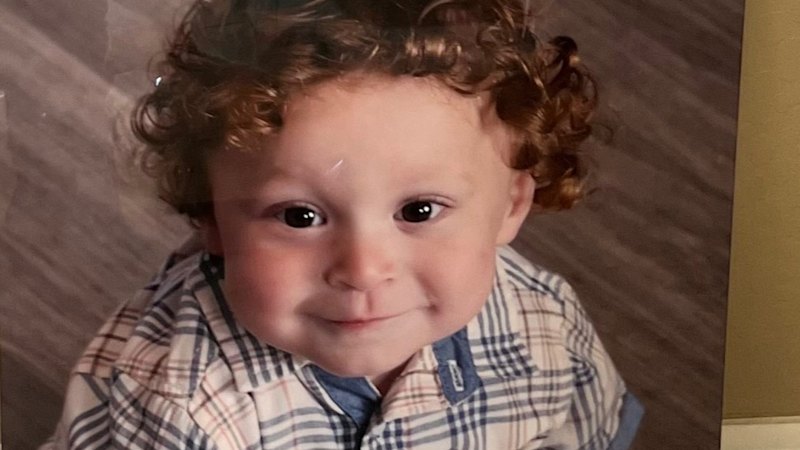
Imagine sitting in a hospital waiting room, completely broken, trying to process the news that your 18-month-old child is gone. You saw him pulled from a backyard pool. You watched first responders pump his tiny chest. Then, a doctor in a white coat tells you there's no hope. He pronounces your son dead. You go home to face a lifetime of empty bedrooms and crushing guilt.
Then your phone rings at midnight.
Your dead child is breathing. He's alive, lying on a metal table in the hospital's cold room, waiting for the medical examiner.
This isn't a plot from a horror movie. It happened in Gilbert, Arizona. The recently released police records from the incident reveal a terrifying sequence of parental neglect and medical arrogance. The story of baby Vincent Fiordilino is a severe wakeup call about water safety, parental responsibility, and why you should never blindly trust authority figures when your gut tells you they're wrong.
The Super Bowl Party That Turned Into a Nightmare
The nightmare began on February 8, 2026, during a Super Bowl watch party. Eighteen-month-old Vincent was wandering around a house filled with people, noise, and distractions. According to police reports, guests eventually found the boy floating face down in the backyard swimming pool. He had been underwater for roughly five minutes.
Someone frantically called 911. Shrieks filled the background of the audio. Relatives tried CPR. Paramedics rushed Vincent to Mercy Gilbert Medical Center, fighting to kickstart his heart.
When they arrived at the emergency room, the medical staff took over. They performed life-saving measures for about an hour. But at 6:20 p.m., the attending emergency room physician decided that it was over. He pronounced Vincent dead.
Except Vincent wasn't dead.
When Medical Hubris Ignores Clear Signs of Life
The most disturbing part of this case isn't just that a mistake happened. It's that multiple people on the scene explicitly told the doctor they thought the boy was still alive.
Two different Gilbert police officers noticed the toddler showing signs of life. They saw movements. The parents saw them too. Everyone in the room was watching a child gasp for air. When the police officers and the grieving parents questioned the doctor about these movements, the medical staff brushed it off. They claimed the boy was experiencing agonal breathing. This is a reflexive, involuntary gasp that sometimes occurs right after the heart stops. It's a common phenomenon, but in this case, it was treated as a definitive sign of finality rather than a reason to keep trying.
According to the police report, the ER doctor grew defensive when challenged. He allegedly turned to an officer and pulled rank.
"Please do your thing and let me do my thing," the doctor said, according to the official records. "I went to medical school for a reason."
With those words, the conversation ended. The doctor's pride overrode the survival instincts of everyone else in the room. Vincent was wheeled out of the emergency room. At 7:23 p.m., workers placed an alive, breathing 18-month-old boy inside the hospital's morgue, a chilly storage space known as the cold room.
He stayed there for nearly five hours.
At 11:52 p.m., a team from the local medical examiner's office arrived to transport the body. When they opened the space, they didn't find a corpse. They found a baby boy breathing and clinging to life. Medical personnel immediately scrambled. They airlifted Vincent to Phoenix Children's Hospital, where specialists finally gave him the actual care he needed.
The Shocking Reality of Misdiagnosed Death
You might think this is an isolated, freak occurrence. Forensic experts say otherwise. While declaring a living person dead is rare, it happens far more often than hospitals care to admit.
When a patient is near death, especially after a drowning or hypothermia incident, their vital signs drop to near-undetectable levels. The heart might beat so faintly and slowly that a standard stethoscope or a quick pulse check misses it entirely. The metabolic rate slows down. The body goes into a deep preservation mode.
In Vincent's case, a combination of human error and rigid compliance with hospital hierarchy created a perfect storm. The attending physician made a premature call and then refused to re-examine his own conclusion when presented with conflicting evidence.
A similar case happened in Southfield, Michigan, where a 20-year-old woman with cerebral palsy was declared dead over the phone by a doctor. Funeral home workers opened the body bag hours later and found her gasping for air. She survived the initial error but tragically died two months later. Her family later won a 3.25 million dollar negligence lawsuit against the city.
Vincent was luckier. According to updates from a family fundraising page, the toddler escaped severe, permanent brain damage, though his lungs required significant time on a ventilator to heal. He survived because a medical examiner's team actually looked at him instead of just reading a clipboard.
Parental Impairment and the Legal Fallout
While the hospital faces immense scrutiny, the police are focusing their attention on the parents. The Gilbert Police Department has recommended felony child abuse and negligence charges against Vincent’s mother and father.
The police report notes a strong odor of marijuana at the home during the Super Bowl party. Both parents later admitted to investigators that they had been smoking marijuana that afternoon. Officers found open doors that gave the toddler completely unsupervised access to the backyard pool area.
The investigation asserts that Vincent’s fall into the pool went unnoticed because his parents were impaired by mind-altering substances. They simply weren't paying attention.
Drowning is incredibly fast. It's also completely silent. Forget the cinematic depictions of splashing, screaming, and waving arms. When a child falls into a pool, they slip under the water quietly. A toddler can lose consciousness in less than two minutes. Within five minutes, irreversible brain damage or death typically sets in. If you're impaired, distracted by a football game, or assuming someone else is watching the kids, you've already created a lethal environment.
The Maricopa County Attorney's Office is currently reviewing the child abuse recommendations. The hospital also released a statement claiming they completed a thorough internal review to make meaningful changes to their care systems. They refused to comment on whether the doctor involved is still practicing there.
How to Protect Your Family From Fatal ER and Water Errors
This story exposes massive flaws in both domestic supervision and emergency medical care. You can't control what an ER doctor does, but you can control your own environment and learn how to advocate fiercely for your loved ones in a medical crisis.
Here's exactly what you need to do to ensure your kids stay safe, and what to do if you ever find yourself in a hospital room fighting an incompetent medical decision.
Secure the Water Danger Zones
Relying on your eyes is a losing strategy. You need physical barriers that prevent a child from ever reaching the water in the first place.
- Install a four-sided pool fence that is at least four feet high. It must completely separate the pool from the house and the rest of the yard.
- Use self-closing and self-latching gates that open outward, away from the pool area. Keep the latches high enough that a toddler can't reach them.
- Place alarms on all doors and windows leading to the pool area. If a door opens, you need an immediate audible alert to shock you into action.
- Assign a dedicated water watcher during gatherings. This means one sober adult is wearing a physical marker, like a lanyard or a wristband, and doing nothing but watching the pool. Rotate the duty every 15 to 20 minutes so no one gets fatigued or distracted.
Question the Medical Authority
If you're ever in an emergency room and a doctor tells you a loved one has passed away, but you see signs of movement, breathing, or twitching, don't let them pull rank on you.
- Demand a secondary check with a different diagnostic tool. Ask for an ultrasound of the heart or an extended EKG strip to look for faint electrical activity.
- Explicitly state what you are seeing. Say, "I see chest rise," or "I see a muscle flinch." Force the medical staff to document your observations in the chart immediately.
- Ask for a second opinion from the charge nurse or the chief of medicine on duty. Hospital hierarchies exist, but every patient and family member has the right to demand another set of eyes when a life is on the line.
- Stay with the body if you have doubts. If the hospital tries to move your loved one to a morgue or a cold room while you still suspect signs of life, refuse to let them move the gurney until a senior administrator reviews the case.
Vincent Fiordilino survived by sheer luck and the diligence of a transportation team. Don't rely on luck. Keep your eyes on your kids, secure your pools, and never let a doctor's medical school degree silence your own eyes and instincts.