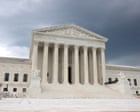
The final week of a Supreme Court term is usually a flurry of paperwork and legal jargon. Not this time. Right now, the high court is sitting on a powder keg of cases that could fundamentally change how much control a president has over the daily lives of Americans, the borders of the country, and the independence of the federal government itself.
If you think the court's conservative majority is just cleaning up leftover business, you're missing the bigger picture. This week isn't about routine legal housecleaning. It's about how far Donald Trump's "America First" agenda can bend the separation of powers before it snaps.
The baseline reality is simple. The executive branch wants more control over independent agencies, immigration status, and state-level laws. The justices are about to tell us exactly how much leash they are willing to give.
The Push to Dismantle the Independent Bureaucracy
For nearly a century, certain federal agencies operated with a layer of insulation from the Oval Office. Presidents couldn't just fire the head of the Federal Reserve or the chief of an independent regulatory body because they had a bad day or disagreed with interest rates.
Trump wants to destroy that barrier. This week, the court is deciding cases that challenge whether a president can fire the heads of most independent agencies at will, including an explicit effort to remove a sitting Federal Reserve governor.
Think about what that actually means. If the court rules in the administration's favor, the concept of an independent central bank goes out the window. Economic policy, interest rates, and financial regulations could swing wildly with every single presidential election cycle. Critics call it a power grab. The administration calls it accountability to the voters. Either way, it completely alters how Washington functions.
Stripping Birthright Citizenship by Executive Decree
Perhaps the most explosive case left on the docket stems from an April oral argument where the justices dropped hints about where they stand on immigration. The administration is trying to defend an executive order that upends a century of legal consensus regarding the 14th Amendment.
The order attempts to deny birthright citizenship to children born on American soil if their parents are in the country illegally or on temporary visas.
During arguments, even some of the conservative justices looked skeptical. While the court has given Trump significant victories recently—including a June 25 ruling allowing the government to end Temporary Protected Status (TPS) for migrants from Syria and Haiti—birthright citizenship is a different beast entirely. It is hardcoded into the Constitution. If the court actually greenlights this executive order, it won't just be an immigration policy shift. It will be a constitutional earthquake.
The High Stakes of the Remaining Docket
The legal battleground spans far beyond the office of the president. Here is exactly what is hitting the fan over the next few days.
- Transgender Athletes: Cases out of West Virginia and Idaho are forcing the court to decide whether states can legally ban transgender girls and women from participating in public school and college sports. Roughly half the states in the country have similar laws waiting on this verdict.
- Geofence Warrants: A massive civil liberties case focuses on whether police can use digital dragnets to scoop up the cellphone location history of everyone near a crime scene. Civil rights groups call it a fishing expedition; law enforcement calls it modern policing.
- The Mail-In Ballot Grace Period: Two major election cases challenge state laws that allow a grace period for counting mail-in ballots, provided they are postmarked by Election Day.
Reading Between the Lines of the Recent Wins
To understand where the court is going this week, you have to look at what they did just days ago. The Department of Homeland Security secured three massive wins on June 25 that show the court's clear appetite for border enforcement.
In Mullin v. Al Otro Lado, a 6-3 majority ruled that migrants standing in Mexico haven't legally "arrived" in the US, allowing border officials to block asylum seekers before they set foot on American soil. Combined with the Mullin v. Doe ruling that killed the TPS loophole for Haitian and Syrian nationals, the conservative majority made its position obvious: when it comes to national sovereignty and enforcement, the executive branch holds the cards.
But the upcoming decisions on agency firings and birthright citizenship test a completely different theory. They test whether the court will allow the president to override domestic statutes and constitutional text.
How to Prepare for the Rulings
Don't get distracted by the political theater or the inevitable talking heads on television. If you want to know what these rulings actually mean for your business, your taxes, and your civil liberties, look at these specific indicators.
First, check the wording on the independent agency cases. If the court rules that a president can dismiss a Federal Reserve governor without cause, prepare for immediate volatility in the financial markets as investors price in the loss of central bank independence.
Second, watch the vote split on the birthright citizenship case. If it is a unanimous or 8-1 rejection of Trump’s executive order, it means the conservative originalists on the bench are holding a hard line on the text of the 14th Amendment. If it is a tight 5-4 or 6-3 decision, the boundaries of executive orders just expanded exponentially.
Stay locked into the official Supreme Court press releases over the next 48 hours. The opinions will drop at 10 a.m. Eastern time, and the text of those decisions will dictate the layout of American government for the next generation.